The Center for Research and Advanced Studies published an article by Abd al-Rahman Hamdi, professor of political science at Zayed University in the United Arab Emirates, in which he defines the prospects for Africa in 2023 by analyzing six major trends that will shape the general economic, political and geopolitical features of the African continent.
The article touched on a set of axes, most notably “elections that may restore democratic transition,” “a geostrategic concern in the Horn of Africa,” “the growth of Rwanda’s military diplomacy,” “the escalation of conflicts in West and Central Africa,” and “the continuing economic crisis and the grievances of societies.” ’, and ‘Increasing climate degradation forces adaptive policies’.
Despite the negative effects of the “Covid-19” pandemic and the Ukrainian war, Africa is expected to avoid a major economic recession in 2023 with growth exceeding 3 percent in the north of the continent and south of the Sahara. However, the main concerns remain related to the heavy burden of debt servicing, instability associated with electoral processes, violent conflict and terrorism, as well as the constant threat of food insecurity caused by conflict and adverse weather conditions.
Elections may restore democratization
Africa is scheduled to witness presidential or parliamentary elections in 17 countries in 2023, while 13 other countries will hold elections in 2024, which makes preparations and campaigns for elections in full swing.
These elections are likely to have a significant impact on the political scene on the continent, as the election period could lead to political turmoil in Africa through the increased possibility of political protests, mass demonstrations and strikes in many countries. The return of the coup phenomenon also represents a major challenge, as the continent witnessed in 2022 two coups in Burkina Faso, as well as failed coup attempts in Guinea-Bissau, Sao Tome and Principe and Gambia.
Will the year 2023 mark a break with the wave of military coups that some African countries witnessed in previous years, or will it confirm the centrality of the role of the military in the political development of their societies?
All eyes are on Nigeria’s elections in February 2023, as it is one of the largest economies on the continent, and it suffers from very complex security problems. The political atmosphere is tense in the country, which has a population of 217 million, and is always described as the “sleeping giant of Africa.”
Incumbent President Muhammadu Buhari will not run again after completing two terms in office, making this election a crucial tool for change. There is a growing expectation among young voters (84 percent of all voters) of the possibility of change, as they can change the balance of power between the major political parties in one way or another.
In any case, Nigeria’s new president has a long and complex list of crises to manage, including high unemployment, violence by armed groups, separatists and jihadists, corruption and a lack of accountability by government institutions. Nigeria, Africa’s largest oil producer, has failed to profit from skyrocketing global oil prices, perhaps due in part to large-scale oil theft and failure to maintain pipeline infrastructure. With few refineries, Nigeria relies on oil imports to meet its domestic needs.
In 2023 presidential elections in the Democratic Republic of the Congo, Liberia and Zimbabwe could similarly turn into political hotspots as Congolese President Felix Tshisekedi, who took office after elections marred by allegations of fraud in 2018, struggles to stay in power amid armed militia violence.
The ruling party in Zimbabwe has also been preoccupied with imprisoning its political opponents, as the administration of President Emmerson Mnangagwa, who has announced his candidacy for the upcoming elections, has imprisoned prominent figures from the opposition “Citizens Alliance for Change” party. All in all, Africans will vote for change, even though they may not get it.
Geo-strategic concern in the Horn of Africa
There are three major regional trends that will shape features in the geostrategic landscape of the Horn of Africa during 2023:
The peace process in Ethiopia: In November 2022, the Ethiopian federal government and the Tigray People’s Liberation Front signed an agreement to cease hostilities in Pretoria, South Africa. The fighting has stopped, but obstacles remain to achieving a permanent end to the country’s two-year civil war.
Eritrea’s withdrawal from Tigray was not part of the deal, and Eritrean President Isaias Afwerki appears to be seeking to eliminate the Tigray Front, which led Ethiopia during a border war against Eritrea between 1998 and 2000.
Hostilities also continue in the Oromia region, the birthplace of the Ethiopian prime minister, where the Oromo Liberation Army is accused of killing hundreds of civilians, many of them from the Amhara ethnic group. In addition to this extremely complex and intertwined situation, the Amhara militias that fought alongside the Ethiopian army in Tigray are also accused of committing war crimes in regional conflicts.
However, there are still positive signs of reconciliation as Ethiopia begins to address the humanitarian crisis in Tigray. Dialogue over territorial claims and management of the region is likely to be a top priority for Ethiopian Prime Minister Abiy Ahmed during the year 2023. However, the biggest challenge will be reconstruction. According to official statistics, Ethiopia today needs $3.6 billion for reconstruction, although Actual costs may be much higher. Meanwhile, food inflation has risen by a staggering 40 percent.
Corruption and conflict in Somalia: Despite the gains made by the federal government in the face of the Al-Shabaab terrorist movement, after two years of drought, accompanied by a prolonged war of attrition between the army and the terrorist movement linked to Al-Qaeda, Somalia remains a standard model for the “failed state”.
At a time when people are starving, the ruling political elite, elected on clan lines, is still mired in corruption and cannot meet the aspirations of the broad popular base. The situation was exacerbated by the Russian war against Ukraine. Before the invasion, Somalia obtained 90 percent of its wheat from the two countries.
But with supply chains disrupted, the few relief ships that arrive loaded with grain are completely insufficient in light of the climate change crises and the intensification of armed conflicts. It is possible that the ongoing crisis in Somalia, which was once thriving with rich fishing grounds, threatens to drag into the abyss the Republic of Somaliland, which unilaterally declared its independence in 1991.
While the dynamics that will determine the fate of both Somalia and Ethiopia in the coming years are relatively clear, Eritrea remains far from future calculations and estimates, as despite the geostrategic importance of this small country overlooking the Red Sea, it is like a black box, as there are no available statistics on hunger or the effects of the “Covid-19” pandemic.
The growth of Rwanda’s “military diplomacy”
Rwanda is a small, landlocked country with a high population density and limited natural resources, unlike some of its neighbors.
It has gone through an exemplary development path after the 1994 genocide and is widely recognized for its economic growth, poverty reduction rates, and public safety and security. Despite its negative human rights record, the administration of Rwandan President Paul Kagame remains the fifth largest contributor to UN peacekeeping missions globally, which affects its global image.
Kigali has the diplomatic ability to broker transactional deals with African states to diversify the economy and increase self-sufficiency, and it mobilizes its key assets, military professionalism, political stability, and the “brand Rwanda” for its foreign policy.
Therefore, deployments to CAR (Central African Republic) and Mozambique must be seen as military diplomacy that supports the economic ambitions that fuel the country’s soft power. It is possible that Rwanda will realize that it is the trusted proxy of the West in the region through its involvement abroad and its support for security in Africa. Meanwhile, Rwanda continues to manufacture vaccines in Africa.
Kagame also aspires for the country to become a continental leader in civilian nuclear power and a hub for immigrants excluded from Europe. However, the escalating tensions with the Democratic Republic of the Congo will affect the landscape of regional stability in the Great Lakes region.
Rwanda continues to support attacks in eastern Congo by a Tutsi rebel group, the March 23rd Movement. And Kagame insists, as he announced during his participation in the second African-American summit, that “the problem is not of Rwanda’s making, and it is not a problem of Rwanda, but rather a problem of the Congo.”
Escalation of conflicts in West and Central Africa
West and Central Africa is characterized by increasing instability and the spread of violent extremism. Some countries in the region, such as Chad, Burkina Faso, Mali and Guinea, have witnessed military coups, which manifests a state of uncertainty about the political transition process in these countries.
The situation remains alarming in Cameroon and Nigeria, where insecurity is high in parts of those countries. In addition, northern Mozambique remains a major concern, as violent jihadist terrorism is driving people to flee.
Eastern Congo is also a major flashpoint, with more than 100 armed groups fighting for control of the territory, fueling a decades-long crisis. Citizens are often targeted. After nearly a decade of dormancy, the M23 movement launches a new offensive in 2022, forcing families to flee their homes and disrupting humanitarian aid.
The situation in Burkina Faso is likely to worsen as armed groups intensify their attacks and seize territory. Tensions between the country’s political factions have contributed to the instability, with the military seizing power twice in 2022 alone.
The increase in the number of vigilante groups has also led to an increase in violence. The expansion of the number of these groups is likely to lead to an increase in political instability, especially since armed groups control nearly 40 percent of the country today. Some cities in northern Burkina Faso are almost completely isolated. Food prices have increased by 30 percent, and are among the highest rates of food inflation in the world.
The continuing economic crisis and the grievances of societies
Dire economic conditions are fueling social grievances across the African continent. Countries across the continent are likely to face food insecurity, humanitarian emergencies, declining government support and unemployment crises on the back of mounting debt burdens, which will lead to political volatility and instability.
The global economic downturn will increase the risks of financial instability and sovereign debt defaults across the region. Countries that are already in default (such as Chad and Zambia) will face very difficult economic recovery prospects.
Deteriorating economic conditions will also inflame long-standing societal grievances on issues such as unemployment, inequality, and food insecurity. But governments are unlikely to quell discontent by increasing public spending without worsening their debt burdens.
Economic hardship combined with social crises and perceptions of state inefficiency are likely to lead to public demonstrations demanding government action in countries such as the Democratic Republic of the Congo, Ghana, Senegal, South Africa, and Zimbabwe, among others.
Together, these factors may lead to an unstable political situation, where the ruling elites try to blame the political scapegoat, and the opposition parties try at the same time to benefit from the decline in the popularity of the ruling parties. In cases of extreme political uncertainty, military leaders may try to take advantage of popular unrest and economic difficulties to overthrow power, especially in the Sahel region and West Africa.
Increasing climate degradation forces adaptive policies
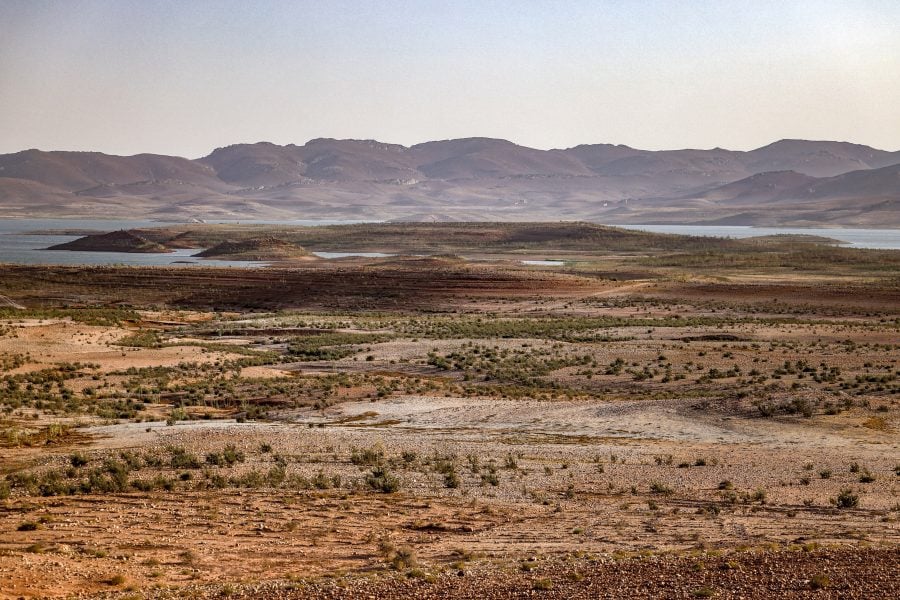
The worst drought in at least four decades in the Horn of Africa in the east of the continent and floods and water shortages in the Sahel region of West Africa have left 76 million people food insecure. It was not surprising that Somalia topped the emergency watch list for 2022 issued by the International Rescue Committee, a global list of humanitarian crises, which monitored crises and conflicts in 20 countries, whose conditions are expected to deteriorate further during 2023.
The Horn of Africa is witnessing its worst drought. 40 years ago, around 7.8 million Somalis were affected. A failure of the fifth consecutive rainy season is expected to push 8.3 million people, half of Somalia’s population, towards extreme hunger by mid-2023.
Somali President Hassan Sheikh Mohamud has expressed concern that declaring famine could divert international aid from other government priorities, including fighting the terrorist group Al-Shabaab. According to the Norwegian Refugee Council, “the famine is already here and killing tens of thousands silently in Somalia.”
Complicating matters further, Somalia’s crisis is multifaceted and increasing armed violence by the extremist al-Qaeda affiliate al-Shabaab, coupled with harsh drought conditions could lead to more violent conflict.
In the Sahel region, which includes countries such as Mali and Niger, malnutrition levels are 60 percent higher than they were in 2018. About 1.4 million children under the age of five suffer from severe wasting, the result of severe acute malnutrition that leads to diarrhea and a weakened immune system.
Climate-related challenges and violent conflicts are likely to continue to be an obstacle to achieving the African development goals. However, debt-servicing burdens will become more problematic, as the need to secure large sums at a time when domestic and international borrowing costs are rising dramatically will affect some countries in 2023.
Things could get more painful in 2024 when more debt payments come due.
On the other hand, general elections could be accompanied by instability in Africa, as the 2023-2024 cycle will be different, with high risks of political protests, mass demonstrations and strikes in a group of countries.
Can the slogan “African solutions to African problems”, which many African politicians believe in, meet these challenges in 2023?





add your comment
Terms of publication : Not to offend the writer, people, sacred things, or attack religions or the divine self, and refrain from racist incitement and insults.