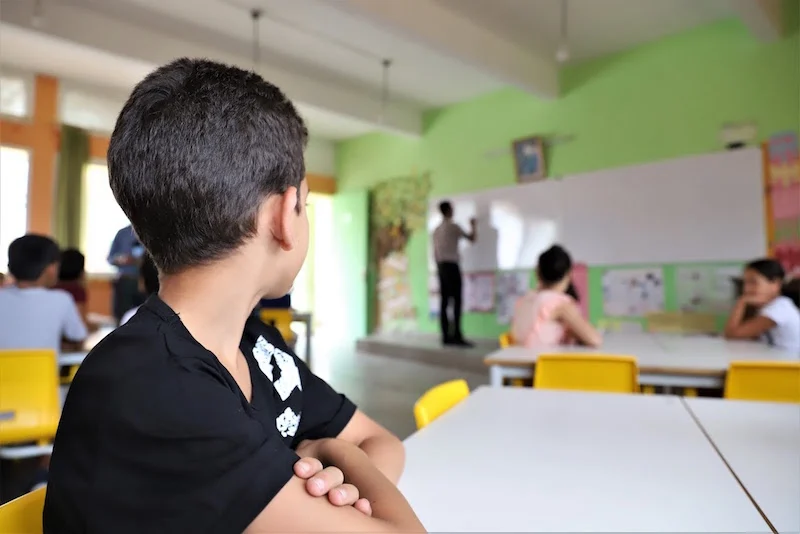
In an effort to smooth the integration of English into Moroccan schooling systems, the ministry of education is deploying numerous techniques to make English the second language for all high school science courses.
This transition however, is tedious and delicate, according to experts, who assured Hespress EN that the success of this operation is highly contingent on long-term planning, and the training of available and future human resources.
Dr. Zouhair El Aouni, a Continuing Education Department director specialized in English Language Diplomas and international professional certifications at Dar Al-Hikma University in Saudi Arabia, believes that integrating English in Moroccan schools on a wider range is a great initiative towards real development across all levels.
“This initiative has come as a result of a lot of research conducted by the Supreme Education Council and it is already well-investigated,” said the professor.
Despite this action being late, he explained that this will “help enormously in changing a whole mind-set that has been affected by the French model,” which according to him, is “a failure by excellence.”
As for the steps to be taken to ease this integration, El Aouni believes that the first step needs to be benchmarking.
“We should look for the best models around us and we benchmark. We might need to look at the best international schools in countries like KSA and the United Arab Emirates, and benchmark against their models.”
“ We should learn from their best practices and implement them to save time and energy with a lot of attention to the Moroccan context that might be unique in its nature,” advises the academic.
The second step, said the professor, is teacher training, which might be the most difficult step in the entire operation.
“We can have the best model adopted but if we do not have the qualified human resources, then it will be a failure again.”
“In a nutshell, I believe that the ministry of education should have a clear-cut plan of action with clear key performance indicators to make this decision a turning point in the history of the educational system in Morocco,” explained El Aouni.
A step that could follow the integration of English, is for Morocco to rely on English as an essential language in institutions all over the country and not just schooling systems.
El Aouni explained to Hespress EN that this would be challenging, yet worth considering.
“It will take some time,” explained the expert, as there is a whole generation that is used to French and it is difficult to integrate.
However, the expert believes that considering using English as a formal language in institutions will pave the way to the current generation that is already ready for the shift.
“Moroccans have proved to be great with foreign languages and I don’t think it will be a problem. Based on my observation, I can tell that the majority of the current generation will opt for English as a formal language to be used both at the institutional and educational levels,” concluded El Aouni.
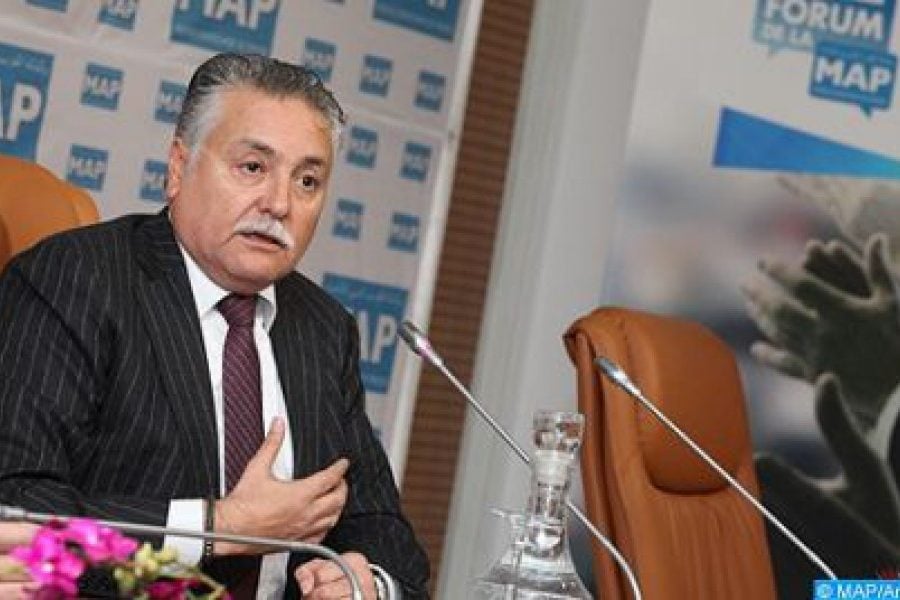
Prominent member of civil society Nouredine Ayouch emphasized to Hespress EN the importance of Morocco’s attempt to promote the integration of other languages in schools, by encouraging their use in productions and developing accessible learning shows.
The influential Moroccan businessman shared his thoughts on how French should not be disregarded as English is progressively incorporated into classrooms.
Ayouch began by stating in an interview with Hespress EN that, contrary to what is generally believed, he does not only support French but also encourages the learning and use of other languages.
According to Ayouch, the economic worth of the French language has been declining over the past 15 years or so. “Even in international seminars held in France, the official language is mostly English,” declared Ayouch.
He emphasized that “we should all think of Morocco’s future and the diversity of languages,” which is why he has high hopes for the Ministry’s decision to make English an important and early subject at schools by 2030.
Ayouch highlighted that we shouldn’t privilege French above other languages, as he expressed his gratitude for the Moroccan government’s decision to expand English training on a more widespread national level.
On integrating English into the Moroccan educational system, Ayouch told Hespress EN that it will be very difficult and that it would be “miraculou” if Morocco somehow manages to achieve a smooth integration by the desired year.
Ayouch emphasized the importance of having well-trained teachers as well as equipped schools with technological resources, to ease learning foreign languages and ensure the smooth enrollment of this transition.
Fouad Chafiki, Director of Curricula at the Ministry of National Education, has previously told Hespress EN that teachers are now required to finish 6 to 8 hours of training every week in order to be adequately prepared to teach in English across Moroccan public schools.
Chafiki also mentioned the national education ministry’s plans to recruit new staff, saying: “We have a sufficient number of trained teachers with English literature degrees to help the implementation of the language learning in our educational system.”
Ayouch said that based on what’s circulating on the internet and on social media platforms, “we notice that Moroccans are more and more talented when it comes to mastering English because they listen to songs and watch movies and series on Netflix primarily in English, which helps them learn the language easily.”
He described this as remarkable, saying that if we bring an illiterate individual and ask them to study French and English, they will probably pick up English more quickly.
“All we need now is creating training centers all over the country, in small and big cities as well as rural areas to encourage people to take on the challenge of learning English,” declared Ayouch.
The activist’s vision somehow aligns with the ministry of education’s plans to integrate English gradually into academic systems and institutions.
For example, Rwanda was a perfectly French-speaking country that successfully transitioned into an English-speaking country in less than 10 years, which makes it possible for Morocco to do so as well, said Ayouch.
Would a generational gap result from this abrupt shift from a French-speaking nation to one that has opened up to speaking English? According to Ayouch, if one language is not taught at the expense of another, generational conflict may be avoided and we can live in harmony as a nation.
Ayouch believes that English, French, and Arabic should all be taught while granting the students freedom of choice.
“We are condemned in the future to learn 2 other languages at least besides Arabic, which is our mother tongue,” reminds Ayouch.
To learn new languages according to Nouredine Ayouch, we should invite English-speaking spectacles into our country.
“We need to create English speaking tv channels, with English-speaking shows to ease the learning process and make it more accessible,” he said.
“Our country should remain francophone and become Anglophone at the same time,” concluded Ayouch.
The use and hunger for English for Morocco is growing daily, with many anglo-saxon events and activities taking place across the country.






add your comment
Terms of publication : Not to offend the writer, people, sacred things, or attack religions or the divine self, and refrain from racist incitement and insults.