Nearly four million women, i.e 32.4% of women aged 18 and over, face simultaneous deprivation linked to the Sustainable Development Goals (SDGs), highlighted a study on “intersectional discrimination of women in Morocco”.
The findings of this study, conducted under the Joint Program “Support for the Evaluation of Public Policies for Equitable Human Development” by the National Observatory for Human Development (ONDH) and the United Nations, particularly UN Women, were presented during a webinar held Tuesday at the headquarters of the United Nations Coordination Office in Rabat.
Based on data from the ONDH household panel survey and supplemented by field investigations, the study highlights the inequalities affecting women and girls in Morocco through the examination of several outcome indicators related to SDGs. It also highlights the causes of these inequalities, which are generally determined by underlying structural factors and often rooted in the country’s economic, social and political institutions.
Speaking at the webinar, Secretary-General of the ONDH, El Hassan El Mansouri, said that this study is unique since it focuses on inequalities among women, moving beyond the notion of considering women as a homogeneous and universal group.
“This study confirmed the heterogeneity among women according to different factors, notably place of residence, level of education, marital status and standard of living,” El Mansouri added.
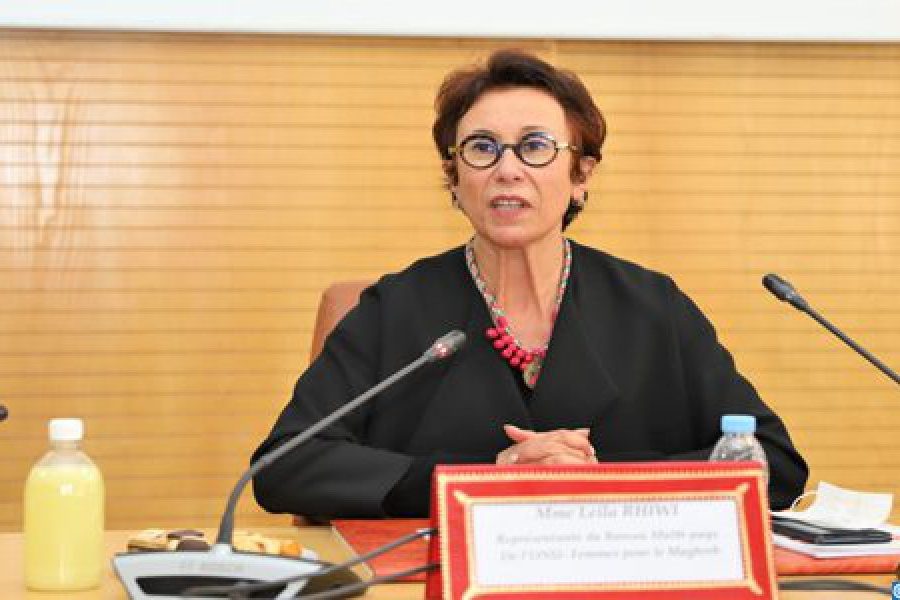
Representative of UN Women in Morocco, Leila Rhiwi, stressed that the study analyzed inter-sectoral gender discrimination, noting that multiple forms of discrimination overlap and aggravate inequalities in general and among women in particular.
“The intersectional approach adopted to carry out this study identified those who are most marginalized, vulnerable and excluded to better guide public policies aimed at them and meet their needs and expectations,” Rhiwi noted.
Resident Coordinator of the United Nations in Morocco, Sylvia Lopez-Ekra, said that this study helped identify ”women who were left behind and those whose daily life has not changed despite the important advances Morocco made.”
The main findings of the study show that poorest rural women are twice as likely to marry before the age of 18 compared to rich counterparts from urban households (28.3% versus 13.9%), the prevalence of violence against women remains high (58% in urban areas and 55% in rural areas). This kind of violence is present in both private (52%) and public spheres (48%) and the most blatant shortcomings are noted in the regions of Fez-Meknes, Casablanca-Settat, Beni-Mellal-Khenifra and Tangier-Tetouan-Al Hoceima, notably access to education, medical coverage, prenatal consultations and supervised delivery.





add your comment
Terms of publication : Not to offend the writer, people, sacred things, or attack religions or the divine self, and refrain from racist incitement and insults.