The majority of irregular migrants who perished at the Nador-Melilla border on June 24 died of mechanical asphyxia, according to the Moroccan National Council for Human Rights (CNDH).
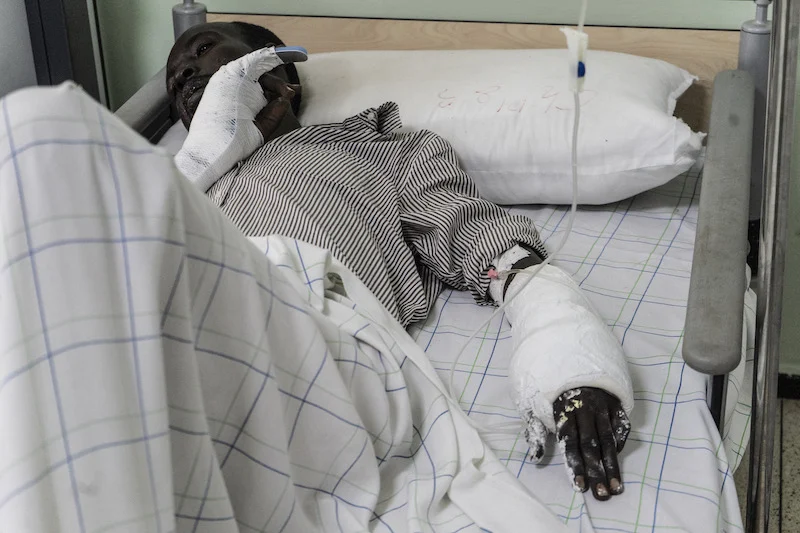
In its preliminary report of fact-finding mission on the incident, the CNDH confirmed that the death toll stood at 23, contrary to the approximate 30 fatalities reported by NGOs, adding that “five people died before reaching the hospital, 217 people were injured, including 140 law enforcement officers and 77 migrants.”
Contrary to what some NGOs claimed, “none of the dead migrants have been buried so far,” assures the council, adding that “the fact-finding mission visited the mortuary and checked the number of dead bodies” from the tragic incident.
According to the council, mechanical asphyxia was the main cause of death. The other potential causes of death included “massive jostling in a tightly secured and very narrow space at the crossing station and falling as the barbed-wire fence failed.”
The border fence failing was due to the large number of migrants climbing and attempting to breach the fence at the same time.
However, the CNDH reiterates that “only an autopsy can accurately determine the exact individual causes of death.”
All injured migrants and law enforcement officers received necessary medical assistance and care, including medical surgery at the Regional Hospital in Nador and the University Hospital in Oujda, says the report.
For a few cases at the hospital, the CNDH’s fact-finding mission “couldn’t determine whether some migrants’ injuries were due to the massive jostling, falling as the fences failed, or to a disproportionate use of force.”
The Regional Human Rights Commission in the “Oriental” Region will follow up on autopsy and DNA testing for the migrants, says the CNDH.
The council notes “with satisfaction” the decision to perform an autopsy and DNA testing in order to accurately determine the causes of death for all migrants, and “grantee their and their families rights, and enclose the findings in court filings.”
The CNDH’s fact finding mission reported that “authorities, NGOs, and injured migrants at the hospital all confirmed that law enforcement forces did not use lethal weapons or firearms.”
Instead, law enforcement officers used tear gas and truncheons in the confrontations, which were a resort for officers after realizing that the migrants “were extremely violent in the confrontations with law enforcement officers,” and held an officer hostage.
The cndh additionally reports that the migrants were “armed with stones, sticks, and sharp tools when they stormed the crossing, all together, at the same time.”
The trials for the detained migrants were postponed today until July 24.







add your comment
Terms of publication : Not to offend the writer, people, sacred things, or attack religions or the divine self, and refrain from racist incitement and insults.