
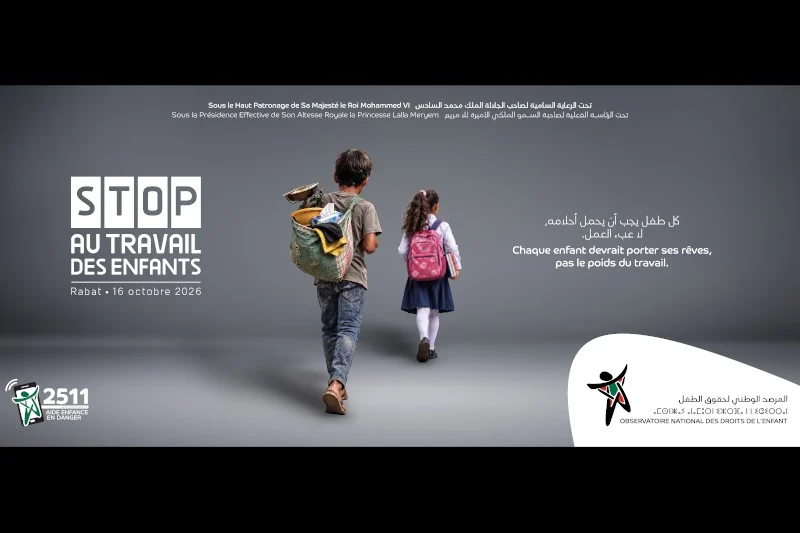
The number of working children in Morocco decreased by 26 percent in 2021 compared to 2019, standing at 148,000 according to figures shared by the High Commission of Planning.
Working children represent 2% of the 7 million Moroccan children between the ages of 7 and under 17 years old in Morocco.
In rural areas, 3.8 percent or 119,000 children are forced to work, compared to 0.7 percent in urban areas, or 29,000.
The data indicated that 80.4 percent of the active working children live in rural areas, 79.5 percent are males, and 87.5 percent are between 15 and 17 years old. 12.1 percent of children work while they go to school, 85.7 percent have left school, and 2.2 percent have never attended school.
About 65 percent of active working children benefit from health coverage.
In rural areas, 82.2 percent of children work in agriculture, forestry and hunting, while n urban areas 58.4 percent of children are in the services sector, and 24.7 in the industry sector.
the phenomenon of child labor concerns about 109 thousand families, which represents 1.3 percent of all Moroccan families. These families are concentrated mainly in rural areas, and about 9.5 percent of them are run by women.
The commission stated that this phenomenon is of particular interest to large families, as the percentage of families with at least one working child is 0.5% for families consisting of three members, and gradually increases with the size of the family, reaching 3.5 percent for families consisting of six or more individuals.
The percentage of families with at least one working child is 2% among families managed by a person without an educational level, while it remains almost non-existent among families led by a person with a high level of education.
50.4 percent of working children come from families managed by farmers, 16.6 percent by industry workers, and 21.3 percent by employers, traders, equipment managers, or craftsmen.



add your comment
Terms of publication : Not to offend the writer, people, sacred things, or attack religions or the divine self, and refrain from racist incitement and insults.