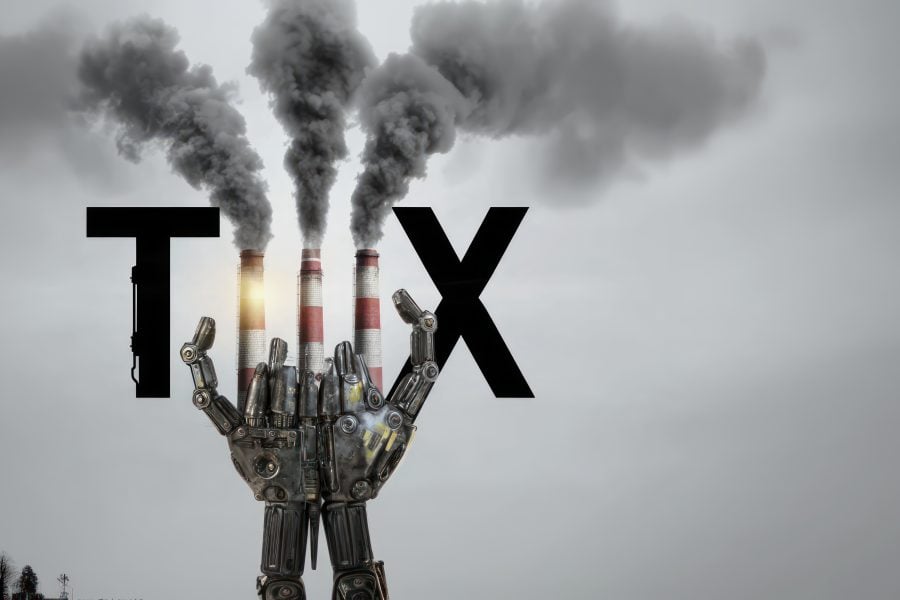
The European Commission has held talks with Moroccan stakeholders on helping the country’s exporters adapt to the European Union’s new carbon border rules, as energy-intensive industries face growing pressure to reduce emissions to remain competitive in Europe’s market.
In its 2026 annual climate progress report, the Commission said discussions focused on practical measures to turn the Carbon Border Adjustment Mechanism (CBAM) into an opportunity for Moroccan businesses, describing the system as a potential driver of the country’s industrial competitiveness.
The report provided no details of commitments reached with Morocco, implementation schedules or preferential arrangements for Moroccan exports.
The mechanism entered its definitive phase on January 1, 2026, following a transitional reporting period that began in October 2023. It aims to impose a carbon cost on selected imports, including fertilizers, steel, cement and aluminum, to prevent European manufacturers from facing competition from producers operating under less stringent environmental rules.
Morocco’s fertilizer industry is particularly exposed because of its exports to Europe, making the carbon intensity of production an increasingly important factor in pricing and market access.
According to the Commission, approximately 212 million tonnes of goods covered by CBAM were declared during the transitional period through late 2025. Steel and iron accounted for 69% of the total, followed by fertilizers at 15%, cement at 11% and aluminum at 5%.
The goods carried an estimated 387 million tonnes of embedded carbon dioxide equivalent emissions, based on unverified reporting data.
The figures cover imports into the EU from all trading partners, not Moroccan exports specifically. The Commission did not disclose Morocco’s share or estimate the potential financial impact on its exporters.
The report also highlighted Morocco’s inclusion in the EU’s T-MED initiative, launched in June 2026 to accelerate renewable energy development, clean technology manufacturing and electricity grid modernization across the Mediterranean.
The initiative builds on the green partnership signed in October 2022, when Morocco became the EU’s first partner country to conclude such an agreement.





add your comment
Terms of publication : Not to offend the writer, people, sacred things, or attack religions or the divine self, and refrain from racist incitement and insults.