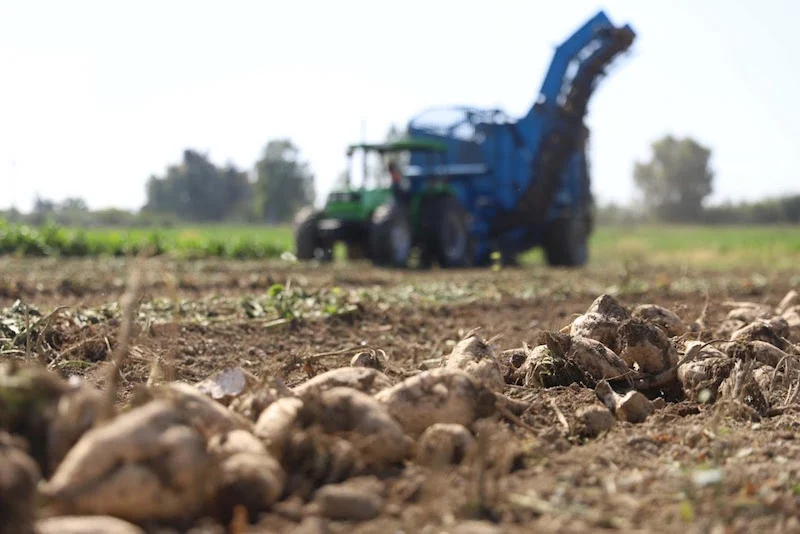
The Oxford Business Group (OBG) economic intelligence and consulting firm published a new report in collaboration with Morocco’s Cherifan Office for Phosphates (OCP), on the prospects, realities, and challenges of agriculture in Africa.
Entitled “Agriculture in Africa 2022,” this is the group’s third study devoted to this timely theme for the continent, as its population grows amid an accelerating climate crisis and growing food prices.
With a population expected to double by 2050, according to the World Bank, and a food demand that is expected to grow by 55% by 2030, the challenge of food security is significant in Africa, where 85% of food is still imported, according to data published by the United Nations Conference on Trade and Development (UNCTAD).
While the continent has the world’s fastest-growing agricultural sector, posting an average annual growth rate of 4.3% since 2000, the development of the vast amount of uncultivated arable land will not be enough to meet the growing demand for food.
OBG’s targeted report explores the various avenues and concrete solutions available to meet the food needs of the African population, while making the sector part of a sustainable and climate-friendly process.
The report emphasizes the importance of circular economy practices, as increasing production will not be possible without increasing productivity, which may result in collateral damage to the climate.
Therefore, OCP and OBG are encouraging practices such as converting organic waste into productive inputs, recycling water, among the agricultural practices adapted to climate change.
The report highlights that boosting productivity and increasing incomes for small farmers, who produce 80% of the food in sub-Saharan Africa, requires greater use of renewable energy technologies and increased support for the institutions that generate them, including research, development, and engineering systems.
To the report’s authors, the lack of funding currently available for these ecosystems in Africa is holding the continent back from achieving agricultural, food and climate security.
Increasing productivity also supports the preservation of ecosystems and biodiversity.
The study also states that while Africa has the potential to feed the world’s population in the coming years, in order to accomplish this scenario, land must be used sustainably, by addressing issues such as deforestation and inefficient fertilizer use.
This would require the adoption of a green economic model, characterized by low carbon emissions, efficient use of resources and social inclusion.
The report also includes four interviews with renowned experts. Hanane Mourchid, Executive Director for Sustainability and Green Industrial Development at OCP Group, offers insights into how the circular economy and sustainability policies will help address the challenges facing agriculture in Africa.
In addition, she explains the importance of companies implementing sustainability policies and how the private sector and academia can work together to implement smart agricultural practices.
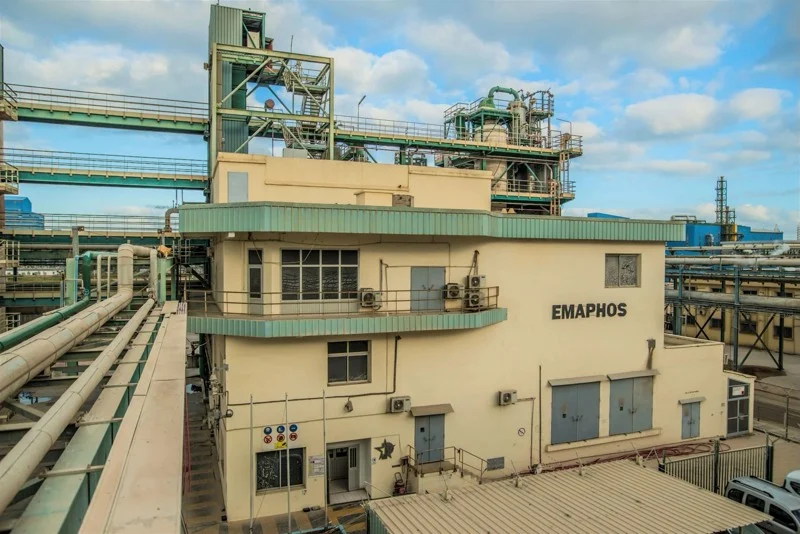
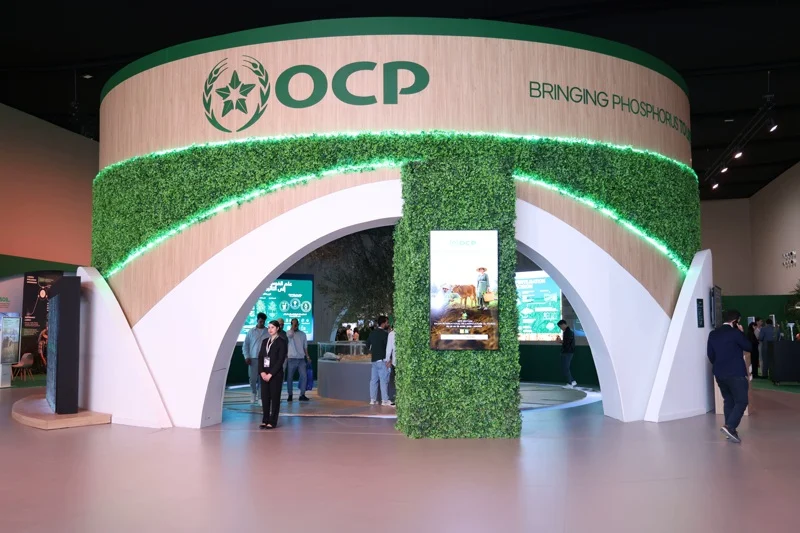
In Morocco, which is home to more than 70% of the world’s phosphate reserves, OCP Group manages the entire phosphate value chain, from extraction and processing, through to the marketing of fertilizer products.
As the world’s largest commercial phosphate producer, it has a responsibility to manage the use of phosphate resources in a sustainable way. “OCP Group has access to approximately 70% of the world’s phosphorus reserves. It is a finite resource that must be extracted and used responsibly,” Mohamed El Boukhary, senior manager of sustainability and green industrial development at OCP, told OBG.
For OCP, optimizing phosphorus extraction is a major priority, states the report. Through several successful R&D initiatives, OCP has significantly increased phosphate beneficiation, which is the process wherein valuable minerals are separated from unusable minerals, according to the joint report.
Phosphorus is just one element of the rock matrix extracted from phosphate mines: there are other elements, such as carbonates and silicates, as well as impurities, explains the publication, adding that “a washing and flotation system developed by OCP enriches the phosphate after it is extracted, which enhances the phosphate rock with the lowest phosphorus content, thereby making it economically viable.”
OCP Group has also developed innovative approaches to increase phosphorus recovery and recycling across the value chain and beyond.
There are three key initiatives in this regard: the first reintroduces waste ore back into the phosphorus extraction process; the second recovers phosphorous residue from wastewater treatment systems, and the third integrates phosphorus and other nutrients recovered from organic waste back into fertilizer products.
Developing the right fertilizer to match the soil and crop is crucial to increasing food production. OCP is investing heavily in developing tailor-made fertilizers that enhance crop yield, limit overuse and preserve existing global mineral reserves.
The company carries out field trial programs with smallholder farmers to assess any challenges to production, such as poor crop management and inefficient fertilizer use. Based on these assessments, it tailors its fertilizer offerings to the country, crops and agro-ecological specificities.
OCP has developed more than 40 customized fertilizer formulas for farmers across the world, according to the report, as the group’s customized fertilizer blends have helped to increase maize yields by 37% in Ethiopia, and maize and soybean yields by 20% in Kenya.
Other contributors to the report include, Tony Siantonas, Director, Scaling Positive Agriculture, World Business Council for Sustainable Development (WBCSD), who presented various solutions for enhancing sustainability and food security, such as material on soil health and the need for long-term investment and innovation.
Kaushik Majumdar, Director-General, African Plant Nutrition Institute (APNI), also contributed to the recent joint output, advocating for smart, calibrated plant nutrition to counter the adverse effects of climate change and discusses the key role of public-private partnerships in R&D and knowledge transfer in the agricultural sector in Africa.
President of the Mohammed VI Polytechnic University (UM6P), Hicham El Habti, explained to the OBG how technology and innovation can concretely help African farmers.
For the third year in a row, OBG has been supported by OCP Group to produce this analysis, which will be accompanied by an illustrative video and a podcast on the report’s main findings, including segments about African agriculture’s perspectives and challenges.





add your comment
Terms of publication : Not to offend the writer, people, sacred things, or attack religions or the divine self, and refrain from racist incitement and insults.