
Moroccan rappers and creatives are raising awareness about what they’re calling a “blatant theft of earned copyright revenues,” pointing the finger towards the Moroccan Copyright Office (BMDA), which in turn maintains its “proven legitimacy and transparency.”
Two weeks ago, popular rappers Abdessamad Lamrik, known as SmallX, and Taha Fahssi, aka ElGrande Toto called unveiled the list of the BMDA’s top 10 earners during an Instagram live, pointing to the “injustice of the office’s financial distribution criteria.”
According to the artists, all regularly charting Morocco trending and streaming lists, the distribution of state-allocated funds is “unfair,” as it includes artists who “are unknown to the public,” while actual active young artists, promoting Moroccan music worldwide, do not benefit from copyright revenues.
The office, which has been the center of controversy and a wide debate on both the parliament’s floor and across social media platforms, is now under the public’s scrutiny.
What is the BMDA?
The BMDA is the “exclusive” national authority in charge of the collective management of copyrights and related rights. The collection of the rights of creators in all their existing and future forms, as well as the distribution of rights is within the vicinity of its powers.
This authority manages a sector linked to the freedoms of thought, creation, publication, and exhibition, protected by article 25 of the Constitution which stipulates that “the freedoms of thought, opinion, and expression in all its forms are guaranteed…the freedoms of creation, publication, and exhibition in literary and artistic formats and of scientific and technical research are guaranteed.”
According to this year’s finance bill, the BMDA has been granted a MAD 200 million annual budget, largely intended for compensating Moroccan creators, artists, and registered intellectual property holders.
Generational or ethical conflict?
During the live Instagram stream, SmallX, rapper ElGrande Toto, and a BMDA ex-collaborator, Youssef Kamili, alleged the office “has been operating in preferential and dubious manner,” prioritizing “insiders and career unionists” over the kingdom’s top internationally recognized creatives.
According to Youssef, the top beneficiaries of the government’s funds to artists and creatives in the country go to “a minority of elder, powerful individuals,” most, unknown to today’s audiences.
Name after name, the list of beneficiaries was revealed to be exclusively consisting of men, whose latest “artistic output” goes beyond a year for most, while others were personalities whose names and faces remained unrecognizable to the artists hosting the live.
The young artists are advocating, in addition to their rightful compensations through the BMDA, for older artists to receive their due rights. “Older generation actors and musicians who have served the Moroccan art scene for decades are now living in poverty and misery,” says Youssef, lamenting the exclusion of these “icons” of the Moroccan art scene.
Since the live, and subsequent exchanges between Kamili and BMDA beneficiaries and unionists on social media, young consumers of music, films and the arts in Morocco are now joining forces with the artists to demand justice for the creatives.
The arts lobby
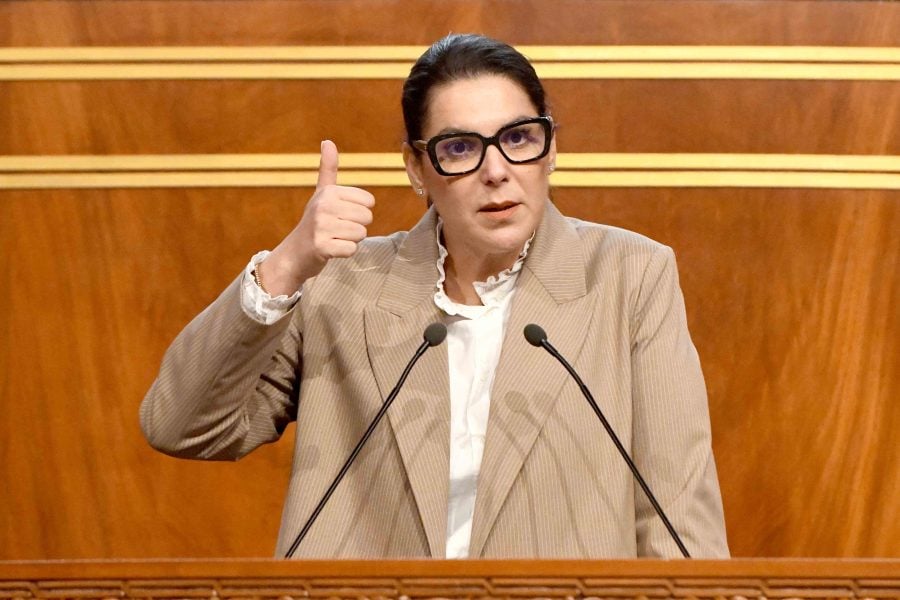
Prior to this recent young artists’ claim, the Moroccan Minister of Culture had learned of what Kamili describes as a “close nit mob,” telling Parliament that “the way the office manages its tasks and the current legal framework makes a number of institutions refuse to pay the amounts owed to the artists because they fear that these funds will not go to those who deserve them.”
Faced with this long-standing questionable impunity and lack of transparency among the BMDA’s ranks, Bensaid undertook the long-awaited reform plan.
The official gave a presentation back in early April on a bill aiming to reform the legislative basis for the BDMA’s management, at the end of the legislative session.
Through this bill, the Minister aims to restructure the Office and rebuild it on a “transparent and clear basis,” allowing it to carry out its expected duties of protecting Moroccan creatives from illegal uses of their artistic outputs.
But the true amendment was that the text will transform the office into a financially independent authority while providing the BMDA with a board of directors chaired by the government authority, which according to its Article 8 would be the Ministry of Culture.
This shift would put the office under the Ministry’s control and supervision. Unsurprisingly, artist unions vehemently opposed the bill, as five representative bodies issued a joint statement on April 15, rejecting the BMDA bill, calling it “rushed,” and unaware of the craft’s “particularities.”
After the bill was delivered to parliament for deliberations, lobbies attacked the law proposal, arguing that the executive’s possible involvement in the BMDA’s management “may hinder the freedom of creative expression, and promote censorship in the arts.”
Kamili argued against this argument, saying that “all the current national office managers care about is utter control over the funds’ distribution, and maintaining a selective, highly lucrative status quo.”
The BMDA declining Hespress EN requests for comment.






add your comment
Terms of publication : Not to offend the writer, people, sacred things, or attack religions or the divine self, and refrain from racist incitement and insults.