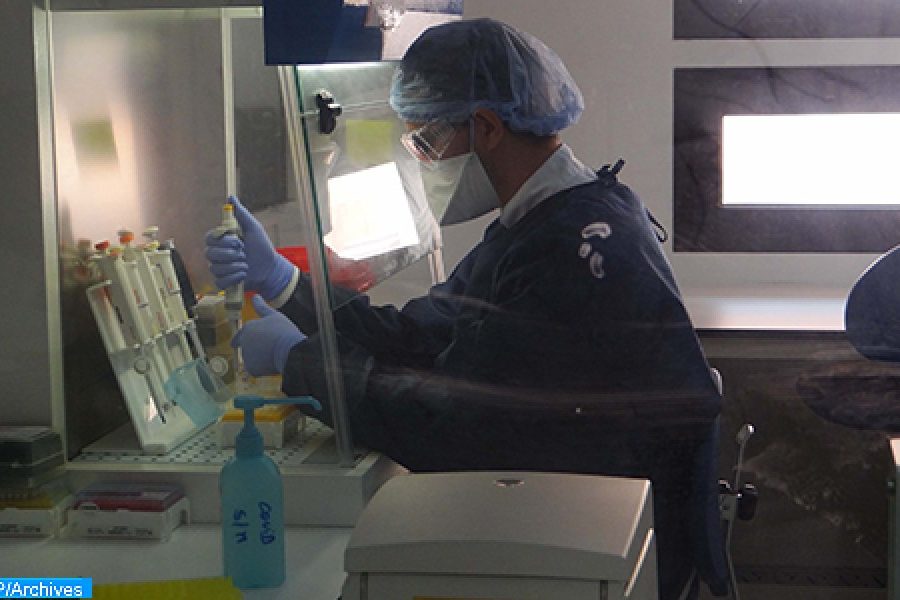
After the detection of 3 potential monkeypox cases in Morocco this Monday, sources within the Ministry of Health told Hespress EN that they are awaiting test results, to determine whether they are in fact carrying the virus.
Informed sources stated that “the patients’ blood has been drawn and the samples are under laboratory testing as we speak,” declining to comment on where the potential cases could have contracted the virus.
The Ministry of Health announced yesterday that the three potential cases were “in good health,” adding that as of this time, no confirmed cases have been recorded domestically.
Citizens are currently reliving the early days of the COVID-19 pandemic, as new cases increase internationally on a daily basis, only this time the threat is much closer to home, as the current epicenter is neighboring Europe.
Since 13 May 2022, 12 western countries that are not endemic to the virus have reported cases to the World Health Organization (WHO), specifically, as of this Saturday, 92 confirmed cases and 28 suspected have been recorded.
As epidemiological investigations are ongoing, reported cases thus far do not all have established travel links to endemic areas, namely West African countries.
It’s unusual to see monkeypox in Europe and North America, but there are thousands of cases on an annual basis throughout West and Central Africa, WHO officials said this week.
The earliest known case in the UK was linked to travel in Nigeria, according to the UK Health Security Agency. But the two latest infections there, reported on Wednesday, were not tied to either travel or to other previously confirmed cases.
However, the Gran Canarian pride festival in the United Kingdom, attended by 80,000 from across Europe, is currently being investigated after being linked to numerous monkeypox cases in Madrid, Italy and Tenerife, according to The Daily Mail.
Despite mild worries among Moroccans, widely expressed across social media platforms, health professionals are reassuring that there is nothing to worry about.
Although some are visible, most monkeypox syndromes are usually associated with a multitude of diseases and infections, and are considered mild. The Moroccan Health Ministry defined a “suspected case” as any person with a vesicular or vesiculo-pustular rash and a fever exceeding 38°C.
Probable cases are also designated to be a suspected case who has had contact with a confirmed case within 21 days prior to the onset of symptoms, a suspected case who has traveled to a country where the disease is endemic or a country that has recorded a chain of transmission since the beginning of May 2022 (currently countries in Central and West Africa, Europe, and North America) within 21 days prior to symptom onset, and any individuals experiencing rashes on the palms and/or soles of the feet.
In addition, even with the existence of all the symptoms, the Ministry maintains that a confirmed case will only be designated as such, after a monkeypox virus infection has been confirmed by molecular laboratory testing.
In addition, because the monkeypox virus is closely related to the virus that causes smallpox, the smallpox vaccine can protect people from getting monkeypox.
Past data from Africa cited by the CDC suggests that the smallpox vaccine is at least 85% effective in preventing monkeypox.
Vaccination after exposure to the monkeypox virus is also possible and can be highly effective when administered early, preferably within 4 days from the date of exposure.
Although monkeypox has a 1% mortality rate, which is exclusive to non-vaccinated infants and children, the risk of infection is not to be underestimated. According to available data, the virus itself can lead to “monkeypox disease,” which includes more severe symptoms.
Those who have been exposed to the monkeypox virus risk developing the disease, as the symptoms consist of fever, headache, muscle aches, backache, swollen lymph nodes, a general feeling of discomfort, exhaustion, and severe rashes. The disease expands the mortality rate to about 10%.
In contrast, individuals vaccinated against smallpox or monkeypox vaccine experience minor reactions, such as mild fevers, tiredness, swollen glands, and redness and itching at the place where the vaccine is given.





add your comment
Terms of publication : Not to offend the writer, people, sacred things, or attack religions or the divine self, and refrain from racist incitement and insults.