Morocco and Spain are reinforcing joint migratory efforts, announced in a meeting by the Permanent Group on Spanish-Moroccan Migration meeting in Rabat, following a year of disconnect due to a diplomatic crisis that was recently put to an end.
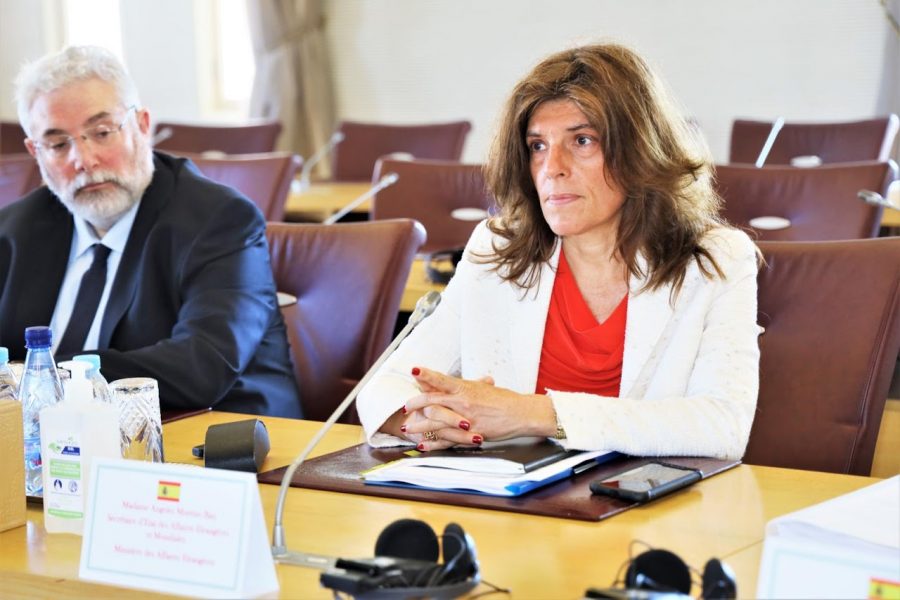
This Friday, a Spanish delegation arrived in Rabat to meet with Moroccan counterparts to discuss the most pressing migratory challenges and upcoming bilateral systems in the 20th meeting of this joint delegation.
The Moroccan delegation was headed by the Director of Migration and Border Surveillance, Khalid Zarouali, while the Spanish delegation, chaired by the Secretary of State for Migration, Jesus Javier Perea, was accompanied by the Secretary of State for Security, Rafael Perez, and the Secretary of State for Foreign and Global Affairs, Angeles Moreno.
According to a statement from the Spanish delegation, the meeting focused on the new challenges in migratory matters, following the exceptional situation caused by the COVID-19 pandemic in the last two years.
In this context, Angeles Moreno, Secretary of State for Foreign and International Affairs, recalled “the quantitative and qualitative efforts made by the Spanish consular services in Morocco,” regarding Moroccan requests to expedite the granting of visas.
Moreno emphasized “the desire to continue it and simplify the procedures as much as possible”, saying that “this is in the interest of both parties, by promoting orderly and regular mobility”, stating that Spain wants more Moroccan students to improve their academic training in Spanish institutions.
Both delegations recognized the important achievements such cooperation has had in limiting irregular migratory flows, as demonstrated by the Moroccan Ministry of Interior’s data.
According to the ministry, in the first three months of 2022, authorities have managed to thwart 14,746 illegal immigration attempts, dismantled 52 criminal networks for trafficking and smuggling of migrants, provided relief to 97 individuals, and successfully organized the return of 1080 irregular foreigners in Morocco to their countries of origin.
In addition, Moroccan authorities managed to also return 600 people, in partnership with the International Organization for Migration, to their home countries, all while thwarting 12 incursions into the Spanish enclave, Melilla.
In his speech, the Secretary of State for Migration stressed the need to continue to support regular migration programs as a strategic objective for Spain and also for the European Union.
Perea highlighted Spain’s efforts to ease regular migratory flows between Morocco and Spain, naming several current programs, “such as Wafira, a project funded by the European Union that allows Moroccan seasonal workers to be trained in Spanish cooperatives.”
“These programs contribute to strengthening relations between the two countries in terms of regular migration while contributing to the development and empowerment of the women who participate in them,” stressed the Secretary of State for Migration.
In his speech, Secretary of State for Security Rafael Perez said Spain is committed, alongside Morocco, to continue strengthening bilateral cooperation in migratory matters.
According to Perez, Morocco and Spain are neighboring countries and strategic partners who practice “exemplary daily joint efforts with regard to the control of migratory flows and the fight against human trafficking.”
The economic repercussions of the COVID-19 pandemic and the closing of borders have “influenced migratory flows,” affirmed Perez, adding that “the best option to face this challenge is to bet on bilateral cooperation with the countries of origin and with those who share the same challenge.”

add your comment
Terms of publication : Not to offend the writer, people, sacred things, or attack religions or the divine self, and refrain from racist incitement and insults.