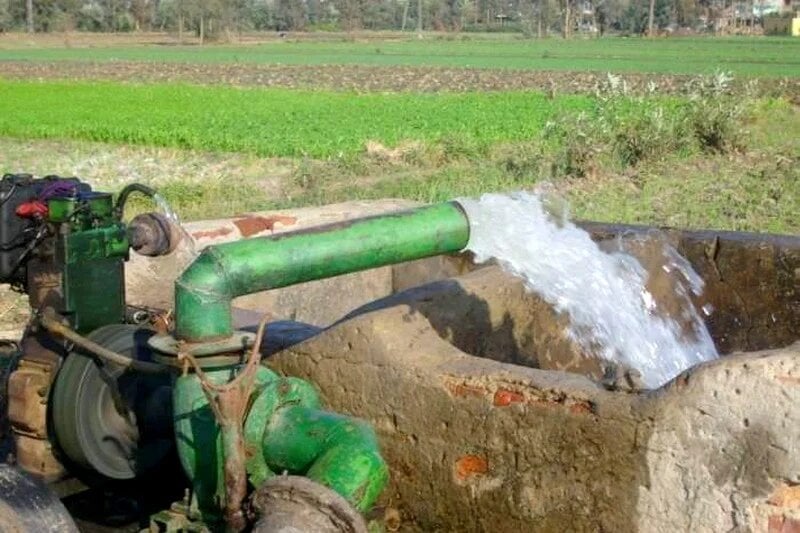
In a report published by the UN-Water jointly with UNESCO to identify the challenges and opportunities related to “the development, management, and governance of groundwater across the world,” scientists recall the importance of groundwater.
The report of 2022 aims to formulate a better understanding regarding the centrality of groundwater on an individual basis, but also across the different sectors.
The report explores the challenges hindering groundwater’s proper exploitation and management, resulting in several recommendations to optimize sustainable usage.
Groundwater, described in the report as an “available yet fragile resource,” makes up to 99% of all liquid fresh water on Earth and provides the majority of rural populations with drinking and irrigation waters.
The document indicates that groundwater presents “tremendous social, economic and environmental benefits and opportunities,” as it is a central resource in fighting food and water insecurity, poverty, climate change, and other imminent socioeconomic constraints.
Moreover, the report noted that about 50% of the world’s urban population is estimated to be supplied from groundwater sources. Still, increasing pollution and overexploitation of aquifers is sewing more worries among communities.
The report also highlights the vitality of groundwater in offering a multitude of services in different sectors. Among these services, groundwater can be withdrawn and used for several human activities, including cultural purposes related to leisure activities, tradition, religion, or spiritual values.
Groundwater also supports services linked to environmental aspects and water security improvement, contributing to fighting climate change.
Groundwater is also a leading resource for irrigated agriculture, livestock farming, and other agricultural purposes. The report stresses that to meet global water and agricultural demands by 2050, it is urgent to consolidate sustainable intensification of groundwater abstraction for agricultural productivity.
In addition, around 50% of the global urban population today is estimated to be dependent on groundwater sources, intensifying the dependency of cities on groundwater.
The industrial sector highly depends on groundwater sources as well. Activities such as power generation, mining, manufacturing, construction, food, and beverage production are all supplied mainly by groundwater sources.
For Subsaharan Africa, the report indicates that the region possesses considerable groundwater resources, estimating its volume to be “more than 100 times that of the annual renewal of the region’s freshwater resources”.
This resource offers vast opportunities to meet the increasing need for water supply for human consumption and support economic stability and growth.
Yet, about 400 million people in Sub-Saharan Africa still do not have access to essential water services.
For the Arab region, groundwater is one of the most vital water sources in up to 11 states. It is one of the regions that suffer the most from water scarcity.
Excessive extraction and overexploitation of groundwater in the region led to the decline of groundwater volumes, “especially in highly populated and agricultural areas,” according to the document.
In the case of Morocco, the kingdom is facing, as noted, increasing water insecurity trends. This phenomenon has contributed to unsustainable groundwater use.
In addition, due to climate change that is decreasing aquifer recharges and surface water availability, “the groundwater table of the Ben Tadla aquifer in Morocco is expected to decrease from between 10 m to more than 25 m under different climate scenarios between 2020 and 2100, leaving some aquifer areas completely dry”, according to The United Nations Economic and Social Commission for West Asia (UNESCWA).
To respond to this imminent problem, the government in 2006 adopted a new approach of managing aquifers by introducing aquifer contracts as a participatory measure to improve “sustainability based on local needs.”
In this framework, different actors, including public institutions, governmental organizations, local stakeholders, and agricultural water users’ associations and research institutions, were granted agreements to explore issues related to groundwater opportunities for improvement.
Traditional knowledge is also applied, including Aflaj, “which are ancient tunnels used to convey water by gravity for irrigation – mostly from groundwater sources,” as indicated in the same report.
Given the importance of groundwater, the report calls for a sound and good knowledge base regarding this resource, which will contribute to efficient decision-making.
However, the document stressed that “this natural resource is often poorly understood, and consequently undervalued, mismanaged and even abused”, which contradicts the necessity to address the needs of “an ever-increasing population, and respond effectively to the global climate and energy crises.”




add your comment
Terms of publication : Not to offend the writer, people, sacred things, or attack religions or the divine self, and refrain from racist incitement and insults.