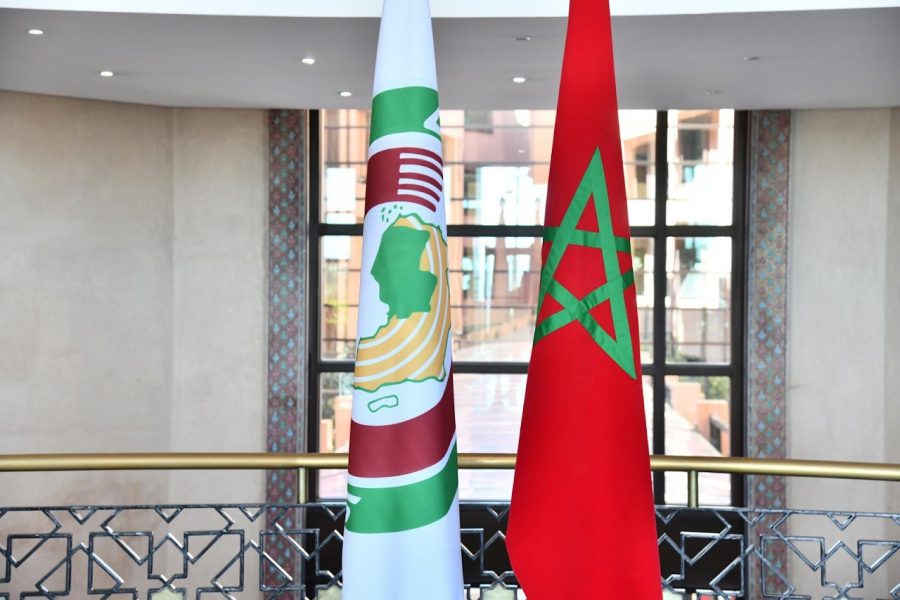
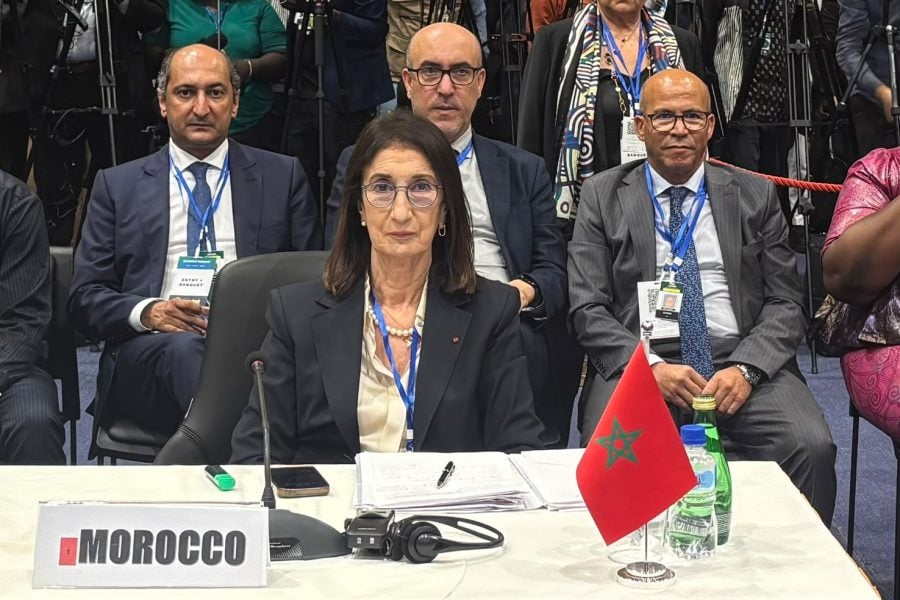
Following its readmission into the African Union, the Kingdom of Morocco formally applied on June 4, 2017, for membership in the Economic Community of West African States (ECOWAS).
During the 51st Summit of ECOAWS held June 2017 in Monrovia, capital of Liberia, heads of states and governments “agreed in principle” to integrate Morocco into the regional economic bloc. However, a complete report on the effects of the Kingdom’s adhesion was to be delivered.
The final decision was expected to be announced at the 2018 summit organized in Abuja, the capital of Nigeria. However, Morocco’s application is still on standby.
Since that date, a long process of discussions, negotiations, and debates regarding the possible adhesion of Morocco in ECOWAS took place on the continental scale.
Considering Morocco’s legitimacy to formulate the demand given its historical, economic, and diplomatic involvements within Sub-Saharan Africa (SSA), the pending application questions the principles of regional integration in Africa.
Morocco within Sub-Saharan Africa
By the provisions of its Establishment Treaty of 1975 and the Revised Treaty of 1993, ECOWAS’, the union concerns countries of West Africa. Thus, Morocco’s demand to integrate the union does not satisfy a geographical criterion defined by the contiguous states of West Africa.
Resolution CM / RES.464 (XXVI) of the Organization of African Union’s Council of Ministers indicates that ‘Region’ in this case concerns the geographical zone of West Africa.
Despite the geographical criterion, the presence of Morocco in the region is not underminable.
Morocco’s economic exchanges with the region have grown over the past years. According to statistics, Morocco’s exports to the rest of Africa reached around 8% of its world exports in 2020.
Around 21.5 billion Moroccan dirhams (MAD) (roughly 2.41 billion U.S. dollars) of products from Morocco were exported to other parts of Africa.
In this respect, many SSA countries demonstrated their interest in Moroccan products ranging from chemical products to seafood.
The primary African markets targeted are Ivory Coast, Djibouti, Nigeria, and Senegal. US$2.2 billion is the value of 2020 intra-Africa exports, and the primary exported goods are fertilizers and prepared or preserved fish.
To illustrate this interest, it is to mention that there is a promising ongoing partnership between Morocco and Nigeria, particularly, among other products, on the Nigeria-Morocco gas pipeline project, agro-businesses, and fertilizers.
Foreign direct investments (FDI) rose significantly as well, indicating an increased stimulation of trade relations.
Figures retrieved from the 2017 African Economic Outlook indicate that Ivory Coast is the largest West African recipient of foreign direct investment from Morocco.
The substantial influx of Moroccan FDI into the region concerned mainly banking, manufacturing, insurance, and telecommunications.
Predictably, the trade balance between Morocco and West Africa recorded a net surplus over time.
Al Maliya, the magazine of the Moroccan Ministry of Economy & Finance, published that trade between Morocco and the rest of African countries has known an average annual growth of 6.1% over the period 2009-2019.
In addition, the diplomatic policy of Morocco in the region underscores the significant role played by the Kingdom in the area.
Morocco’s diplomacy relies on a variety of means to translate the country’s ambitions to integrate economically and diplomatically in the region.
Royal visits are scheduled each year to SSA countries. Visits of delegations of business people, policymakers, and public company managers are also frequently scheduled to discuss various themes.
The aim is to strengthen bilateral and multilateral relations with SSA countries and explore new markets for African companies and investors.
By developing a rich network of strategic allies, including central regional state organizations, and through its religious diplomacy, Morocco establishes significant links with different countries.
A Moroccan diplomatic source explained to Hespress EN that “Morocco has strong historical, religious and diplomatic links with SSA. This dynamic has made the Kingdom one of the most established North African countries in the region, becoming a key player today”.
By intervening as a mediator or participating in peacekeeping operations, Morocco emerged as well as a promotor of peace and security in a region torn by violent conflicts.
Since the last century, Morocco participated in numerous peacekeeping operations, such as in the framework of ONUC (UN mission that lasted from July 1960 to June 1964, in the Republic of Congo) and UNOSOM I (from April 1992 to March 1993 in Somalia).
In Ivory Coast, Morocco has been contributing to the United Nations operation (UNOCI) since April 4, 2004. More recently, in 2013, the FAR (Moroccan Armed Forces) participated in the MUNISMA mission to stabilize Mali.
In addition, Morocco has played a considerable role in responding to terrorist threats to counter Islamic extremism in the region, including by establishing a training center to guide clerics on advocating for moderate Islam.
As such, the Kingdom’s mediation and neutral positions make up Morocco’s reputation as a key actor in negotiation, conflict resolution, diplomacy, and expertise in multilateral relations.
Caution, but not refusal
The reorientation of Moroccan’s foreign policy toward Africa is the result of a long process in which Morocco has considered the benefits of regional integration for the emergence of the continent.
However, despite the country’s contributions to the continent’s development, notably the SSA region, concerns regarding Morocco’s accession rapidly shaped the dialogue.
The same diplomatic source stated to Hespress EN that “The entry of Morocco represents an issue for some ally, and none ally countries. For instance, Nigeria would not appreciate the adhesion of a competitor on the economic level”.
The source added, “Other players express the same concerns. Senegal, the private sector, and private investors fear to be marginalized”.
Regarding the position of the Kingdom in the dialogue regarding its accession to the ECOWAS, the same diplomatic source stated that “Perhaps we did not take enough time to have the countries of SSA by our side. Further negotiations may be key in upholding Morocco’s application”.
ECOWAS membership would grant Morocco tariff-free access for national goods to infuse the vast market, notably dominated by Nigeria, with local products.
Under pressures from civil society actors and the private sector in their countries, some policymakers have expressed concerns about Moroccan competition.
However, some experts deem prolonging the demand’s results is a common practice. A Moroccan specialist of African affairs assured Hespress EN that “There is no declared reluctance. Some countries conducted some studies, but Morocco has also conducted studies prior to demand joining, which is normal”.
On the likely competition between Morocco and some actors of SSA, the expert explained that “Nigeria is the second-largest power in the region. Senegal also plays a significant role, but they are not enemies or against Morocco’s adhesion. Morocco can further cooperate on economic, migration and cultural, religious matters”.
“Nigeria is not against, it is a strategic associate of many African countries, and it has attempted to sustain equilibrium between several North African countries, including between Morocco and Algeria.”
The expert also stated that “On the level of the international scene, there is some skepticism. European countries regard this matter with an evil eye. Morocco is a strategic partner, and it will play a considerable role in regulating markets and controlling migration as it started doing since the significant time”.
On the first day of 2021, some African countries, including Morocco, launched a continental free trade area known as the afCFTA after postponing the project for several months due to the COVID-19 pandemic.
Signed by 44 countries and ratified by 33, the agreement on establishing a free trade area aims to consolidate regional economic integration. Officially, African countries have started trading under the agreement.
Under the agreement, African countries will reduce and eventually eliminate tariffs on 90% of goods traded over five years for the most developed countries (non-LDCs) and over ten years for less developed ones (LDCs).
The integration of Morocco within afCFTA promises mutual economic and political benefits with the African countries, making it challenging to overcome the growing strategic role of Morocco, even by members of the ECOWAS. As such, multilateral discussions are still underway.
February 23, 2022, Morocco’s House of Councilors and the Parliament of the ECOWAS released today a joint document dubbed the “Laayoune Declaration,” stressing the importance of supporting cooperation between the two parties.
The declaration emphasized the significant ties between Morocco and West African countries, arguing that the two parties have a “historical path, based on cultural and civilizational ties and common values of development, solidarity, and mutual respect.”
What next?
Morocco is well aware of the importance of locating a part of its diplomatic, economic, and cultural exchanges within the SSA.
Given the links of the Kingdom with Europe and its geographical location, the country could be the gateway for tripartite cooperation by mobilizing bilateral and multilateral agreements benefiting the African continent on all levels.
Exchanging on how to improve Morocco’s position within the framework of ECOWAS, Hespress EN source specialist in African affairs stressed that “It is important to work on economic integration. The countries should not think only in terms of exporting, but also in terms of joint production”.
The expert added, “It is also important to give chances for small economies and small and medium-sized enterprises (SMEs). For instance, in Coast Ivory, opportunities can be presented for companies in the automotive sector.”
“These companies can produce, and export tires, cables, batteries and so on. Promoting such companies can help expand markets and reach equilibrium on the level of trade balance”.
To this end, Morocco has been working on implementing trade financing mechanisms while promoting the diversification of industrial products.
Large Moroccan groups in various sectors, including finance, industry, real estate, and telecommunications, are present today in different African countries.
West Africa is a target market due to the rapidly growing urbanization of the population in the region. In 2018, Moroccan banks detained a market share of 27.8% in the WAEMU region, for example.
Thus, it is essential to work on different sectors, systematically opening up trade markets, increasing regional production and exports, concluding trade agreements.
To reach this goal, the expert noted that “We have considerable work to do on the level of communication. Not only communication of states, but also with political parties, unions, international organizations, and the civil society with its different components”.
“We should invest huge efforts for communication,” he added.
Emerging as a key player on the continent, Morocco reaffirms by requesting to join ECOWAS its regional ambitions.
The adhesion of Morocco promises, without neglecting challenges, more robust integration within the continent, building competitive regional value chains and promoting inter-sectorial development.



add your comment
Terms of publication : Not to offend the writer, people, sacred things, or attack religions or the divine self, and refrain from racist incitement and insults.