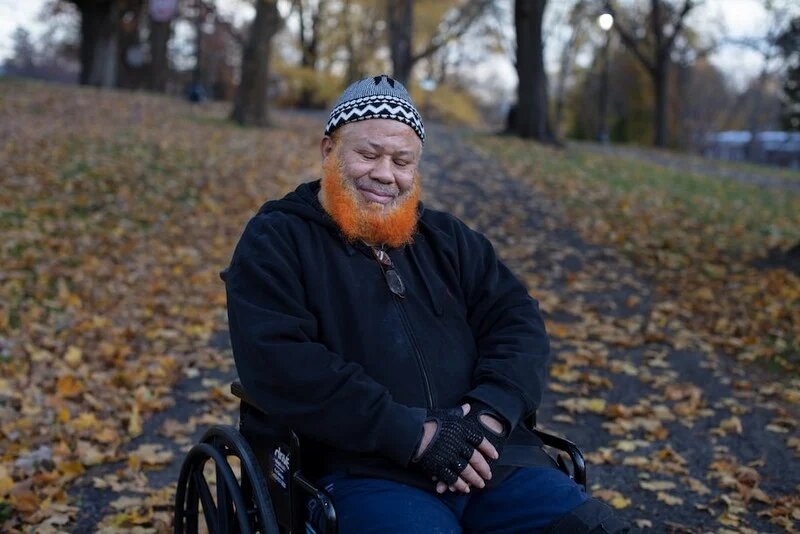
A Moroccan-American bookstore owner in New York, Abdulrahman Farhane is at risk of losing his US citizenship 14 years after he pleaded guilty to conspiracy charges of money laundering to jihadist groups in Afghanistan and Chechnya, and for making false statements in connection with a terrorism investigation.
He already spent 13 years in prison for these charges.
Farhane’s family has long maintained that the case was unjust, saying Farhane, a Moroccan-born naturalized American citizen, as a victim of the US government’s controversial round-up of Muslims after the 9/11 attacks.
As a way of avoiding the risk of an even longer prison sentence, Farhane pleaded guilty to the charges of conspiracy to launder money and lying to FBI agents. His lawyer at the time warned him that no Muslim would get a fair trial.
After serving 11 years in prison, Farhane won early release in 2017, with hopes of his life returning back to normal. Recently, the US Justice Department sent him a letter, informing him that the US government “plans to revoke your US citizenship,” according to the Washington Post.
The same sources stated that Farhane’s former attorney failed to inform him that accepting a guilty plea would jeopardize his citizenship under laws that allow the government to reverse naturalization in some cases. Historically, these punishments have largely been reserved for war criminals – naturalized Americans who have lied about their involvement in atrocities committed during the Nazi era or in the Balkans.
According to an Open Society Justice Initiative report, “Unmaking Americans,” published in 2019, it stated that “measures are now applied almost exclusively to marginalized communities,” aimed at people on the basis of their ethnicity and religion.
“The denaturalization statutes, already heavily flawed, are far too elastic to safeguard the rights of naturalized Americans in the face of this unprecedented and highly problematic new form of targeting,” the report stated.
Following his inauguration, US President Joe Biden issued an executive order on immigration that directed agencies to “review policies and practices regarding denaturalization and passport revocation to ensure that these authorities are not used excessively or inappropriately.”
Immigration analysts say the status of such a review has not been announced since then. The US Justice Department declined to comment on the issue.
To the Farhane family, receiving the letter from the government felt like stepping back into an uncertain and anxious past. Only one of Farhane’s children, 38-year-old Salah, agreed to speak on the record; as the others cited fear of backlash or just wanted to move on.
Farhane’s fate remains in the hands of a federal appeals court, which is weighing his argument of ineffective representation, an attempt to save both his citizenship and that of his children. Depending on the complexity of the case, a ruling could take months or longer.
If Farhane loses the case, he and his family will face another prolonged separation. However, if he wins, there’s another risk – vacating the 2006 guilty plea would allow the US government to prosecute him again, potentially resulting in more prison time.
For Farhane’s family, the complex legal battle revolves around one issue: Farhane is a US citizen who has served his time, so why is the government still pursuing him?
“We’re constantly trying to escape that period,” Salah said, “and they’re constantly trying to drag us back in.”







add your comment
Terms of publication : Not to offend the writer, people, sacred things, or attack religions or the divine self, and refrain from racist incitement and insults.