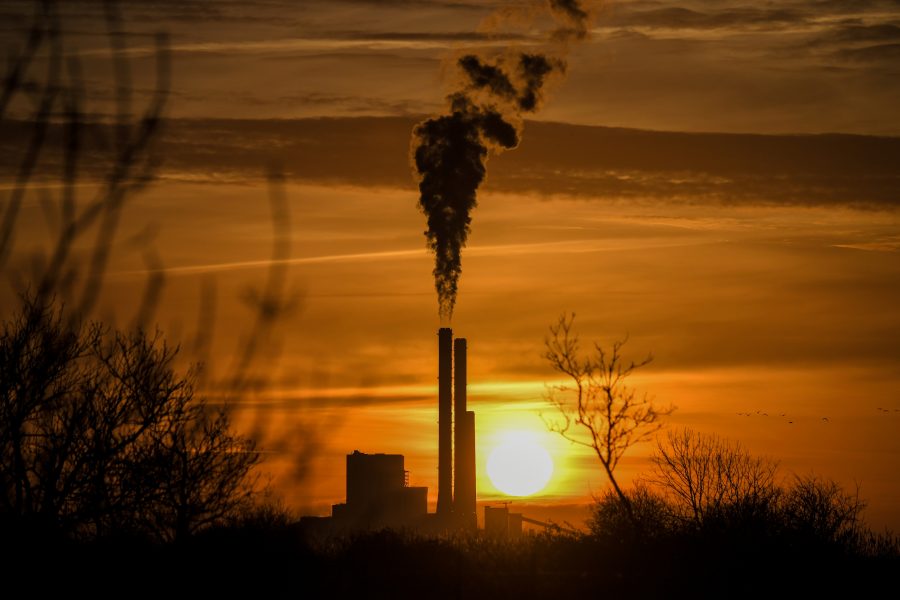
Around 200 countries participated in the UN’s Climate Change Conference 2021 this November in Glasgow.
The conference resulted in a list of “unprecedented” agreements, aiming to curb the effects of manmade global warming and climate change.
Once again, COP26’s outcomes are now coming under scrutiny by various environmentalists and climate activists, for its failure to establish efficient mechanisms to enforce the agreements.
The final agreement, signed on Saturday, November 13, hopes to accelerate the fight against global warming, but fails to ensure the achievement of the global goal of containing global temperatures at 1.5 degrees Celsius, and does not address the challenges poor countries face in their implementation phase.
Secretary-General of the United Nations, António Guterres, pointed to the weaknesses of the “Glasgow Charter,” warning that “the climate catastrophe is still at the door” and that “political will” has failed to overcome “contradictions” between countries.
The text was approved after two weeks of painstaking negotiations, due to last-minute amendments being made at the unrelenting demand of both China and India, pertaining to fossil fuels.
Before the final last-minute consensus, President of the British Congress, Alok Sharma, expressed his “deep regret” for this unexpected outcome. He had previously estimated that the agreement “announces a decade of increased ambition” in the climate field.
The finalized agreement calls on member states to fulfill their commitments by systematically reducing carbon dioxide emissions as stipulated in the 2016 Marrakesh Agreement and the 2015 Paris agreement. However, the possibility of adjustments “for specific national conditions” is a point that has drawn criticism from many climate NGOs.
As experts gather, “every tenth of a degree is important in terms of waste,” especially with regard to the increase in climate-related disasters, where phenomena such as floods, droughts or heat waves are actually increasing, with significant damage and casualties.
The final text was watered down before it was adopted in plenary, at the insistence of China and India.
The final version calls for “intensifying efforts towards reducing CO2 emissions and phasing out inefficient fossil fuel subsidies.”
Again, there is a reference to “special national circumstances” in which the representative of Liechtenstein bitterly regretted and accepted “for the common good,” a position that summarized many of the interventions made by other delegates.
Another area of concern that remains unaddressed is the lack of insurance, that poor country will, in fact, receive an increase in their climate aid, previously set at $100 billion annually from 2020 onwards.
Smaller economies, being the least responsible for global warming, are on the front line in terms of bearing its effects, and have requested increased financing for the “losses and damages” they are already experiencing.
Developed economies, led by the United States, were adamantly opposed to the request, in fear of possible future legal action.
Prime Minister of the host country, Boris Johnson, who traveled twice to Glasgow in an attempt to facilitate discussions, considered this outcome a “big step forward,” pending continued and full engagement of all parties.
As for the US envoy, John Kerry, he commented optimistically, saying “the Glasgow summit constitutes an important stage, not the finish line.”







add your comment
Terms of publication : Not to offend the writer, people, sacred things, or attack religions or the divine self, and refrain from racist incitement and insults.