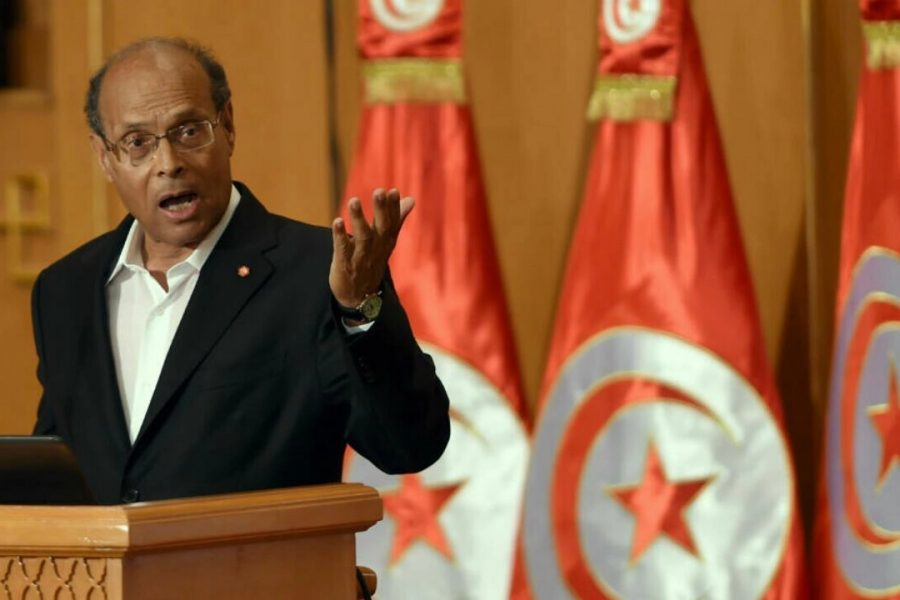
Tunisia’s President Kais Saied has said he will withdraw the diplomatic passport of Moncef Marzouki, one of his predecessors, after the latter urged France to end its support for Tunisia under Saied’s leadership.
Last week, in a speech widely shared online, France-based Marzouki called on the French authorities “not to help the dictatorial regime in Tunisia.”
“The French government should reject any support for this regime and this man who has plotted against the revolution and abolished the constitution,” Marzouki said addressing anti-Saied demonstrators in Paris on Saturday.
Saied on Thursday asked the justice minister to open an investigation into allegations that Marzouki had conspired against state security.
“I will withdraw his diplomatic passport because he is among the enemies of Tunisia,” Saied said, referring to Marzouki, but without naming him. “He cannot use this privilege to visit capitals and damage Tunisian interests, he added, “some have used refuge abroad to attack Tunisian interests.”
Saied was under strong international pressure to reveal a clear road map for a return to constitutional politics after sacking the previous prime minister, suspending parliament and assuming executive power, in July, in moves his foes call a coup.
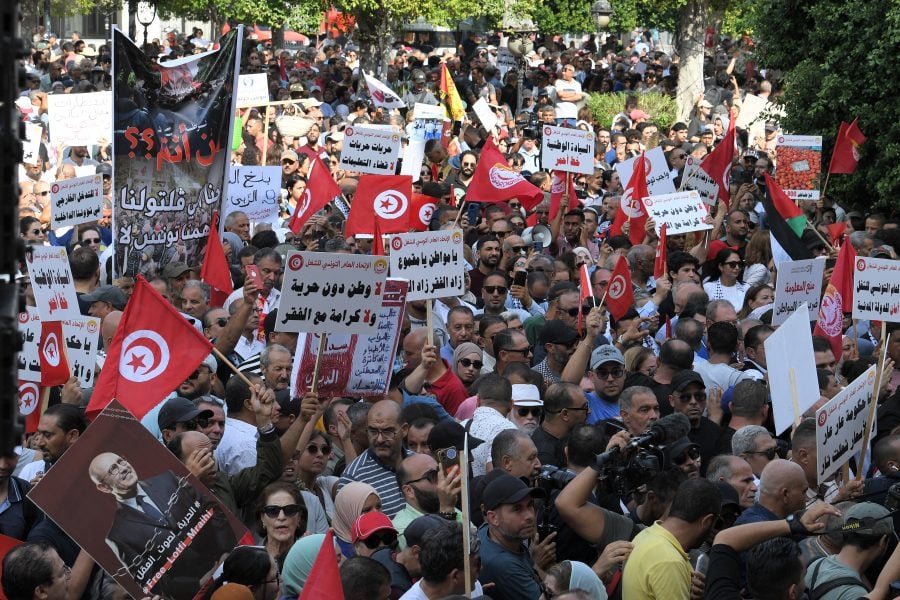
The Tunisian president unveiled a new government on Monday, but the political scene is still blurry in the North African country as the popular and the political outrage against Saied remains.
A presidency statement said he had informed the United States ambassador of Tunisia’s “dissatisfaction” that the House Foreign Affairs Committee was due to discuss Tunisia at a hearing called “Examining the State of Democracy and Next Steps for U.S. Policy”.
The US has been important to Tunisia since its 2011 revolution in providing security assistance and working with other major donors to support public finances.
Along with other members of the G7 group of advanced economies, U.S has urged Saied to return to the democracy road in which an elected parliament plays a main role.
Saied’s intervention has cast into doubt the democratic gains made by Tunisians during the Jasmine revolution that triggered the Arab Spring uprisings since 2011.





add your comment
Terms of publication : Not to offend the writer, people, sacred things, or attack religions or the divine self, and refrain from racist incitement and insults.