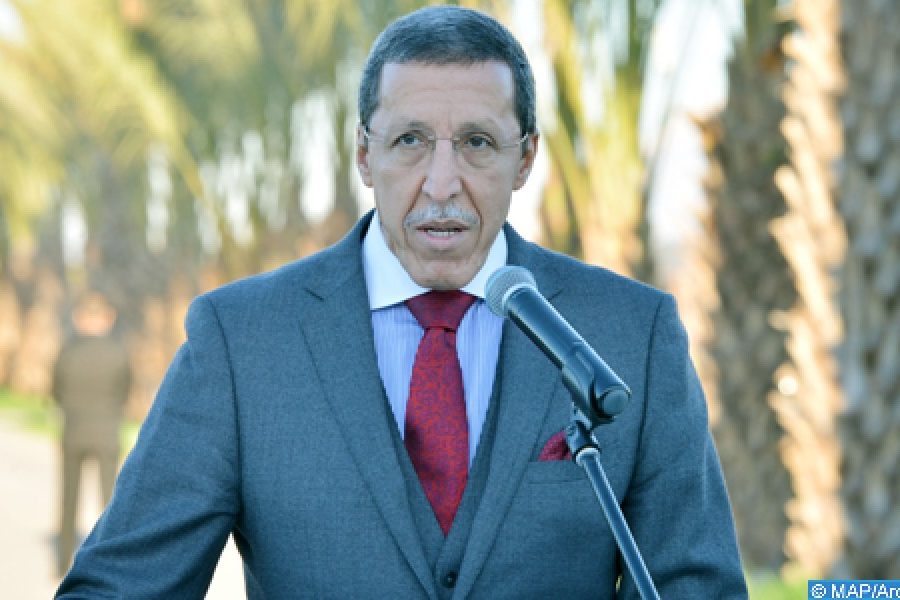
The Permanent Mission of Morocco to the UN in New York organized, on Wednesday, jointly with the United Nations Alliance of Civilizations (UNAOC), the UN Office on Genocide Prevention and the Responsibility to Protect (OSAPG) and the Office of the High Commissioner for Human Rights (OHCHR), a side event on the implementation of the Global Pledge for Action by Religious Actors and Faith-Based Organizations to Address the COVID-19 Pandemic.
This meeting, which is being held on the sidelines of the United Nations High-level Political Forum, took place following the virtual high-level meeting organized by the Kingdom on May 12, 2020 on the role of religious leaders in meeting the challenges of the pandemic of COVID-19, which was marked in particular by the participation of the Secretary-General of the United Nations, Antonio Guterres, the President of the General Assembly and high-profile religious leaders and officials representing the three monotheistic religions.
The event is also in line with the Secretary-General’s request made to Morocco to collaborate more with his Special Adviser on the Prevention of Genocide and with the High Representative of the United Nations Alliance of Civilizations to advance the UN initiative to focus on “a very important aspect of the common fight against the pandemic, namely the role of religious leaders to join their efforts to strengthen solidarity and multilateralism in the face of the pandemic”.
The meeting was marked by the participation of the Ambassador, Permanent Representative of Morocco to the UN, Omar Hilale, the High Representative for the UN Alliance of Civilizations (UNAOC), Miguel Angel Moratinos, UN Special Adviser on the Prevention of Genocide, Alice Wairimu Nderitu, UN High Commissioner for Human Rights, Michelle Bachelet, and representatives of several faith-based organizations.
In his opening address, Hilale highlighted the role of Morocco, under the enlightened leadership of His Majesty King Mohammed VI, as an essential international and regional actor in the promotion of interreligious and intercultural dialogue and the reinforcement of the values of peace, tolerance, human dignity and mutual respect, while stressing that the holding of this meeting is in line with the initiatives taken by Morocco, in accordance with the High Royal Instructions, to shed light on the contribution of religious leaders to promote peace, solidarity, unity and social cohesion and to combat hate speech.
The ambassador reiterated Morocco’s full support for the leadership of the UN Secretary-General who has empowered the United Nations system to respond effectively to the political, social, economic, environmental, humanitarian and human repercussions triggered by the COVID-19 pandemic.
Hilale underlined the urgency to advance and strengthen the ongoing actions of the United Nations system to stimulate action-oriented activities to address the numerous challenges posed by the COVID-19 pandemic.
The diplomat pointed out that religious leaders play a key role in preserving human brotherhood and making societies more inclusive, secure, resilient and united, particularly in this critical phase facing the international community.
Hilale, who stressed in this regard, the central role of religious leaders, said they are the main source of support, comfort, guidance and social service for the societies and communities they serve.
“They can raise international consciousness and collective responsibility not only to fight against this pandemic, but also to fight against hate speech, discrimination and misinformation,” he added.
He also noted that the power and wisdom of religious leaders go beyond mosques, churches and synagogues to reach out to the whole world. “Their messages are not only spiritual. They have, indeed, a universal force because they echo the existential expectations of the citizens of the world, in particular their legitimate needs for peace, security, development, prosperity, respect for human dignity and promotion of human rights,” he concluded.
For his part, the High Representative of the Alliance of Civilizations, Miguel Angel Moratinos, commended the role played by Morocco in encouraging the United Nations to reflect with religious leaders “on our collective responsibility and our respective roles to meet the multifaceted challenges of the pandemic”.
Referring to the challenges posed by the pandemic, Moratinos noted that over time, the world is only beginning to understand “the complex implications and ramifications” of this health crisis. Therefore, the role of religious leaders and faith-based organizations remains “more crucial than ever and the issues identified in the global engagement continue to play a central role in the multifaceted response that is needed to emerge from the pandemic stronger and more united”, he noted.
For her part, the Special Advisor to the UN Secretary General for the Prevention of Genocide, Alice Wairimu Nderitu, welcomed the Moroccan leadership in promoting a culture of peace as well as its efforts on the international scene to fight against hate speech.
Nderitu noted that the Covid-19 recovery plans provide “a valuable opportunity to better rebuild and place the protection of vulnerable groups at the center of sustainable development”.
“In my capacity as the UN Special Adviser on the Prevention of Genocide, I am determined to work with religious leaders to combat hate speech, in accordance with the United Nations Strategy and Plan of Action on Hate Speech and the Plan of Action for Religious Leaders to Prevent Incitement to Violence that Could Lead to Atrocity Crimes (the Fez Plan),” she said.
The United Nations High Commissioner for Human Rights, Michelle Bachelet, expressed the hope that this commitment to global action on the role of religious leaders will be the start of a sustainable partnership structure between religious actors and the United Nations.
“Together, we can advance the rights and dignity of people everywhere,” she said in a pre-recorded statement sent to the participants in the meeting.




add your comment
Terms of publication : Not to offend the writer, people, sacred things, or attack religions or the divine self, and refrain from racist incitement and insults.