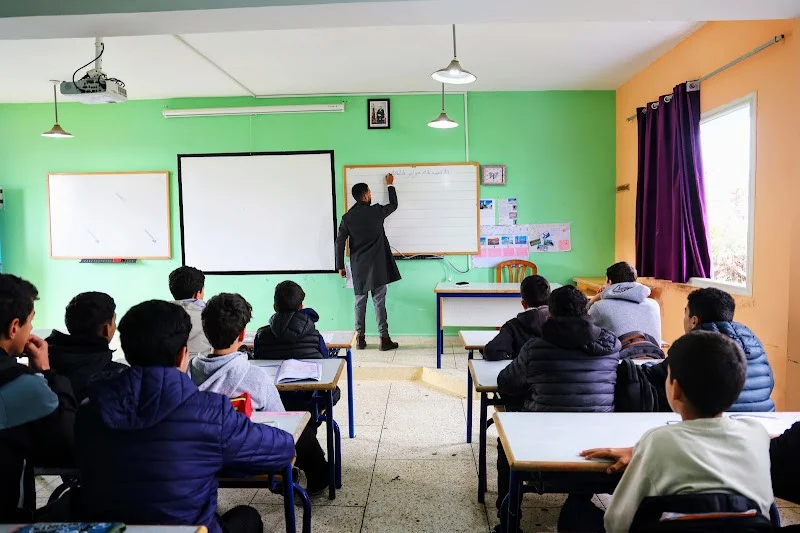
Morocco has dropped five places in the 2026 Global Knowledge Index, ranking 94th out of 155 countries, down from 89th last year, despite improving its overall score by more than five points.
The index, published in its 10th edition by the Mohammed bin Rashid Al Maktoum Knowledge Foundation and the United Nations Development Programme (UNDP), assesses countries across several dimensions related to knowledge, education, research, innovation and the broader economic and institutional environment.
Switzerland topped the global ranking with 69.8 points, followed by Singapore, Sweden, Denmark and Norway. The Democratic Republic of the Congo, Burundi and Chad occupied the bottom three positions, scoring 22.6 points and 20 points, respectively, according to the report.
Morocco recorded mixed results across the index’s sub-indicators. Its ranking improved by 10 places in technical and vocational education and higher education, and by three places in research, development and innovation compared with the previous edition.
However, the country fell 10 places in the environment, government and society indicator, as well as in the indicators covering pre-university education and the economy.
The report warned that countries face increasingly complex crises that can undermine development gains, noting that recent years had brought pandemics, wars, disruptions to trade routes and climate-related disasters.
“In 2026, the escalation in the Middle East forced schools to shift to remote learning within days, putting at risk an entire year of human development gains across a region,” the report said.
It also highlighted significant differences between countries in their ability to anticipate, withstand and recover from crises. While some managed to absorb shocks and emerge stronger, others suffered setbacks that could take years to reverse.
The report stressed that knowledge-related capabilities take considerable time to build but can be rapidly eroded. Pre-university education provides the foundations that technical and vocational training and higher education subsequently develop into specialized skills.
Across both stages, high-income countries recorded scores between 1.6 and 1.7 times higher than those of low-income countries, it said.
The report also pointed to the concentration of knowledge-production capabilities, describing research, development and innovation as the most unequal of the Global Knowledge Index’s six dimensions.
Capabilities required to develop artificial intelligence are even more concentrated, it added, noting that both AI readiness and its actual adoption are closely linked to the strength of countries’ wider knowledge ecosystems.
For most countries, the report argued, the most important capabilities lie in absorbing knowledge developed elsewhere, adapting it and putting it into practice.
“Where economies cannot absorb skills, graduates migrate, research findings remain unused in practical applications, and digital infrastructure is not fully utilized,” the report said, adding that the structure of an economy largely determines whether knowledge translates into tangible development outcomes.
Presenting the 10th edition of the index, Jamal bin Huwaireb, executive director of the Mohammed bin Rashid Al Maktoum Knowledge Foundation, said this year’s ranking came at a time of profound global changes reshaping economies, societies and patterns of production and work.
Knowledge, he said, was no longer merely a supporting factor in progress but had become a strategic asset and a major source of competitiveness, shaping countries’ ability to adapt to change and turn challenges into opportunities for growth and innovation.
Bin Huwaireb described the index as an objective and comprehensive assessment intended to help policymakers identify priorities and direct policies and investment toward a more sustainable and prosperous future.
He said the index also tracks rapid developments in advanced technology and artificial intelligence by focusing on the foundations of future readiness, particularly education, research and development, information and communications technology infrastructure, and governance.
Technological progress, he added, should not be measured solely by access to tools, but by societies’ ability to use them responsibly to increase productivity, improve quality of life and generate added value for the economy and society.







add your comment
Terms of publication : Not to offend the writer, people, sacred things, or attack religions or the divine self, and refrain from racist incitement and insults.