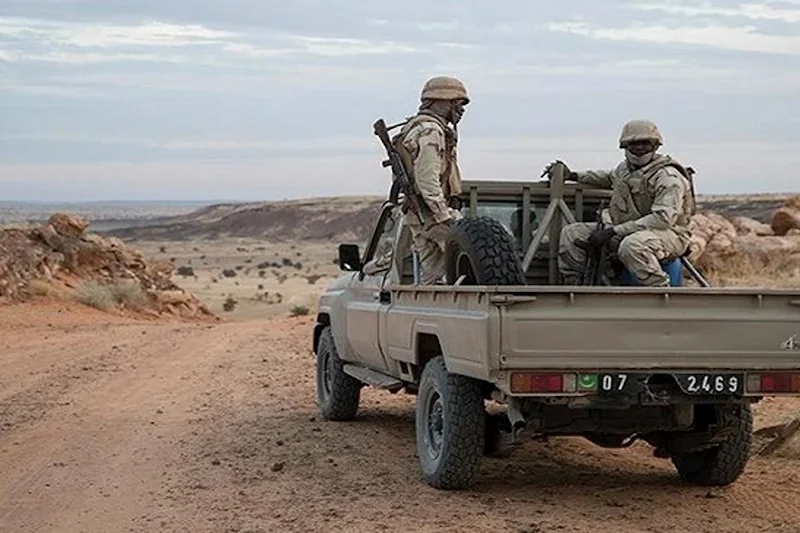
Mauritania’s government has denied claims that its military apologized to the Polisario Front after detaining armed members of the group who reportedly entered Mauritanian territory, reigniting debate over Nouakchott’s response to the movement’s military activities near its borders and the limits of what it considers acceptable in matters of national sovereignty and security.
The government’s denial sought to counter claims circulated by media platforms affiliated with the Polisario Front, which alleged that Mauritania’s army chief had apologized to the group’s leadership and described the military intervention as an individual action by some soldiers.
Mauritanian government spokesperson Mohamed Ould Bebana said the armed forces are responsible for securing the country and protecting its territory, adding that there could be no apology for measures taken as part of that duty.
The official also questioned the accuracy of much of the information circulating about the alleged incident, stressing that reports published by media platforms do not carry official status and do not necessarily reflect the position of the state.
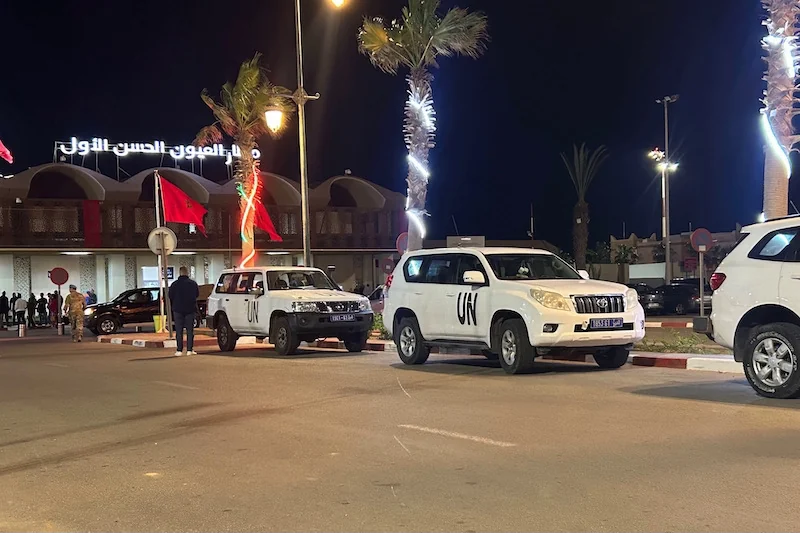
The clarification comes against the backdrop of the expiration of the United Nations Mission for the Referendum in the Sahara (MINURSO)’s mandate on October 31, 2026, and the subsequent arrangements surrounding the end of its operations and the withdrawal of its personnel and military observers.
The development also raises questions about the responsibility of countries in the region for securing their borders, amid changes in the Sahara dispute and heightened sensitivity surrounding military movements in areas close to national frontiers.
Mauritania’s official denial also sheds light on Nouakchott’s approach to the Sahara dispute, which has generally been characterized by diplomatic restraint and an effort to avoid taking sides in the dispute, while maintaining its right to protect its territorial sovereignty and prevent its territory from becoming a staging ground for armed movements outside legal and security frameworks.
Against this backdrop, Mauritanian and Moroccan observers have examined the political and security implications of the government spokesperson’s remarks, their significance for Nouakchott’s position in the period following MINURSO’s departure, and the balance Mauritania seeks to maintain between regional neutrality and the protection of its national security.
A calculated departure from silence
Sheikh Ahmed Amin, a Mauritanian journalist specializing in Maghreb affairs, said the government spokesperson’s remarks on reports that the Mauritanian army had apologized to the Polisario Front reflected the continuation of a longstanding diplomatic approach to the Sahara dispute. He described this approach as one based on carefully calibrated statements, distinguishing between occasions that require clarification and the restraint demanded by the sensitivity of the issue.
Speaking to Hespress, Amin said successive Mauritanian governments, since the overthrow of President Moktar Ould Daddah in 1978, had approached the dispute with calculated caution, recognizing its implications for the country’s security and regional relations.
Given its geographical position and historical experience, he said, Mauritania was well aware of the limits of official rhetoric and what could be publicly stated about the dispute.
Amin said what distinguished the latest statement was that it went beyond the usual level of diplomatic reserve to offer an explicit, direct, if brief, rebuttal of the account circulated by media platforms affiliated with the Polisario Front concerning an alleged apology by the Mauritanian army to the group’s leadership.
The significance of the statement, he argued, lay not only in its content but also in its timing and in the parties whose narrative it sought to counter.
Referring to bilateral relations between Mauritania and Morocco, Amin said Nouakchott’s approach to the Western Sahara dispute required it to strike a careful balance between diplomatic restraint and the protection of its sovereignty and state institutions.
The fact that Mauritanian authorities had previously refrained from engaging in media disputes, he added, should not be interpreted as acceptance of circulating accounts or an inability to respond to them.
He stressed that Nouakchott’s decision to avoid media confrontations did not mean it would remain silent when reports attributed positions or actions to its institutions that could undermine the country’s sovereignty and national standing.
“The government spokesperson’s statement clearly put an end to the story of an apology, while reaffirming the armed forces’ right to protect national territory,” Amin said.
He also drew attention to what the government statement included and what it deliberately left unaddressed. The spokesperson confined himself to rejecting the circulating account and affirming the army’s responsibility for securing the country, without disclosing details of the incident or becoming embroiled in a political and media dispute that might not serve Mauritania’s interests.
This, Amin said, reflected “Nouakchott’s determination to keep its official messaging under control on matters related to national security.”
The Mauritanian political analyst said the core of the country’s approach to the Western Sahara dispute rested on a careful calculation of when the state should speak, what it should say and where its public statements should stop.
The diplomatic restraint that had characterized successive governments, he added, did not mean relinquishing Mauritania’s right to challenge inaccurate reports or allowing narratives to circulate unchecked until their repeated publication made them appear factual to the public.
Amin concluded that the latest rebuttal served as a reminder that Mauritania’s diplomatic reserve did not amount to absolute silence, particularly when claims concerned the positions of state institutions. Leaving such allegations unanswered, he said, could damage the country’s image and undermine the standing of its institutions.
Sovereignty and border security
Sheikh Boussaid, a public law researcher specializing in the Western Sahara dispute, said Mauritania’s denial that its army had apologized to the Polisario Front was particularly significant because of its timing and the regional context in which it was issued.
He pointed in particular to its coincidence with the expiration of MINURSO’s mandate and the beginning of arrangements linked to the end of the mission’s operations, arguing that the government’s position reflected Nouakchott’s commitment to national sovereignty and its responsibility to protect its territory and borders.
Speaking to Hespress, Boussaid said government spokesperson Mohamed Ould Bebana had put an end to the account circulated by media platforms affiliated with the Polisario Front concerning an alleged apology by Mauritania’s army chief to the group’s leadership.
The spokesperson had stressed that the armed forces were responsible for securing the country and protecting its borders, and that there could be no apology for measures taken in the performance of that duty.
The clarification, Boussaid said, amounted to an official rejection of attempts to portray security measures taken to protect Mauritanian territory as actions requiring an apology.
The researcher identified three main dimensions to the government’s statement. The first was its reaffirmation of Mauritania’s right to secure its borders. The second was its emphasis that much of the information circulating about the incident was inaccurate. The third was its distinction between the state’s official positions and reports published by media platforms.
He noted that Ould Bebana had said he was unaware of any specific incident, while warning that the circulation of claims in the media did not make them official or representative of the government’s position.
Boussaid said the statement took on added significance amid developments in the Western Sahara dispute, particularly following the expiration of MINURSO’s mandate on October 31, 2026, and the arrangements associated with the end of its operations.
The departure of UN military observers, he argued, increased the responsibility of countries in the region to manage security challenges along their borders and called for greater caution regarding armed movements that could trigger regional tensions.
“ Mauritania wants to make clear that it is a sovereign state and that protecting its borders is a national responsibility carried out by its competent institutions, requiring neither justification nor apology,” he said.
Nouakchott was also keen to preserve its position as a neighboring state without being drawn into political or military alignments in the Western Sahara dispute, Boussaid added. An apology of the kind described in the circulating accounts could have been interpreted as a political position extending beyond the security handling of the incident.
The researcher also referred to media reports alleging that a Mauritanian army unit had detained a group of armed Polisario members after they entered Mauritanian territory, disarmed them and seized their vehicles and equipment.
Such reports, he said, highlighted the sensitivity of monitoring armed movements in border areas, particularly at a time of regional uncertainty and changes to UN monitoring arrangements.
“Any security incident in these areas could have consequences extending beyond the immediate circumstances if it is not handled with prudence and responsibility,” he said.
Boussaid added that the government’s denial also sent a message to the parties concerned that Mauritania would not allow its territory to become an arena for settling scores or using armed movements in political and media disputes.
Attempts to portray the reported incident as misconduct by individual soldiers warranting an official apology, he said, had been met with a government clarification reaffirming that protecting the country was among the armed forces’ core responsibilities.
He concluded that the post-MINURSO period required countries in the region to combine firmness in protecting national sovereignty with prudence in managing security and political disagreements, while remaining committed to diplomatic and peaceful channels to prevent escalation.
The latest Mauritanian position, he said, reflected Nouakchott’s desire to assert its responsibility for border security without abandoning the cautious and restrained policy that has characterized its approach to the Western Sahara dispute.



add your comment
Terms of publication : Not to offend the writer, people, sacred things, or attack religions or the divine self, and refrain from racist incitement and insults.