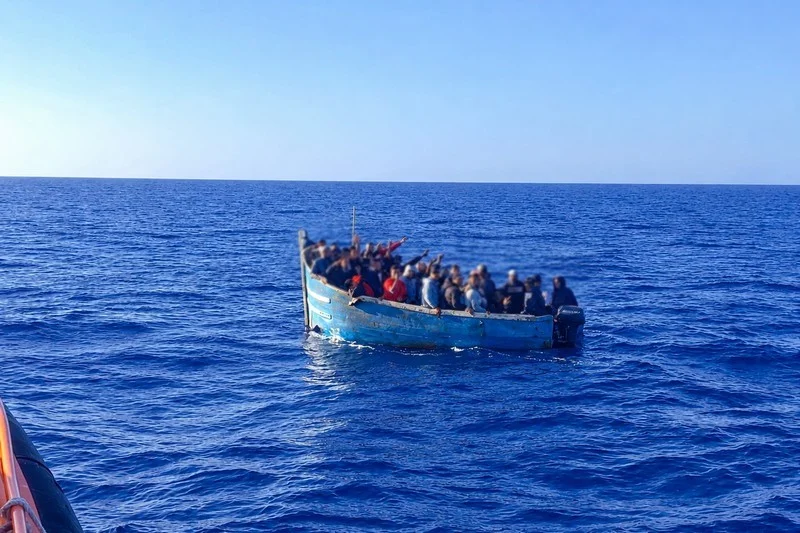
More than 1,900 migrants reached Spain’s Canary Islands aboard 14 boats from West Africa on Tuesday, setting a daily record for arrivals along the Atlantic route and placing renewed pressure on reception facilities already struggling with weeks of sustained crossings.
The boats arrived at La Restinga, a small port on El Hierro, where maritime rescue crews spent much of November 24 escorting vessels to shore and transferring passengers for medical assessment and registration.
An earlier count by Spanish news agency EFE recorded 1,282 arrivals aboard eight boats, including 119 women and 71 minors. The total continued rising through the day as rescue operations brought additional vessels into port.
The crossings followed the arrival of another 815 people on Monday, when eight boats reached El Hierro and neighboring Tenerife. Several vessels had departed from Senegal and Gambia, with passengers also originating from Guinea-Bissau and other West African countries.
One woman was hospitalized after suffering severe hypothermia, while rescue teams located some boats more than 100 kilometers from the archipelago.
The sudden concentration of arrivals has placed particular strain on El Hierro, an island of approximately 12,000 residents that has received around 11,000 migrants during November alone, according to Spanish public broadcaster RTVE.
The latest crossings coincided with a meeting in Madrid between Canary Islands President Fernando Clavijo and central government officials over migration management, particularly the transfer of unaccompanied minors to other Spanish regions.
Clavijo renewed calls for stronger cooperation with Senegal and Gambia, expanded maritime surveillance and greater involvement by the European border agency Frontex. He also criticized the limited willingness of other Spanish regions to share responsibility for accommodating minors.
The dispute reflects a wider difficulty facing the archipelago. Adults can be transferred to mainland reception facilities, but the care of unaccompanied children requires coordination between regional authorities, a process that has repeatedly generated political disagreement.
The Atlantic route remains one of the most dangerous passages into Europe. UN refugee agency figures cited by Spanish media indicate that hundreds of people have died or disappeared attempting the crossing this year, with the actual toll difficult to establish.






add your comment
Terms of publication : Not to offend the writer, people, sacred things, or attack religions or the divine self, and refrain from racist incitement and insults.