
Juan Jesús Vivas, president of the government of Ceuta, has brought Morocco’s participation in hosting the 2030 FIFA World Cup into a political dispute over migration incidents in the Spanish enclave last July, questioning the kingdom’s ability to co-host the tournament with Spain and Portugal.
In an interview published Sunday by Spanish newspaper El Debate, Vivas said he did not believe the World Cup could be organized with Morocco following events in Ceuta on July 30 and 31. He based his position on his account of a large-scale migration crossing and accused the government of Spanish Prime Minister Pedro Sánchez of abandoning the enclave during the crisis.
Vivas, a member of the conservative People’s Party (PP), also criticized Madrid’s approach to relations with Rabat, arguing that the Spanish government had prioritized maintaining ties with Morocco over addressing security concerns raised by Ceuta’s authorities.
His remarks come ahead of Spain’s Nov. 29 general election, in which the PP, led by Alberto Núñez Feijóo, is seeking to unseat the governing Socialists. Migration, security and housing have featured prominently in the campaign.
World Cup hosting drawn into migration debate
Asked by El Debate whether Spain could organize the tournament with a country that, in his account, had failed to prevent 100,000 people from moving toward the border of one of the host countries, Vivas said he did not think it was possible.
“That is my humble opinion, and I say it clearly: I believe it is not possible,” he said, while stressing that his remarks reflected his personal position and did not represent the official stance of the PP.
Vivas said Spain wanted to maintain good relations with Morocco, pointing to the historical and cultural ties between the two countries. However, he argued that such relations required mutual willingness and respect for Spain and Europe, accusing Morocco of failing to demonstrate the necessary commitment to cooperation.
Morocco, Spain and Portugal are jointly preparing to host the 2030 World Cup. Vivas did not announce any formal initiative to reconsider the hosting arrangements, and explicitly distanced his comments from his party’s official position.
Instead, he used the interview to link his criticism of Morocco’s handling of the July migration events to the kingdom’s role in the international sporting event.
Allegations over July border crossings
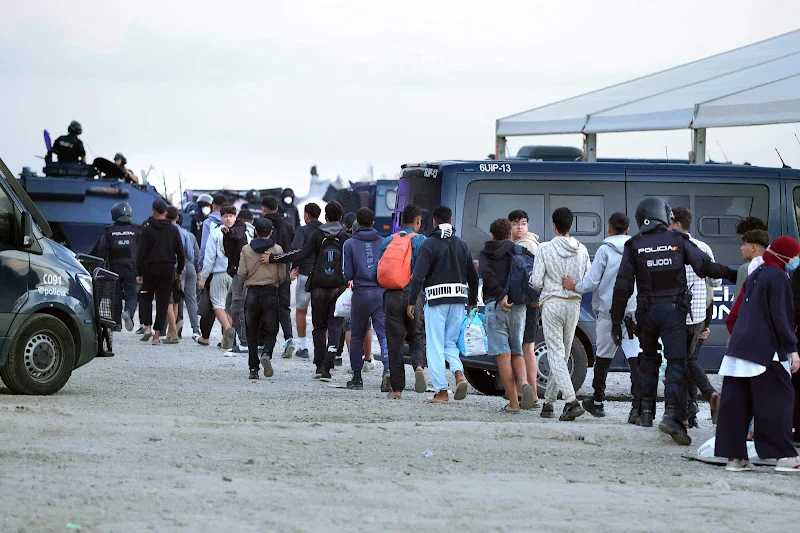
Vivas accused Morocco of facilitating mass crossings into Ceuta on July 30 and 31, arguing that migrant-smuggling networks could not independently mobilize the numbers he cited within a 48-hour period.
He claimed that around 100,000 people entered the enclave over the two days, attributing the figure to Spanish security reports. He argued that the scale of the movements suggested they could not have been organized solely by smuggling networks.
Asked about alleged communications between members of Moroccan security forces and groups linked to the crossings, Vivas said: “What further evidence is needed to prove that Morocco encouraged this invasion?”
He alleged that Moroccan authorities and security personnel had directed people toward the border during the two days, and said the movements had been prepared from Moroccan territory. He acknowledged, however, that determining responsibility was a matter for the ongoing investigation by Spain’s National Court.
Vivas also compared the July events with the May 2021 migration crisis, when Madrid summoned Morocco’s ambassador to seek explanations. He argued that Spain had since shifted its approach, moving from treating Morocco as a potential source of threats to regarding it as a key partner.
He criticized what he described as the consequences of that shift for Madrid’s response to the latest crisis, calling for stronger border controls and questioning why border infrastructure had not been reinforced since 2021 despite warnings from local authorities.
Vivas also cited 141 deaths during the July crossings, according to figures he gave in the interview, and suggested the toll could rise because some people remained unaccounted for. The newspaper did not provide independent documentation for the figure.
He said the events had placed pressure on Ceuta’s health services, public facilities and economic activity, arguing that the enclave had yet to return to normal more than three months later.
Vivas accuses Sánchez government of ignoring warnings
Vivas directed much of his criticism at Sánchez, accusing the central government of failing to respond to warnings from Ceuta’s authorities in the days before the crossings.
He said around 1,500 people had entered the enclave by sea during the 10 days preceding the crisis, prompting local officials to request additional security forces, military deployment, unified command and the activation of measures under Spain’s National Security Law.
According to Vivas, those requests were not met. He said central government officials had treated the warnings as part of the usual seasonal migration movements, despite local authorities’ concerns about the rising number of arrivals.
He recounted contacting the prime minister’s office on July 30, saying he had requested a conversation with Sánchez at around 11 a.m. and was initially told that the relevant ministries were monitoring the situation. He later spoke directly with the prime minister that afternoon and warned him of the seriousness of developments.
Sánchez, according to Vivas, said during the call that he intended to visit Ceuta the following day. The local leader argued that the visit did not lead to the measures the enclave had expected, particularly the return of people who had entered irregularly.
Vivas also accused the central government of failing to deliver on commitments made during Sánchez’s July 31 visit. He said authorities had initially discussed returning arrivals within hours or days, but the consequences of the crisis had continued for months.
On unaccompanied minors, Vivas said decisions on their return and legal status fell under the responsibility of the Spanish state, while Ceuta’s government lacked independent powers over border management, foreign policy and immigration legislation.
He accused Sánchez of shifting responsibility for the situation onto local authorities, despite the central administration’s role in decisions concerning the minors’ residence and return. He said the issue required coordination among Spanish institutions and the relevant authorities.
Vivas further criticized what he described as a lack of direct communication with the prime minister in the months following the crisis. He said their contact had been limited to remote meetings of the National Security Committee, without a separate opportunity to discuss the enclave’s situation.
He called for the judicial investigation to establish what happened and clarify the decisions taken by the relevant institutions before and during the events.
The remarks come as the PP intensifies its election campaign, making migration and security central themes, while Sánchez has defended cooperation with countries of origin and transit, including Morocco, as part of efforts to combat migrant-smuggling networks.
Vivas reiterated his calls for stronger border controls and accountability over the July events, extending his criticism to Spain’s relations with Morocco and the two countries’ preparations to co-host the 2030 World Cup.



add your comment
Terms of publication : Not to offend the writer, people, sacred things, or attack religions or the divine self, and refrain from racist incitement and insults.