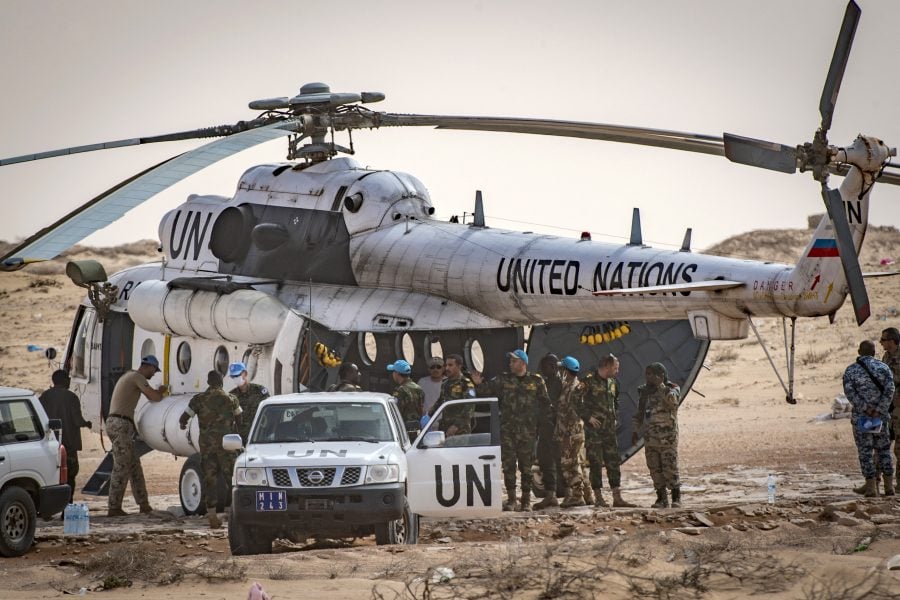
For more than three decades, MINURSO has been in the Moroccan Sahara, with millions of dollars spent on the mission every year, yet it has failed to achieve its main objective.
Experts say the mission has become more of a barrier to progress than a facilitator of peace, doing little to address terrorism, trafficking, and regional instability, including the growing threat from extremist groups, Iranian and Russian influence, and the diversion of aid in Algeria’s Tindouf camps.
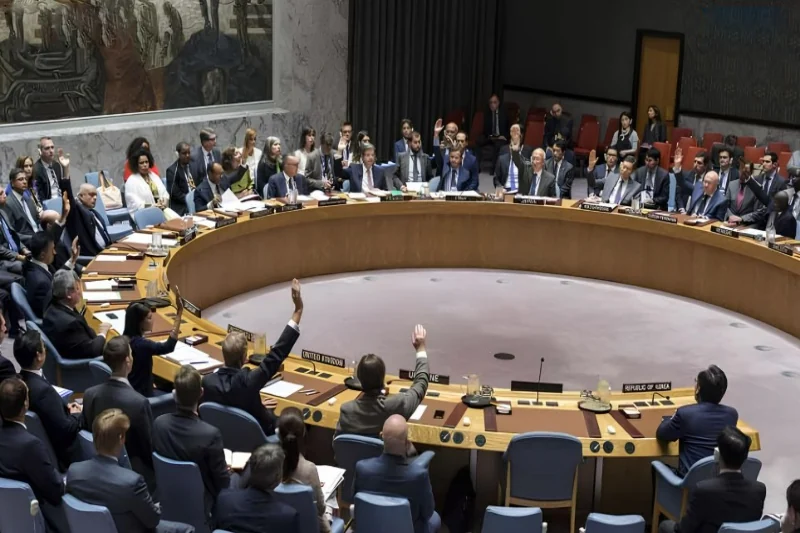
On Friday, the UN Security Council failed to renew MINURSO’s mandate, a development that Morocco’s Royal Cabinet described as a significant step toward bringing the Sahara issue to a definitive close at the United Nations.
It said MINURSO’s presence in the Moroccan Sahara, including its personnel, vehicles, and equipment, should end in the coming days, marking the close of a 35-year chapter.
Here is how much MINURSO has spent over the past three decades:
In May 1991, the UN General Assembly approved $143 million gross ($140 million net) for MINURSO. But delays in implementing the mission’s plan prompted the Secretary-General to recommend keeping it at a reduced level from December 1, 1991, to February 29, 1992, at an estimated cost of $8.63 million gross.
The initial plan called for 550 military observers, but an average of only 235 were deployed. It also provided for up to 1,145 other military personnel, but only an average of 114 were deployed, including 45 signals, 17 movement control staff, and 52 medical personnel.
By November 30, 1992, MINURSO had spent an estimated $72.2 million gross ($70.1 million net) since its creation, leaving $70.8 million unused from its initial $143 million budget.
The report also estimated the mission’s average monthly maintenance cost at $2.7 million gross for September to November 1992.
Between December 1, 1992, and December 31, 1993, the UN mission spent $36.15 million gross ($34.63 million net), $1.23 million less in net terms than initially estimated.
As of November 1, 1993, MINURSO had 324 military personnel, including 226 military observers and 98 support personnel. This included 43 signals personnel from Australia, 14 movement control staff from Canada, and 41 medical personnel from Switzerland.
MINURSO’s spending then fell to $31.26 million gross ($29.64 million net) between January and September 1994. By June 30, 1994, MINURSO’s military component had 242 personnel, including 223 military observers and 19 support staff.
The support personnel consisted of two movement-control staff from Honduras, nine medical staff from Switzerland, and eight clerical staff from Ghana.
MINURSO’s expenditure then rose to $37.09 million gross ($34.36 million net) between October 1994 and June 1995, leaving $2.62 million gross unspent, mainly due to delays in the work of the Identification Commission and the resulting lower number of international and local staff in the mission area.
By August 1995, MINURSO had 285 military personnel, including 237 observers and 48 support staff, 40 of them from South Korea’s medical unit and eight from Ghana’s clerical staff.
The UN mission then increased its spending to $47.72 million gross ($44.47 million net) between July 1995 and June 1996, against an approved budget of $67.11 million gross.
During this period, MINURSO’s operations were scaled back following the suspension of the identification process in May 1996.
The military component was reduced by 20%, from 288 observers in May to 230 by November 1, while the civilian police component fell from 91 officers in January to just nine.
Between July 1996 and June 1997, MINURSO’s spending fell considerably to $29.33 million, with military personnel accounting for 43.6% of total expenditure. The mission had just 230 personnel.
A year later, MINURSO’s military component had increased to 366 observers and other military personnel, including Swedish demining troops and Pakistani engineering staff.
The UN mission then rose its expenditure to around $44.61 million gross ($42.40 million net), out of an approved budget of $60 million gross between July 1998 and June 1999.
By June 2000, spending surged to $49.21 million gross ($45.86 million net) out of an approved budget of $52.12 million gross ($48.17 million net).
Also, the mission had an average of 198 military observers and 27 military contingent personnel, compared with 203 and 27 authorized, respectively.
From July 1, 2001, to June 30, 2002, MINURSO’s actual expenditure fell again to $39.09 million gross ($36.34 million net), against an approved appropriation of $48.84 million gross.
The mission received just an average of 195 military observers and 27 military contingent personnel during the period.
The following year, MINURSO’s expenditure continued to fall, reaching $38.41 million gross, against gross requirements of $41.53 million. It also maintained an average of 190 military observers and 27 contingent personnel during the period.
Between 2003 and 2004, MINURSO’s resources stayed relatively stable at around $38.85 million, with an average of 198 military observers and 27 military contingent personnel.
The following year, spending rose to $41.39 million, while military personnel averaged 199 observers and 27 contingent staff.
Between July 2005 and June 2006, MINURSO spent $42.34 million gross, against an approved appropriation of $45.54 million gross. Military personnel numbers remained again relatively stable, averaging 195 observers and 27 contingent personnel.
A new chapter in the political process
A year later, spending fell slightly to $41.70 million gross, against an approved apportionment of $42.62 million gross, with an average of 191 military observers and 27 military contingent personnel.
During that period, in April 2007, Morocco submitted its autonomy plan, proposing significant self-governing powers for the Sahara region while preserving Morocco’s territorial integrity.
The region would manage most local affairs, while defense, foreign policy, and national security would remain under the central government.
By June 2008, MINURSO’s gross requirements had risen again to $45.5 million, while its military personnel numbers remained relatively stable, averaging 189 observers and 27 contingent personnel.
The budget and staffing levels remained relatively stable again in 2008–2009, with expenditure at $45.06 million and an average of 189 military observers and 27 contingent personnel.
A year later, financial resources rose to $51.93 million, while the mission had an average of 201 military observers and 28 contingent personnel.
The report said budget implementation was affected by higher-than-expected staff salaries and related costs following the introduction of new contractual arrangements.
Between July 2010 and June 2011, MINURSO’s expenditure continued to rise, reaching $57.10 million gross against an approved apportionment of $57.13 million gross. The mission maintained an average of 196 military observers and 27 contingent personnel
During the period, the mission continued to monitor the parties’ compliance with the ceasefire agreement and support efforts to reach a political settlement on the status of the Sahara.
A year later, expenditure increased again to $59.99 million gross, against gross requirements of $61.45 million, while the mission averaged 200 military observers and 27 contingent personnel.
It achieved a 97.6% gross resource utilization rate, excluding budgeted voluntary contributions in kind.
For the July 2012–June 2013 period, MINURSO fell to $56.48 million gross, against an approved appropriation of $58.25 million gross. It maintained an average of 192 military observers and 27 contingent personnel.
The following year, the budget remained relatively stable, with MINURSO spending $55.82 million gross against an approved appropriation of $58.40 million gross and averaging 203 military observers and 27 contingent personnel.
For the July 2014–June 2015 period, MINURSO’s spending dropped to $51.05 million gross and had an average of 189 military observers and 26 contingent personnel.
The UN report attributed the lower expenditure to delayed deployment of military observers and UN police officers, higher vacancies among international staff, and reduced operational costs, including lower fuel requirements.
It also noted that the family exchange visits program, supported by MINURSO and UNHCR, remained suspended during the reporting period due to disagreements between the parties.
When Morocco withdrew its voluntary contribution to MINURSO
In 2016, the budget remained broadly unchanged at $50.15 million, with an average of 200 military observers and 26 contingent personnel.
By March, Morocco called for the departure of 84 MINURSO civilian and African Union personnel, citing what it described as repeated breaches of their UN mandate.
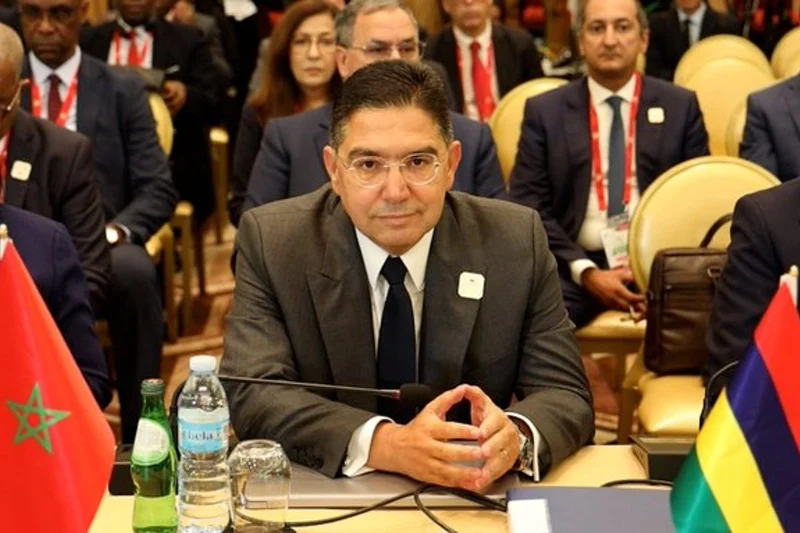
Then Delegate Minister for Foreign Affairs Nasser Bourita said some civilian staff had prepared reports and held meetings with individuals against Morocco’s position, while making statements that he said undermined the neutrality expected of UN personnel.
He also announced that Morocco had withdrawn its voluntary contribution of MAD 30 million to the mission, stressing that the decision did not affect MINURSO’s mandate or military component.
Between July 2016 and June 2017, MINURSO’s expenditure rose to $52.51 million gross, with a budget implementation rate of 99.9%, while its military component averaged 198 observers and 26 contingent personnel.
Military and police personnel costs alone reached $8.044 million, partly due to the increase in daily allowances from $54 to $105 after Morocco stopped providing hotel rooms and meals.
MINURSO’s budget remained relatively stable over the following two financial years.
Between July 2017 and June 2018, expenditure stood at $51.24 million gross, with an average of 203 military observers and 27 contingent personnel. A year later, expenditure reached $52.315 million gross, while the mission averaged 201 observers and 26 contingent personnel.
The report attributed the 2018/19 increase in military observer costs mainly to higher daily allowances, as more observers were deployed in or travelled to Laayoune, and to a lower-than-budgeted vacancy rate, among others.
During the following financial year, the UN mission’s spending increased again to $55.73 million gross, with a resource utilization rate of 98.9%.
The mission had 208 military personnel in total: 181 observers and 27 contingent personnel.
During the pandemic, MINURSO continued to carry out its ceasefire monitoring tasks, despite a 30% reduction in ground patrols, which were partly replaced by air patrols and greater use of satellite imagery.
The UN mission’s expenditure rose again to $56.24 million gross between July 2020 and June 2021, while its budget implementation rate fell to 97.8%.
The UN report said the COVID-19 pandemic and what it described as the resumption of hostilities in late 2020 affected MINURSO’s ability to implement its mandate.
In November 2020, the Royal Armed Forces (FAR) carried out an operation to secure the Guerguerat crossing after Polisario militiamen blocked the road between Morocco and Mauritania, and opened fire on FAR personnel.
The Polisario militiamen then burned their camp and fled in jeeps and trucks to the east and south, in front of MINURSO observers.
The FAR said the operation cleared the road and restored the movement of people and goods. The Polisario Front subsequently announced the end of its commitment to the 1991 ceasefire.
During that period, the UN mission kept an average of 191 military observers and 30 contingent personnel.
Between July 2021 and June 2022, the UN mission spent $55.85 million gross, with an average of 195 military observers and 30 contingent personnel, before spending climbed to $57.86 million gross the following year, with an average of 196 observers and 28 contingent personnel.
The UN mission’s expenditure continued to rise, reaching $64.20 million gross during the 2023/2024 financial year, its highest level since 2011/2012, with an average of 197 military observers and 27 contingent personnel.
During the 2024/2025 period, MINURSO managed to keep its spending relatively stable at $64.73 million gross, against an approved appropriation of $68.78 million gross.


add your comment
Terms of publication : Not to offend the writer, people, sacred things, or attack religions or the divine self, and refrain from racist incitement and insults.