
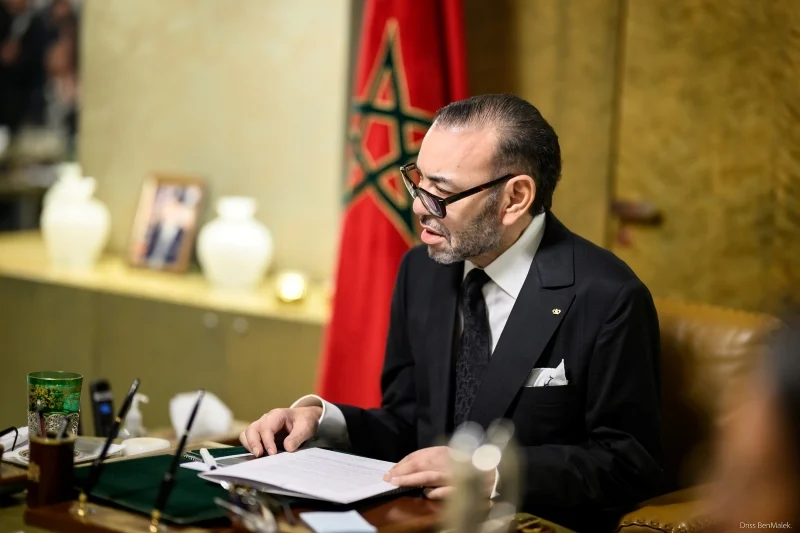
Morocco’s declaration that the UN-led Sahara political process is suspended following the failure to renew MINURSO’s mandate has brought renewed attention to a wider United Nations framework that extends far beyond the peacekeeping mission, encompassing Security Council resolutions, diplomatic mediation, decolonization bodies and humanitarian operations.
The Royal Cabinet said Friday that MINURSO’s personnel, vehicles, equipment and symbols were expected to leave Morocco’s southern provinces in the coming days, bringing a 35-year mission to an end.
It went further, saying the non-renewal should lead to the removal of the Sahara question from the Security Council’s agenda, the cessation of periodic reports and briefings, and the suspension of the UN political process. Similar actions would follow in other UN bodies, the statement said.
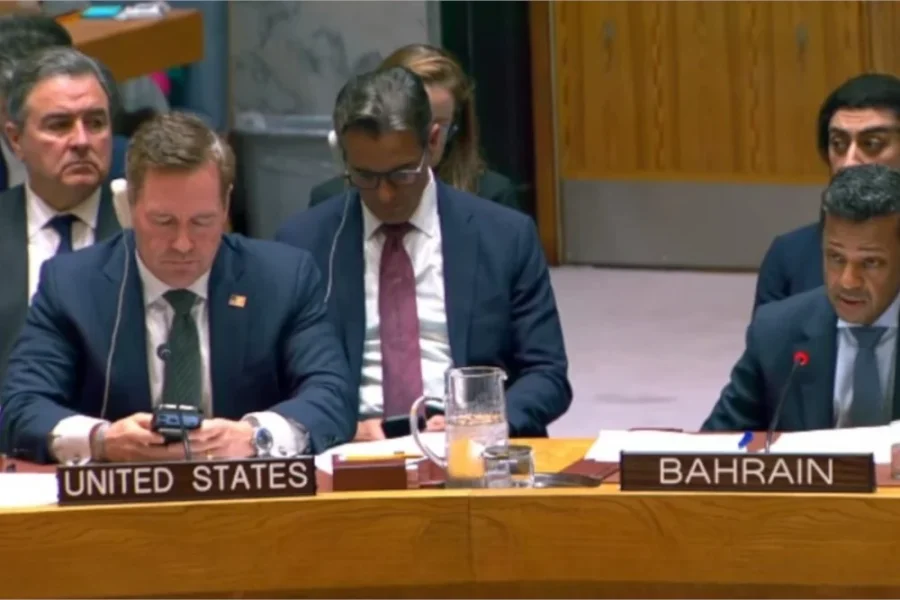
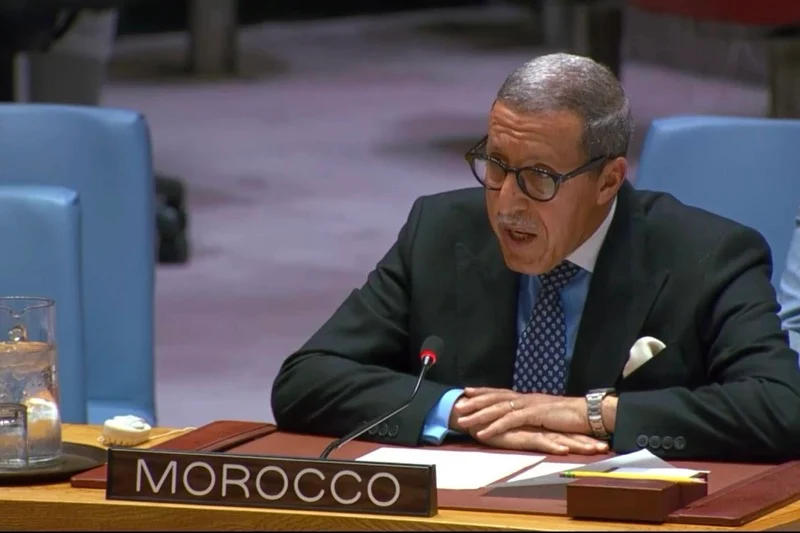
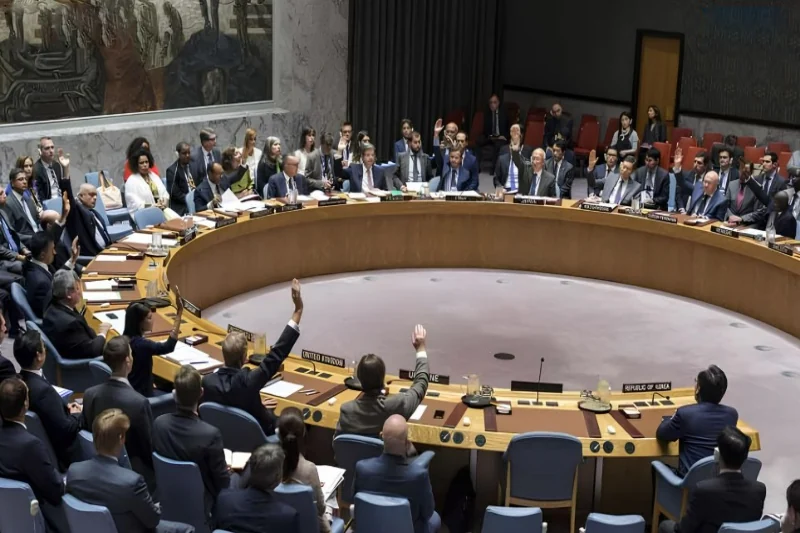
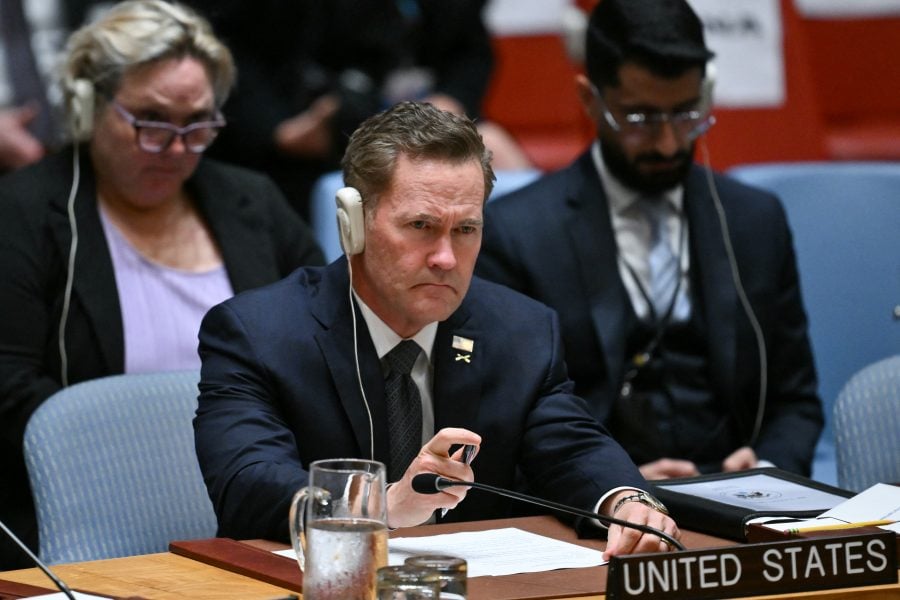
The announcement followed two failed votes on October 30. Russia vetoed an American resolution that would have renewed and restructured MINURSO while making Morocco’s autonomy proposal the sole basis for negotiations. A competing Russian draft proposing a straightforward one-year extension received only three votes in favor, falling short of the nine required for adoption.
The result left MINURSO without a renewed mandate ahead of its October 31 expiry, while drawing attention to the separate UN institutions through which the Sahara dispute has been addressed since the 1960s.
From the settlement plan to MINURSO
The Security Council’s involvement in the Sahara predates MINURSO by more than a decade, with the Council addressing the dispute in 1975 following the end of Spanish colonial administration.
In 1988, Morocco and the Polisario Front accepted settlement proposals developed by the United Nations and the Organization of African Unity. Security Council Resolution 690 established MINURSO on April 29, 1991, to implement the settlement plan.
The mission was originally assigned to monitor the ceasefire, identify eligible voters, organize a referendum and facilitate related arrangements involving military forces, prisoners and refugees.
The referendum never took place because of disagreements over voter eligibility and the terms of implementation.
MINURSO subsequently concentrated on monitoring military developments, investigating incidents, reducing the threat from mines and unexploded ordnance, and supporting the Secretary-General’s diplomatic efforts. – what does it monitor
Following the breakdown of the ceasefire in November 2020, the mission continued observing military activities and serving as a channel for de-escalation.
Its mandate was renewed periodically by the Security Council, most recently through Resolution 2797 in October 2025, which extended its authorization until October 31, 2026.
The Security Council and the political process
Beyond the peacekeeping mission, the Security Council has developed a separate political framework through successive resolutions, negotiations and reporting requirements.
A major shift came in 2007, when Morocco submitted its autonomy initiative and the Council adopted Resolution 1754, calling for negotiations toward a mutually acceptable political solution.
The Secretary-General’s Personal Envoy became a central instrument of that process, facilitating discussions involving Morocco, Polisario, Algeria and Mauritania.
Staffan de Mistura, appointed in October 2021, currently holds that position. His role is exercised through the Secretary-General’s diplomatic authority rather than as a component of MINURSO’s military command.
Resolution 2797, adopted in October 2025, gave Morocco’s autonomy proposal greater prominence, establishing it as the basis for negotiations while retaining references to self-determination and a mutually acceptable settlement.
The resolution also requested regular briefings and a strategic review of MINURSO’s future. Its final operative paragraph stated that the Council would remain seized of the matter.
The Royal Cabinet’s October 30 statement directly addressed this diplomatic structure, saying periodic Council meetings, Secretary-General reports and Personal Envoy briefings would no longer be necessary.
It also declared the political process suspended.
However, the failure to renew MINURSO does not itself constitute a separate Council decision abolishing the Personal Envoy’s office or removing the Sahara from its agenda. The future operation of those mechanisms depends on subsequent institutional decisions and cooperation by the parties.
The General Assembly and decolonization machinery
The UN’s oldest institutional engagement with the Sahara lies outside the Security Council.
The territory was included on the UN list of Non-Self-Governing Territories in 1963, when Spain was still its colonial administrator. It remains on that list, which currently comprises 17 territories.
Spain informed the United Nations in February 1976 that it had ended its presence and considered itself discharged of administrative responsibilities. The UN listing does not identify a successor administering power.
The Sahara is also examined through the General Assembly’s Fourth Committee, which deals with special political questions and decolonization, and the Special Committee on Decolonization, commonly known as the C-24.
The C-24 reviews territories covered by the UN’s decolonization framework, while the Fourth Committee considers reports, hears petitioners and examines draft resolutions before they proceed to the General Assembly.
In October 2025, the Fourth Committee adopted a Sahara draft resolution without a vote, following several meetings that included consideration of the territory and requests for hearings.
The General Assembly separately adopts annual resolutions on the Sahara. Its 2025 resolution, A/RES/80/89, belongs to a sequence of resolutions addressing the territory under the implementation of the UN’s decolonization declaration.
This institutional framework operates under the General Assembly’s authority and is not renewed through MINURSO’s annual Security Council mandate.
The Royal Cabinet did not identify which additional UN bodies Morocco intends to address, although its announcement of forthcoming actions brings the General Assembly and decolonization committees into the scope of possible diplomatic developments.
The legal framework and humanitarian agencies
The Sahara also features in the UN’s international legal history through the International Court of Justice’s October 1975 advisory opinion.
Requested by the General Assembly, the opinion examined legal ties between the territory and Morocco and Mauritania before Spanish colonization.
The Court recognized legal ties of allegiance between the Sultan of Morocco and certain tribes of the territory, while finding that the evidence did not establish territorial sovereignty sufficient to alter the application of self-determination.
The opinion remains part of the historical legal framework but does not constitute an ongoing peacekeeping or negotiating mechanism.
Separate UN humanitarian operations also operate in connection with the dispute, particularly in the Tindouf camps in Algeria.
The UN High Commissioner for Refugees provides protection and assistance, while the World Food Programme supports food assistance and nutrition programmes.
These activities are governed by their agencies’ respective mandates and funding arrangements, rather than by the annual renewal of MINURSO.
Human rights issues may also be addressed through UN treaty bodies, special rapporteurs and other mechanisms operating under separate institutional authorities.
MINURSO itself previously provided logistical support to UNHCR confidence-building measures, including arrangements intended to facilitate contact between separated families. Those activities were suspended in 2014.
Morocco’s shift and the framework’s future
The October 30 development has therefore affected a UN architecture built over more than six decades, but whose components have different legal foundations and functions.
MINURSO was established by the Security Council in 1991. The political negotiations developed through successive Council resolutions and the Secretary-General’s diplomatic efforts. The General Assembly’s decolonization machinery predates both, while humanitarian and human rights activities operate under separate mandates.
The latest confrontation also followed an unsuccessful attempt to redesign the mission rather than simply renew it.
According to Security Council Report, Washington initially proposed replacing MINURSO with a special political mission after a transitional period. Subsequent revisions abandoned the immediate transition but retained changes to the mission’s name and proposed a review of its structure and staffing.



add your comment
Terms of publication : Not to offend the writer, people, sacred things, or attack religions or the divine self, and refrain from racist incitement and insults.