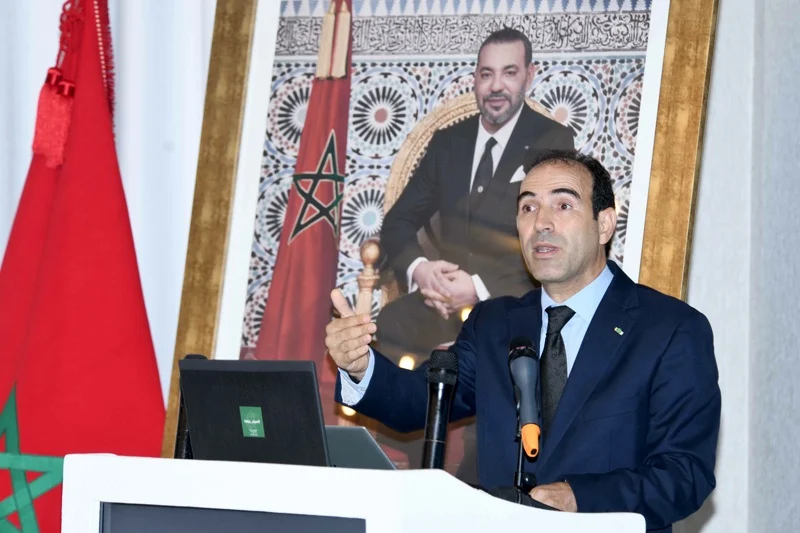
Morocco’s new government must translate anti-corruption reforms into tangible results for citizens and businesses, the head of the National Authority for Integrity, Prevention and Combating Corruption said Friday, calling for a new national strategy and stronger coordination across government institutions.
Mohamed Benalilou made the remarks in Rabat during the presentation of the authority’s 2025 annual report. He said the government should continue reforms, strengthen integrity in public policy and complete the legal framework for combating corruption.
The priority, he said, is to turn legislation and initiatives into practices that citizens can see in their daily lives, while improving the investment climate and protecting public funds.
Benalilou also called for a new-generation national anti-corruption strategy and a mechanism to coordinate the work of government departments, bringing integrity and anti-corruption policies under a more unified approach.
“Indicators, whatever they may be, acquire their true meaning only when they are connected to real life — to what citizens experience every day,” Benalilou said.
Even when indicators are positive, he added, a gap between those figures and people’s lived experiences makes it necessary to reassess them. The primary measure, he said, should be citizens’ lives rather than indicators viewed in isolation.
The authority’s annual report examines international and national indicators, as well as complaints, reports and information received by the institution and the activities it carried out within its mandate, Benalilou said.
He acknowledged progress in Morocco’s legislative and institutional frameworks, including changes introduced by the 2011 Constitution in governance and anti-corruption. However, he said the impact of these reforms remained below public and business expectations.
“The actual impact of reforms on citizens has not yet been felt to the extent they expect, and the same applies to businesses,” he said.
The gap between reforms established through laws and institutions and those experienced by citizens remains one of the central challenges highlighted by the report, Benalilou added. People expect tangible improvements in public services, access to rights and dealings with both public and private institutions.
He said the judiciary must continue strengthening the rule of law, ensuring effective trials, building trust in the fair application of the law and reinforcing the principle that responsibility must be accompanied by accountability.
The private sector also has a role to play, he said, by improving compliance systems and embedding integrity and transparency in management, investment decisions and relations with business partners.
Benalilou concluded that Morocco must move away from fragmented interventions toward coordinated collective action, backed by clear political commitment and broader mobilization.
Combating corruption in both public institutions and the private sector, he said, is a shared responsibility that requires a coordinated effort.



add your comment
Terms of publication : Not to offend the writer, people, sacred things, or attack religions or the divine self, and refrain from racist incitement and insults.