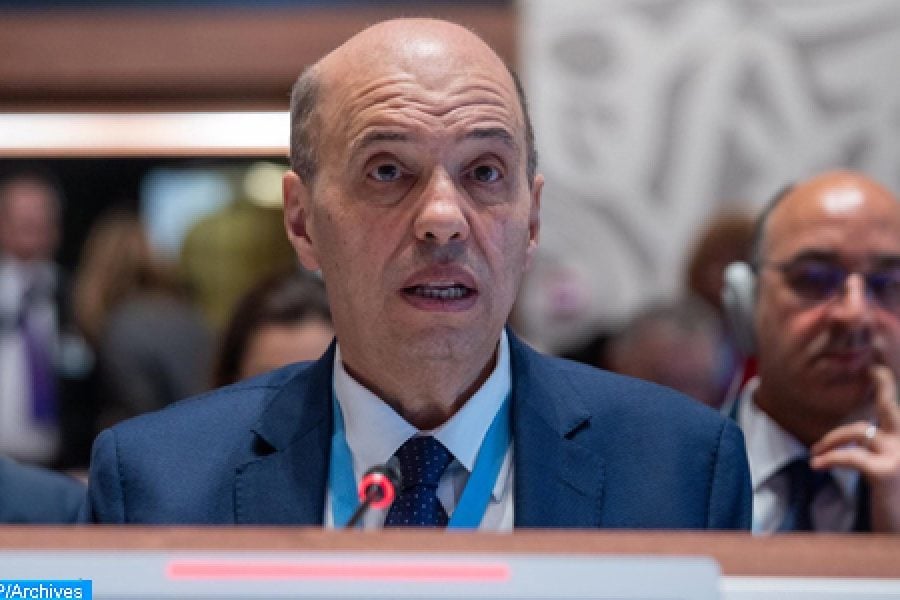
Morocco called Tuesday for the dismantling of the Tindouf camps in Algeria, urging the United Nations refugee agency and donor countries to prioritize long-term solutions for the people living there after decades of displacement.
Speaking at the 77th annual session of the Executive Committee of the United Nations High Commissioner for Refugees in Geneva, Morocco’s permanent representative to the U.N. in Geneva, Omar Zniber, said refugees should be offered the choice of voluntary repatriation, integration into their host country or resettlement in a third country.
Zniber said Morocco had secured significant support from a majority of the committee’s members for its call to move away from prolonged refugee situations and toward lasting solutions.
“The world can no longer bear refugee situations that last for decades,” Zniber said, warning that such crises leave generations in vulnerable conditions with little prospect of a better future.
He pointed to the Tindouf camps, which are entering their sixth decade, arguing that billions of dollars in spending had failed to prevent serious problems, including malnutrition and vulnerability. He also cited concerns over the diversion of humanitarian aid, referring to reports by U.N. agencies and other institutions.
Zniber described the prolonged situation as politically driven and said it had moved away from the humanitarian goals of the refugee agency.
He also recalled that U.N. High Commissioner for Refugees Barham Salih raised concerns about deteriorating living conditions in the camps before the U.N. Security Council on Sept. 25, describing the situation as unsustainable and deeply inhumane.
The Moroccan diplomat cited a Sept. 2 letter from Salih, the U.N. secretary-general’s personal envoy and the U.S. permanent representative to the U.N. in New York, calling for the swift implementation of durable solutions for the camp population.
Morocco said U.N. Security Council Resolution 2797, adopted Oct. 31, 2025, provided a framework for resolving the regional dispute over Western Sahara through the implementation of autonomy.
Zniber also reiterated King Mohammed VI’s appeal to people living in the camps to return to Morocco, saying they would enjoy the same rights as other Moroccan citizens.
The diplomat said Morocco’s delegation had consulted nearly all members of the refugee agency’s executive committee and received written expressions of support from a significant number of them. He added that most major donor countries were ready to help finance durable solutions.
“Assistance must not finance the permanence of refugee status, but the solutions it provides,” Zniber said.
Morocco urged those responsible for the prolonged situation to engage seriously and in good faith in efforts to put the proposed solutions into practice.




add your comment
Terms of publication : Not to offend the writer, people, sacred things, or attack religions or the divine self, and refrain from racist incitement and insults.