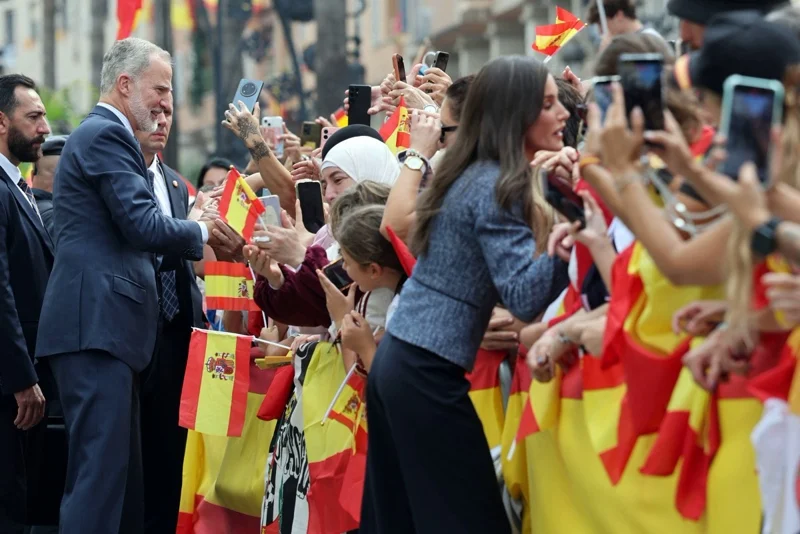
Spain’s King Felipe VI began his first visit as monarch to Ceuta on Tuesday, less than three months after the July migration crisis sharply raised tensions around the North African city.
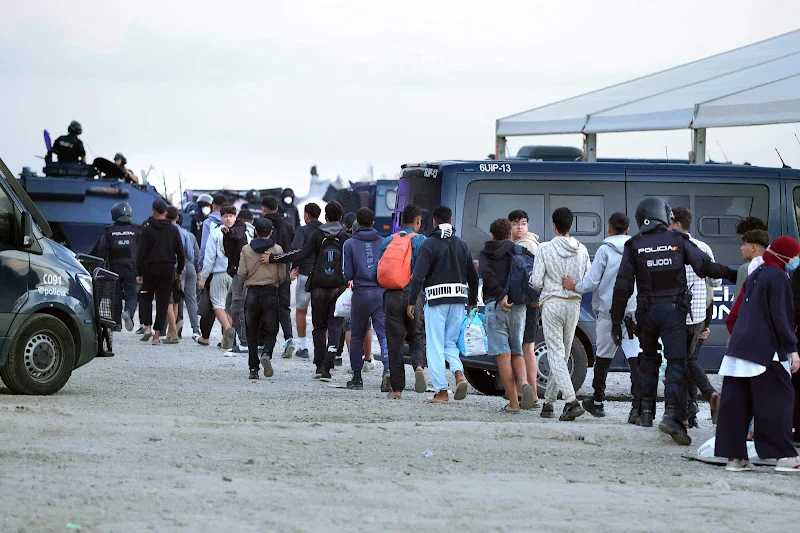
The visit comes as Spain and the European Union continue rolling out measures adopted after northern Morocco into Ceuta over two days in July.
Madrid has mobilized €309 million for Ceuta this year, covering security, public services, migrant reception and economic support, while the European Commission has separately approved €114.7 million in emergency assistance for Spain.
Hespress English is following the main developments.
17:00 | Felipe VI says ‘Melilla is Spain,’ warns any border threat is an EU threat
King Felipe VI said on Wednesday that “Melilla is Spain and Melilla is Europe,” during a reception at Melilla Puerto Hotel, warning that “any threat to the border of a member state is therefore a threat to the European Union as a whole.”
Felipe VI described Melilla as a city where Africa and Europe meet, saying “Spain and Morocco must always work to build and maintain good neighborly relations” based on peace, security, stability, and cooperation for their mutual benefit.
He stressed that this requires trust and responsibility based on good faith. “I believe this is both possible and desirable,” the king said.
13:30 | Left Alliance condemns Felipe VI’s visit to Ceuta and Melilla
The Left Alliance strongly condemned King Felipe VI’s two-day visit to occupied Ceuta and Melilla, calling it “a provocative move against Morocco.”
In a statement, the alliance, made up of the Democratic Left Federation and the Unified Socialist Party, called the visit “a new escalation against Morocco,” saying that Spain seeks to “establish false legitimacy for its occupation of the two Moroccan cities, in violation of international law and norms.”
They also criticized “the Moroccan government’s official silence” over the visit, emphasizing that the Moroccan people would continue to fight for the country’s territorial unity, including the return of Ceuta and Melilla.
The alliance emphasized that future cooperation with the European Union, particularly Spain, must respect Morocco’s sovereignty and its demands to recover occupied territories.
12:15 | Melilla governor calls for city’s increasing ‘integration into Europe’
The president of the occupied city of Melilla, Juan José Imbroda, gave his first official speech before King Felipe VI and Queen Letizia during a reception at the Assembly Palace, calling for Melilla to “become increasingly integrated into Europe.”
He added that Melilla needs “a greater presence of the Spanish state in all areas, including budgetary and legislative matters,” as well as “a stable presence of Spain’s security forces and armed forces.”
Imbroda also called for socioeconomic development that would put the city “on an equal footing with the rest of Spain.”
He described the migration crisis in late July as “very serious,” calling for a firm response from Spain at both the domestic and international levels and for this position to be fully reflected in the proposal for European support.
10:21 | Spain’s King Felipe VI begins visit to occupied Melilla
Spain’s King Felipe VI and Queen Letizia arrived in the occupied city of Melilla on Wednesday morning as part of their two-day visit to Ceuta and Melilla.
They were first welcomed by Melilla governor Juan José Imbroda and other officials at Plaza de España before greeting crowds.
18:41 | Disputed Ceuta, Melilla ‘an inalienable part’ of Spain: king
King Felipe VI on Tuesday said Ceuta and Melilla were “an inalienable part” of Spain as he made a landmark visit to the north African territories claimed by neighbouring Morocco. The monarch added that Spain wants ‘good neighbourly relations’ with Morocco.
Spain and the EU have “the will and the responsibility to maintain good neighbourly relations” with Morocco, added Felipe, who rarely makes political interventions, after July’s unprecedented migrant surge into Ceuta from Morocco.
16:45 | Moroccan groups condemn King Felipe VI’s visit to Ceuta, plan protests
Two Moroccan civil society groups have condemned King Felipe VI’s visit to occupied Ceuta, saying it “was a provocative step” given the historical and national significance of Ceuta and Melilla to Morocco’s territorial integrity as well as its continued demands for their return.
In a statement, the Moroccan Organization for Citizenship and Defense of Territorial Unity and the National and International Body of Green March Volunteers said official visits don’t change Morocco’s claims to Ceuta and Melilla.
The two groups said that Morocco-Spain ties should be based on mutual respect and clear handling of outstanding issues, without fueling tensions over historical disputes.
They also announced plans to organize peaceful protests outside the Spanish Embassy in Rabat and Spanish consulates in Morocco as well as several European countries, involving the Moroccan diaspora.
They called for a civic memorandum to be sent to Spanish and European authorities and for public meetings and media campaigns in Spanish and French to highlight the issue’s historical background and bring it into European public debate.
16:15 | King Felipe VI visits cemetery where mass-crossing victims are buried
Spain’s King Felipe VI and Queen Letizia visited Sidi Embarek Cemetery in occupied Ceuta, where over 80 Moroccan migrants who died off the city’s coast during the mass arrivals on July 30 and 31 are buried.
15:59 | Spain says over 11,000 migrants have returned from Ceuta to Morocco
Spain’s government spokesperson Elma Saiz said Tuesday that 11,686 people had returned to Morocco from occupied Ceuta, including 10,161 voluntary returns and 525 expulsions.
Saiz noted that 3,019 minors were registered under Ceuta’s regional protection system, while 89 have been relocated to mainland Spain for family reunification, 173 to other Spanish regions, and 35 cases referred to Morocco.
She said authorities had distributed 244,612 food packages by October 11 and prepared 7,477 places in temporary assistance centers.
The government spokesperson added that 4,540 people had been vaccinated and that 98 of Ceuta’s 210 hospital beds were occupied, including 22 by migrants.
Between August 4 and October 11, authorities, Saiz said, conducted 10,100 mobile patrols, including 6,700 during the day and 3,400 at night.
She also noted that the government had received 1,779 applications for direct aid to businesses and self-employed workers and has started paying out 800 grants worth more than €5 million.
13:00 | Ceuta president says border control, economy must not depend on ‘a third party’
Juan Jesús Vivas, president of the occupied city of Ceuta, delivered his first official speech before King Felipe VI and Queen Letizia during a reception at the Assembly Palace.
He called for the return to Morocco of all those who arrived in the city “en masse and illegally” during the late July migration crisis and who remain there, describing it as the only way to “restore normality.”
Vivas also urged measures to ensure Ceuta’s border control and economic model don’t depend on what he called “a third party,” arguing that Spain’s sovereign decisions concerning Ceuta and Melilla “must not be influenced by any third party.”
11:20 | Spanish palace says Felipe VI was informed of Moroccan naval movements during July crisis
Spain’s government informed King Felipe VI that Moroccan naval vessels had entered waters claimed by Spain off Ceuta during the July migration crisis, Zarzuela sources said Tuesday as the monarch began his visit.
The disclosure followed Prime Minister Pedro Sánchez’s confirmation a day earlier that Moroccan vessels had entered the area during the July 30–31 crossings.
Spanish authorities have described the incidents as limited and said communication between the two countries’ naval forces prevented further escalation.
11:03 | Von der Leyen says Morocco committed to readmit migrants remaining in Ceuta
European Commission President Ursula von der Leyen said Tuesday that Morocco had committed to readmit migrants who remain in Ceuta following July’s mass crossings, as Brussels pledged continued support for Spain in accelerating returns.
In a letter to EU leaders ahead of this week’s European Council summit, von der Leyen said the July events showed how quickly pressure can build at the European Union’s external borders and called for stronger emergency mechanisms to deal with sudden large-scale arrivals.
She said the Commission would continue supporting Spain on returns, strengthen Frontex, and work on rules allowing greater flexibility in asylum and border procedures during exceptional crises.
Her letter came as EU European affairs ministers met in Luxembourg to prepare the Oct. 15–16 European Council summit, where migration and crisis management at the bloc’s external borders are due to feature prominently.





add your comment
Terms of publication : Not to offend the writer, people, sacred things, or attack religions or the divine self, and refrain from racist incitement and insults.