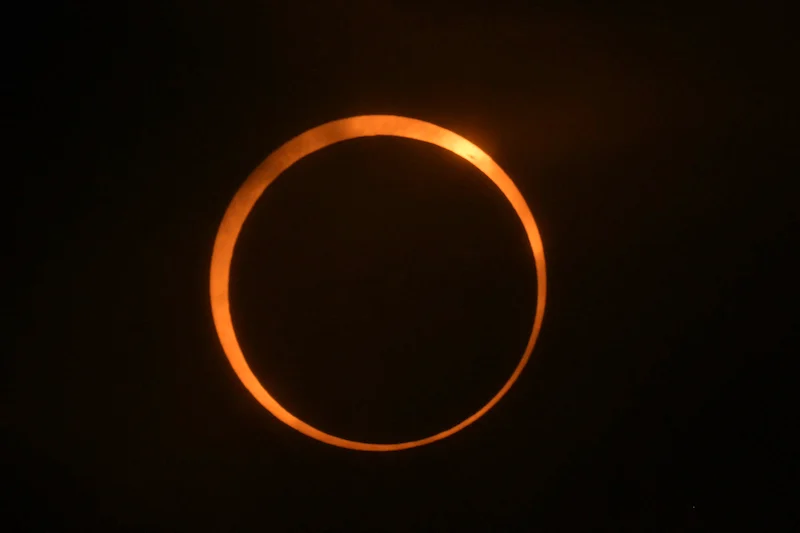
The sky will be the stage on Wednesday for a spectacular astronomical phenomenon with a global total solar eclipse. However, it will be observable as a partial eclipse in Morocco, with a solar obscuration rate reaching nearly 93% in the northern regions, said Zouhair Benkhaldoun, Professor at Cadi Ayyad University and Director of the Oukaïmeden Astronomical Observatory.
“August 12 will see the advent of a spectacular astronomical event consisting of a total solar eclipse,” Benkhaldoun emphasized in a statement to MAP, explaining that a solar eclipse occurs when the Sun, the Moon, and the Earth are aligned.
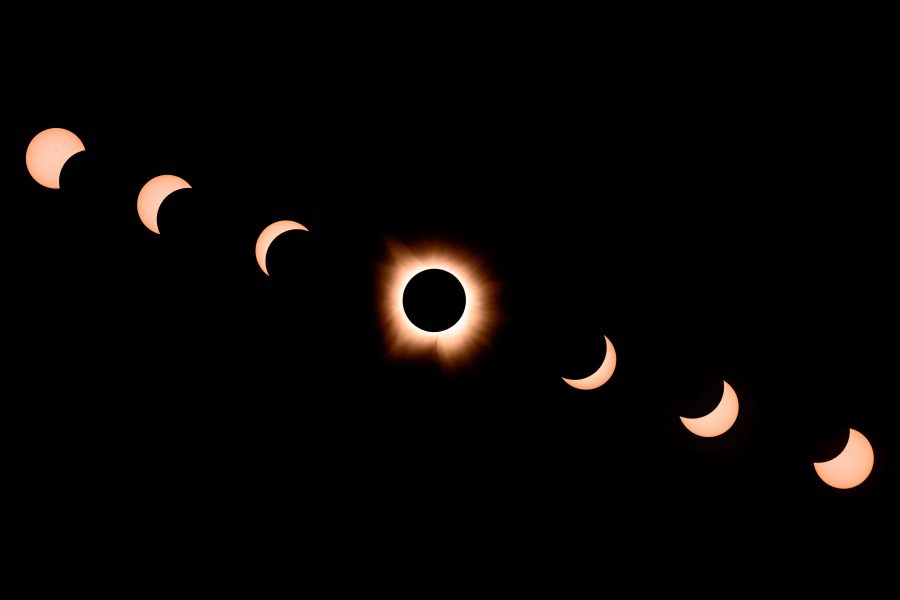
During a perfect alignment observed from a given region of the Earth’s surface, the lunar disk can completely obscure the solar disk, resulting in a total eclipse, he pointed out, adding that the path of totality will notably cross the Arctic, Greenland, Iceland, a small part of Portugal, and especially Spain, before ending over the Mediterranean.
In Morocco, the eclipse will be partial, as the Kingdom is located outside the path of totality and within the Moon’s penumbra, the director of the Oukaïmeden Astronomical Observatory specified, adding that “for Morocco, it will be partial with an obscuration rate varying between nearly 93% in the North and 60% around Dakhla.”
Nador will be the most favored city, with about 92.9% of the Sun obscured, followed by Tangier, Tetouan, and Al Hoceïma at around 92%, he noted, pointing out that the obscuration rate will reach approximately 89.5% in Fez, 88% in Rabat, 87% in Casablanca, 83% in Marrakech, 79% in Agadir, 70% in Laayoune, and 60% in Dakhla.
Generally speaking, in Morocco, the beginning of the eclipse will occur between 6:44 PM and 7:06 PM depending on the location, while the maximum is expected between 7:40 PM and 8:00 PM. The end of the phenomenon should occur between approximately 7:58 PM and 8:39 PM, the expert stated.
Explaining the difference between the areas affected by the total eclipse and those where it will be partial, the expert indicated that the Moon casts a shadow on the Earth composed notably of a central zone, called the “umbra,” and a penumbra.
“In the central umbra zone, the eclipse is total, whereas in the penumbra, it is partial,” explained Prof. Benkhaldoun, underlining that Morocco will be situated in the latter zone.
Regarding observation conditions, there is no particularly privileged location in Morocco compared to others, one simply needs a clear western horizon, he emphasized.
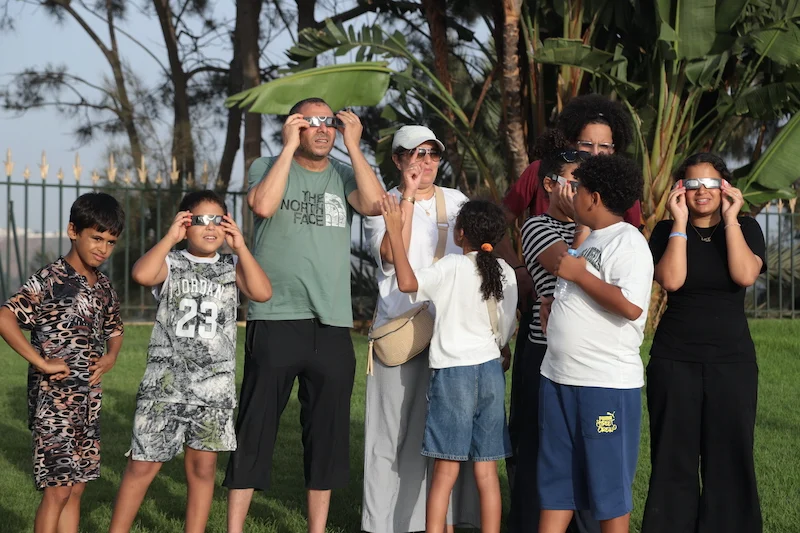
He also stressed the essential precautions for observing the phenomenon, warning against the risks of irreversible eye damage in the event of direct observation of the Sun.
“Above all, you must not observe the phenomenon directly,” he warned, recommending the use of specially designed eclipse viewing glasses, which are available from several associations in Morocco.


add your comment
Terms of publication : Not to offend the writer, people, sacred things, or attack religions or the divine self, and refrain from racist incitement and insults.