
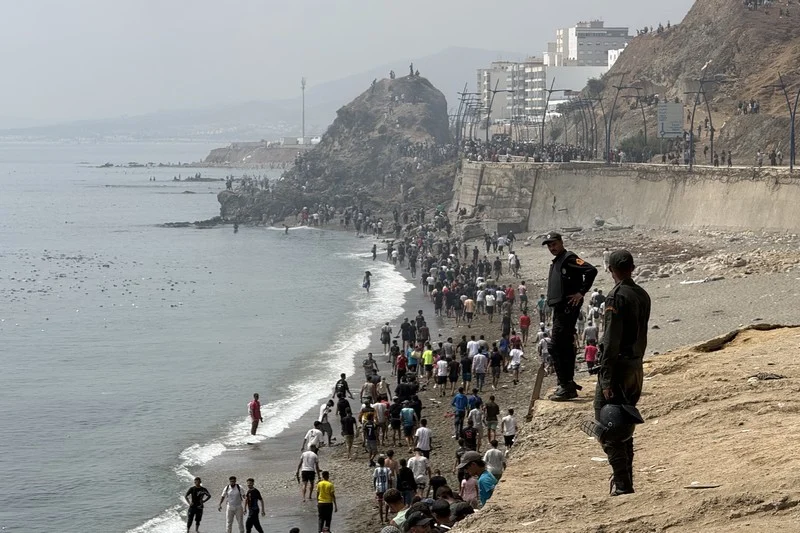
Two Spanish rights groups have accused authorities in Ceuta of denying migrants food, water and basic care following last week’s mass border crossing from Morocco, while Spain’s government announced an additional 25 million euros ($29 million) to help care for unaccompanied migrant children who arrived during the crisis.
The allegations come as Spain faces mounting scrutiny over its response to one of the largest migration surges the North African enclave has experienced in years.
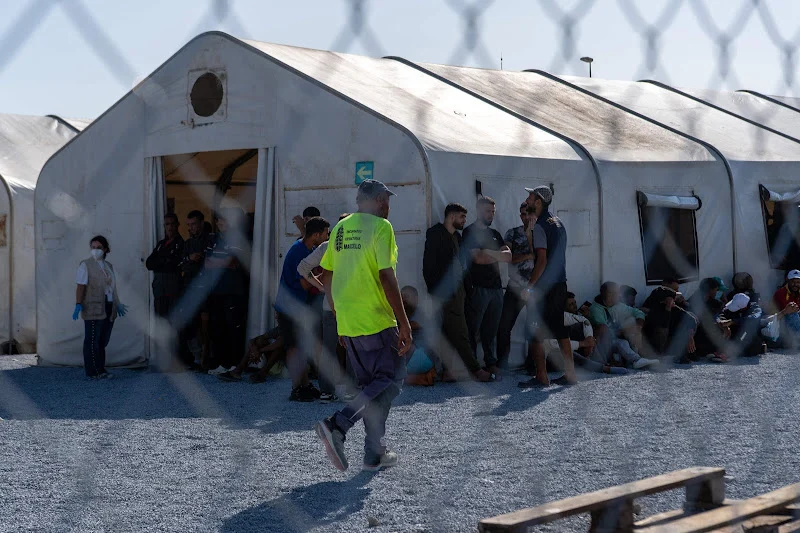
Spanish NGOs No Name Kitchen and Elín Association, both of which operate in Ceuta, said migrants have been living in what they described as inhumane conditions.
The organizations alleged that authorities denied migrants access to food, drinking water, medical care and legal information while also carrying out forced returns to Morocco.
Francesca Fossaro, coordinator of No Name Kitchen, said many migrants had not eaten since last Thursday. According to the organization, the amount of food aid distributed fell far short of what was needed, leaving many people exhausted and on the verge of fainting.
The group said hunger, thirst and deteriorating health conditions forced some migrants to return voluntarily to Morocco after they were unable to access basic assistance.
No Name Kitchen also accused Spanish security forces and the military of racial profiling, alleging that officers identified migrants based on their physical appearance before transporting them to the Moroccan border.
Elín Association, which has operated in Ceuta since 1999, described the treatment of migrants as a pattern of systematic neglect and dehumanization. The organization said many of those affected came from countries facing severe humanitarian crises, including Sudan and Chad.
According to the association, migrants have been left without adequate food, water, health care or a safe place to rest. It also alleged that many were not informed of their legal rights or given the opportunity to apply for international protection.
The organization argued that the situation reflects a political decision rather than logistical shortcomings and called on Spain to establish proper reception centers and activate stronger humanitarian response protocols.
Spanish authorities have not publicly responded to the specific allegations made by the two organizations.
Meanwhile, Spain’s Minister for Inclusion, Social Security and Migration, Elma Saiz, announced an additional 25 million euros in funding for Ceuta to support unaccompanied migrant children who arrived during the recent influx.
The new funding comes on top of the 5.5 million euros allocated in July.
Saiz said the additional resources demonstrate the government’s continued support for Ceuta, particularly for migrant children. She added that two educational centers have been designated to accommodate unaccompanied girls, while Youth and Children Minister Sira Rego is expected to visit the enclave in the coming days to assess conditions and oversee the implementation of support measures.






add your comment
Terms of publication : Not to offend the writer, people, sacred things, or attack religions or the divine self, and refrain from racist incitement and insults.