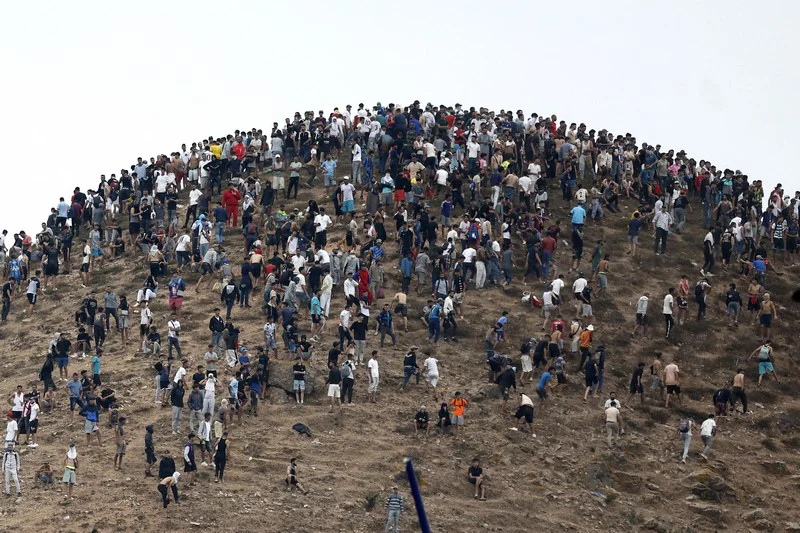
More than eight in 10 respondents say online content makes leaving the country without legal documents seem like a way to build a better life, says a study by the Northern Observatory for Human Rights in Morocco.
The NGO surveyed 500 young men and women in the Tangier-Tetouan-Al Hoceima region and found that digital platforms are doing more than simply spreading information, helping instead to shape perceptions, promote success stories and build online communities that encourage irregular migration.
81% of participants said migration-related content shared on social media makes irregular migration appear to be a solution to improve living conditions. It was the highest-rated finding in the survey, scoring 4.05 out of 5.
The report revealed how easy it has become for young people to access such content. Nearly 78.4% of respondents said posts promoting irregular migration are easy to find, while 74.2% said young people follow pages that provide guidance on planning the journey.
Another 71.6% said they take part in online groups created for the same purpose.
Visual content appears to have the strongest impact. Around 79.2% of respondents said young people engage with videos encouraging migration, while 78.2% pointed to photos.
By comparison, only 62.6% said text-based posts have the same influence, suggesting images and videos carry greater emotional weight.
The study found that online success stories fuel migration ambitions. More than 81% of participants said stories shared by migrants who appear to have succeeded abroad encourage others to consider irregular migration, while 77% said influencers and content creators also help increase the desire to leave.
Posts expressing frustration over unemployment, social exclusion and the feeling of hogra were also identified as a major driver. About 78% of respondents said such content pushes young people to think about migrating.
Researchers found that social media’s influence cuts across gender, education levels and whether respondents live in urban or rural areas.
However, family income and employment status made a noticeable difference, indicating that economic hardship shapes how young people respond to migration-related content.
The observatory said that social media should not be viewed as the sole cause of irregular migration. Instead, it said digital platforms amplify existing frustrations linked to unemployment, precarious living conditions, exclusion and limited opportunities.
The NGO says that relying only on tougher security measures or criminalizing young migrants will not address the root causes behind the phenomenon.








add your comment
Terms of publication : Not to offend the writer, people, sacred things, or attack religions or the divine self, and refrain from racist incitement and insults.