Spain said Friday that an estimated 49,000 migrants had entered Ceuta from Morocco over the previous 24 hours, as Moroccan authorities deployed heavily around Fnideq to prevent further mass crossings.
Hundreds of migrants who had entered Ceuta began crossing back into Morocco on Friday morning through the same breakwater used during the mass influx, according to EFE reporters at the scene. Small groups continued entering in the opposite direction.
Thousands of people continued travelling toward Fnideq overnight despite reinforced Moroccan security operations around the Bab Sebta crossing and nearby coastal routes.
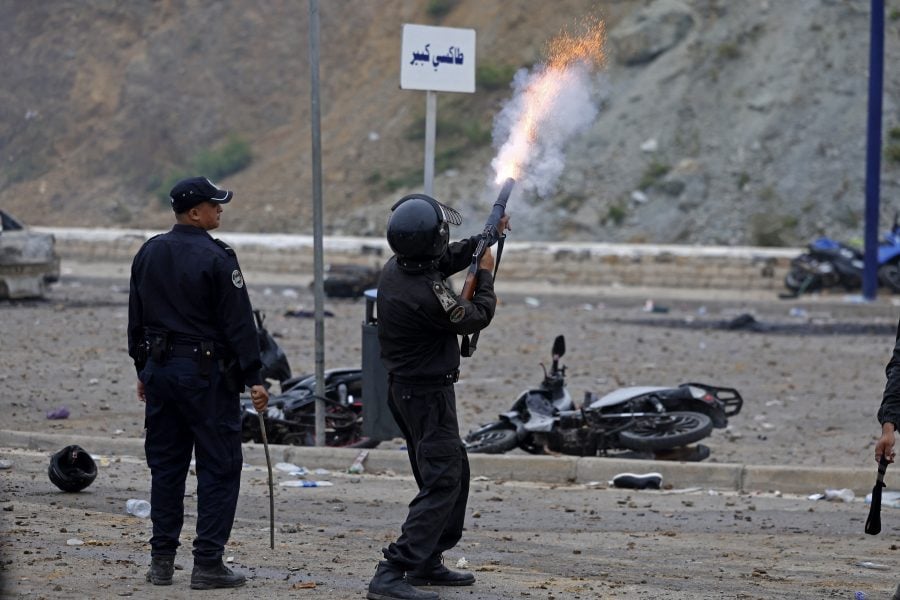
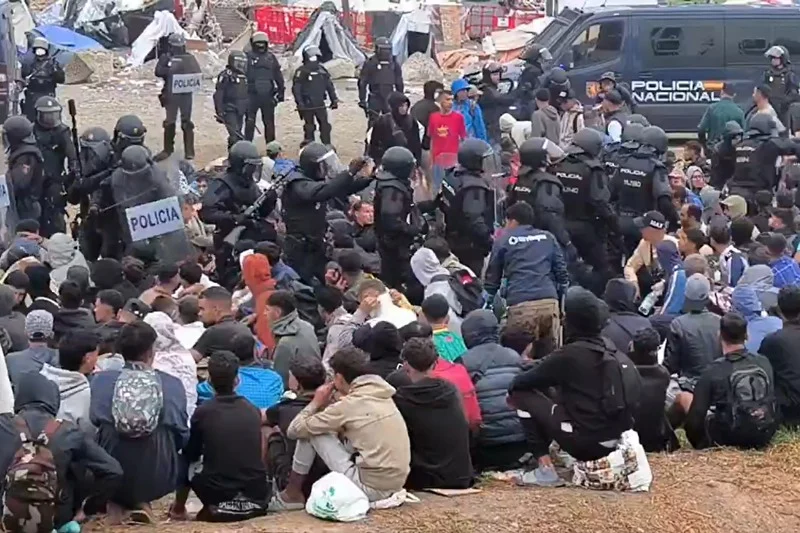
Moroccan forces deployed water-cannon vehicles and repeatedly pushed crowds away from access points leading toward the border. Widely circulated footage showed security personnel intercepting groups of mostly young men, placing some aboard vehicles and transporting them away from Fnideq.
Others were pursued through streets, coastal areas and surrounding hills as they attempted to bypass checkpoints. The deployment prevented thousands from reaching the frontier, although it did not completely stop the flow.
Small groups continued entering Ceuta by swimming around the Tarajal breakwater or moving through shallow water on foot, while hundreds of migrants who had already crossed began returning voluntarily to Morocco through the same route.
Overnight confrontations near Bab Sebta left several vehicles scorched. Live footage showed the burned remains of a bus and other vehicles following clashes between would-be migrants and Moroccan security forces.
Spain has deployed military units, additional police and Civil Guard officers to Ceuta as reception services struggle to register and accommodate arrivals.
Pressure also shifted eastward to Melilla, where around 400 young Moroccans entered irregularly on Thursday night, mostly by swimming from nearby coastal areas, according to local security sources cited by El Faro de Melilla.
Spain closed the Beni Enzar crossing, Melilla’s only operational land border with Morocco, after an attempted mass entry and reinforced security around the southern breakwater and nearby beaches.
Madrid and Rabat have agreed to strengthen coordination and facilitate the rapid return of people who entered the enclave irregularly, according to Spain’s Interior Ministry and an informed source who spoke to Hespress.
Spanish authorities have blamed human-smuggling networks and false social-media messages claiming that the border had been opened for fuelling the mobilisation.







add your comment
Terms of publication : Not to offend the writer, people, sacred things, or attack religions or the divine self, and refrain from racist incitement and insults.