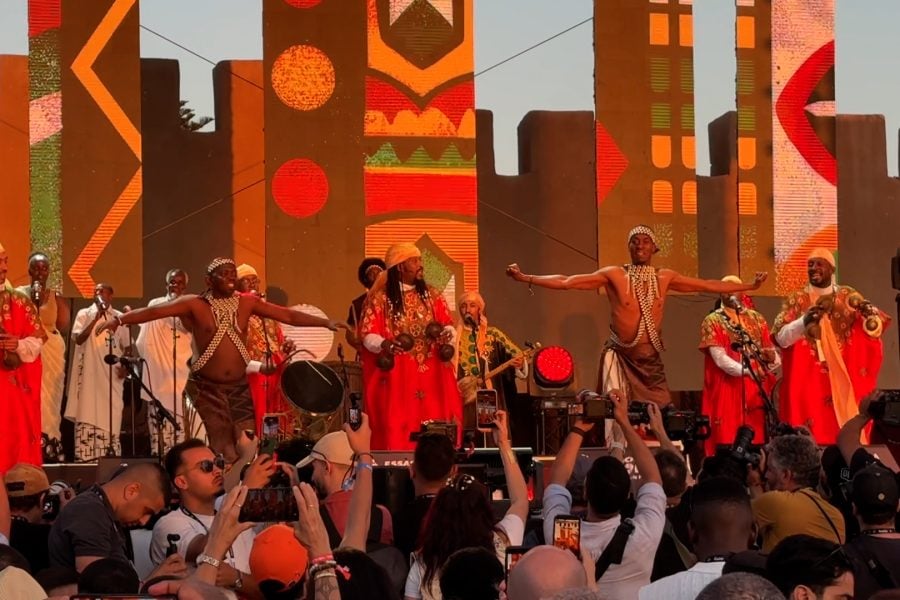
The streets of Essaouira’s old medina were filled with rhythm and celebration on Thursday as the 27th Gnaoua and World Music Festival officially kicked off, launching three days of world music performances, training sessions, and cultural exchange.
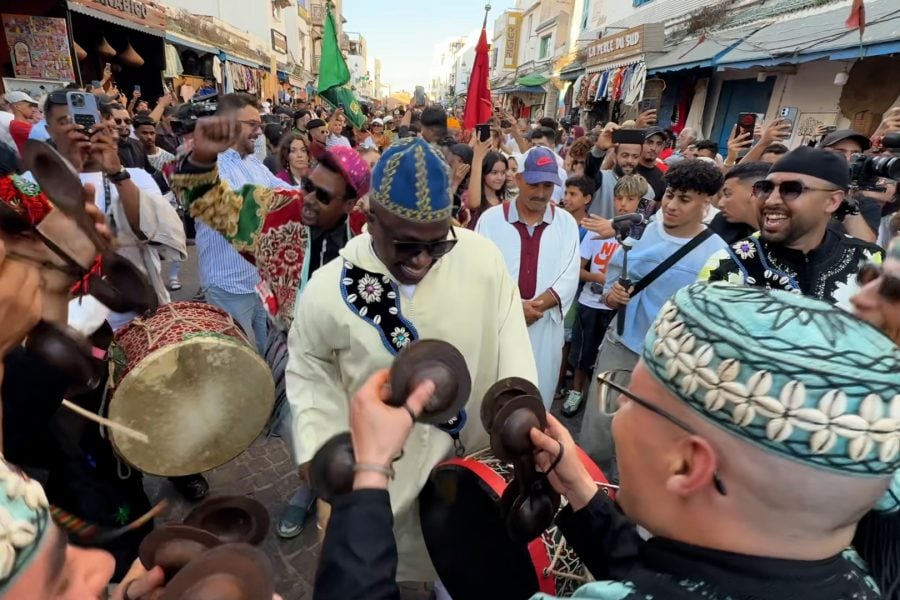
The opening ceremony featured a traditional parade through the old medina of Essaouira, starting at Bab Doukkala, with groups of maalems from across Morocco leading the way with drumbeats and chants to the Moulay Hassan stage.
The festival drew hundreds of people who waited for hou rs at Bab Doukkala ahead of the kickoff, with crowds from countries like Canada, France, Spain, and Italy.
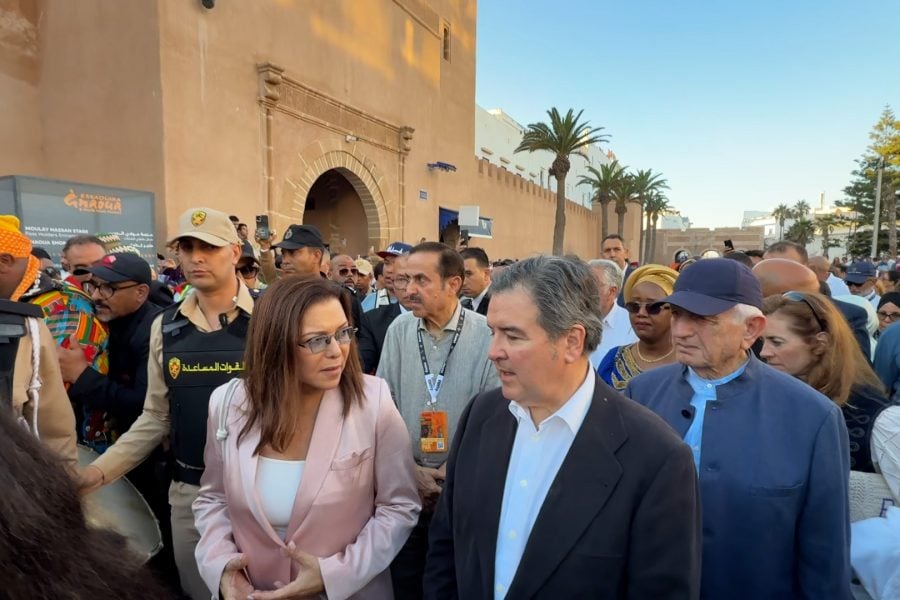
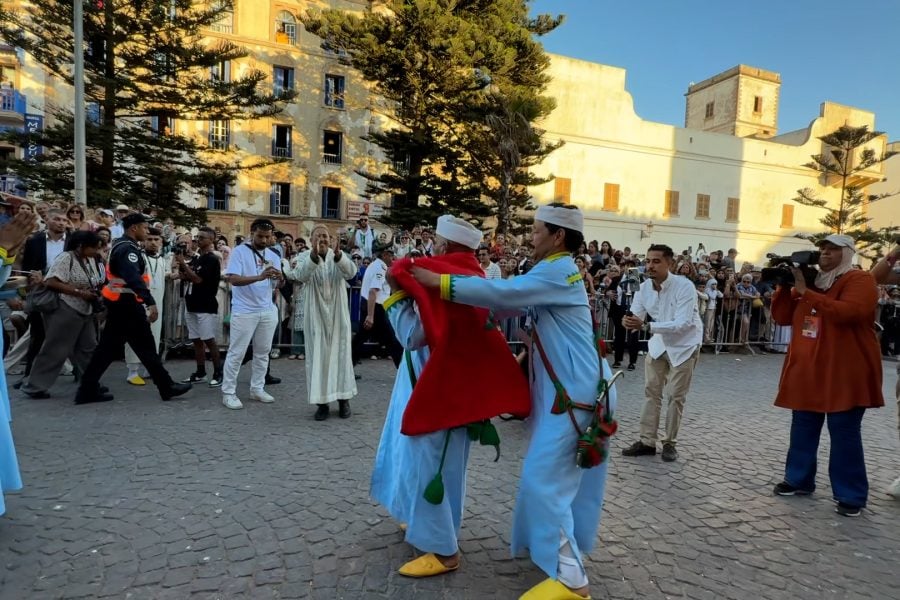
People of all ages, Moroccan and foreign, gathered to follow the drumbeats and chants of Gnaoua musicians, Issawa, Hmadcha, and other traditional troupes.
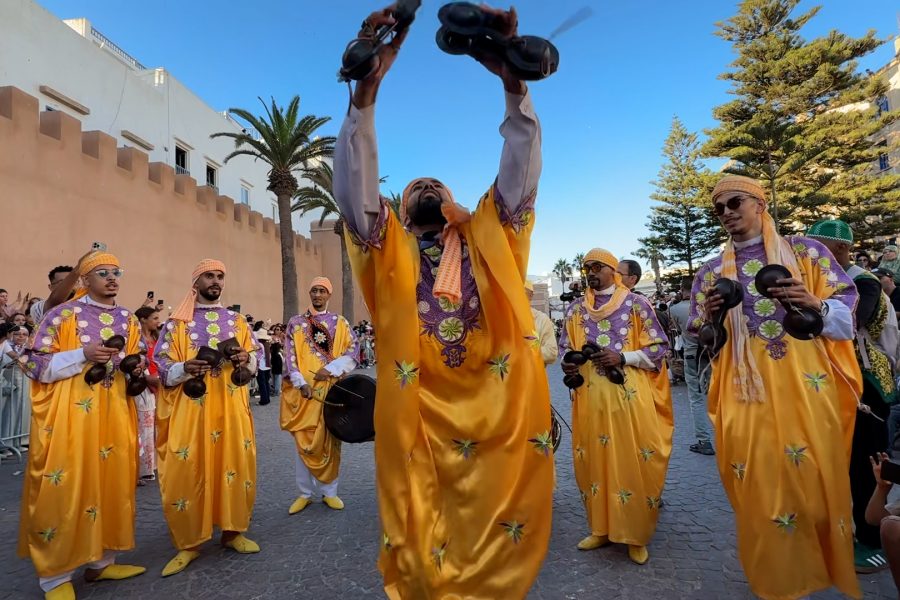
The crowd gathered along both sides of the street to watch the procession as performers moved in sync to the music.
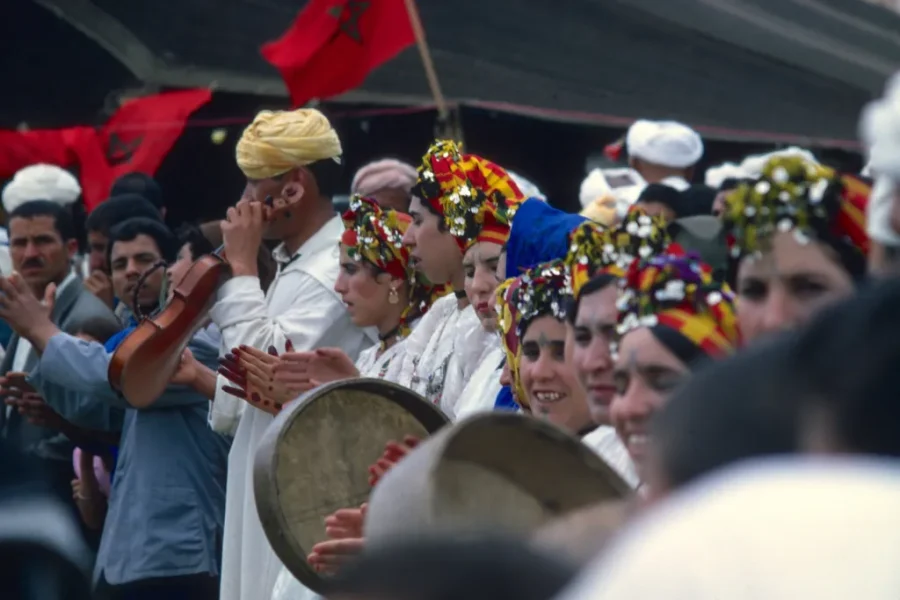
The troupes, including men and women, led the parade, carrying large, colorful flags through the old medina.
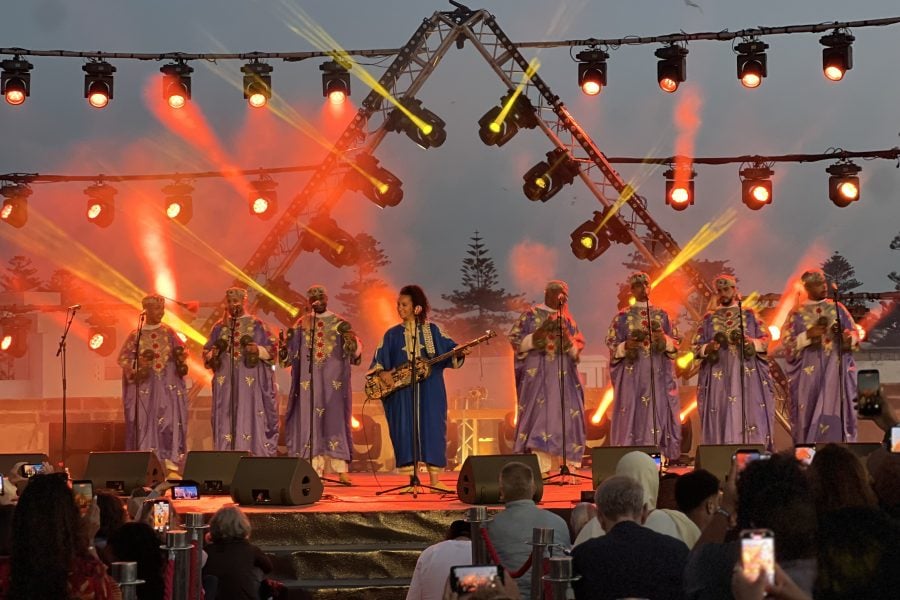
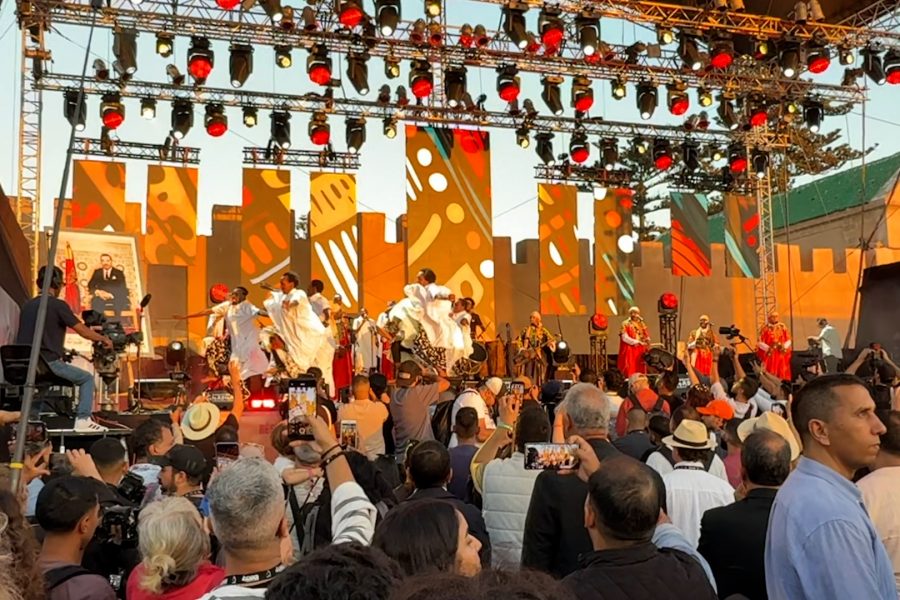
Following the parade, festival co-founder Neila Tazi officially opened the event at the Moulay Hassan stage, announcing the participation of 43 maalems from across Morocco, along with hundreds of artists from Africa, Europe, Asia, the Americas, and the Arab world.
“What brings us together here goes beyond music,” said Tazi, describing Essaouira as an international gathering place that draws people from around the world.

She emphasized that the maalems have preserved Gnawa heritage on the world stage while passing it on to new generations of musicians, helping make Essaouira a reference point for the tradition, coexistence, and building the future.
Tazi also noted that “the Gnaoua Festival is not only about celebrating heritage, but also about giving young artists a chance to experiment and learn” through its partnership with Berklee College of Music, which brings musicians from several countries to Essaouira.



add your comment
Terms of publication : Not to offend the writer, people, sacred things, or attack religions or the divine self, and refrain from racist incitement and insults.