
The United States and Morocco are preparing to deepen defense cooperation over the next decade under a 2026–2036 roadmap that outlines expanded collaboration in drones, cybersecurity, military infrastructure and advanced command systems, while strengthening Morocco’s role in regional security dynamics.
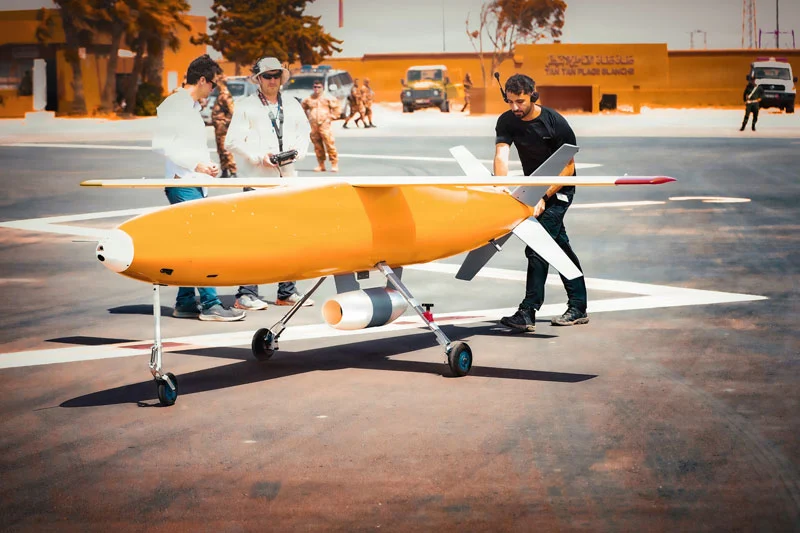
A central element of the proposed framework is the creation of a drone center in Morocco, described in the roadmap as a potential “center of excellence” for joint operations and military technology. If implemented, the facility would position Morocco as a regional hub for training, testing and development of unmanned aerial systems, which have become increasingly central to modern warfare.
The roadmap also envisions expanding the scope of the long-running “African Lion” military exercises. Future editions could include cybersecurity operations, drone and counter-drone warfare, artificial intelligence applications, underwater systems, logistics coordination and protection of critical infrastructure.
Another key proposal involves establishing cooperative security sites in Morocco. While the document does not refer to permanent U.S. bases, it suggests the use of designated locations to support joint training, crisis response and potential operational coordination between U.S. and Moroccan forces.
It also calls for examining the potential renovation of former U.S.-operated strategic airstrips in Morocco, a move that would enhance interoperability and logistical flexibility for joint missions, though details remain limited.
Morocco’s geographic position is a major factor behind the expanded cooperation. Situated at the entrance to the Mediterranean and overlooking the Strait of Gibraltar—one of the world’s busiest maritime corridors—the country is increasingly viewed as a strategic partner for monitoring shipping routes and addressing regional security threats.
The roadmap further outlines deeper counterterrorism coordination and continued modernization of Morocco’s armed forces through U.S. training and equipment. A longer-term objective is improved interoperability, including the ability of both militaries to operate on shared communication networks and exchange real-time operational data.
Among the most significant elements mentioned is potential access to the Link-16 tactical data system, a secure communications network used by NATO members and close U.S. allies. Integration into Link-16 would enable Morocco to connect aircraft, naval platforms, air defense systems and command centers within a unified operational network.
If realized, this would mark a major step in U.S.-Morocco defense alignment and further embed Morocco within Western security architectures, particularly in a region increasingly shaped by maritime competition and evolving geopolitical tensions.








add your comment
Terms of publication : Not to offend the writer, people, sacred things, or attack religions or the divine self, and refrain from racist incitement and insults.