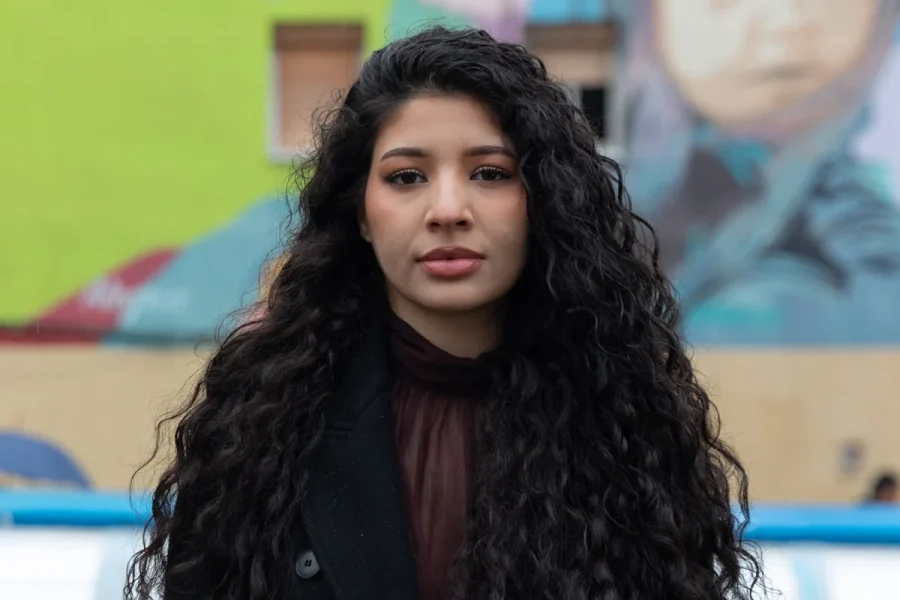
At just nine years old, Nada Itrab was taken from her home near Barcelona by a trusted neighbour who offered her what seemed like a harmless holiday. Instead, the trip marked the beginning of a nine-month ordeal that would see the Moroccan-origin girl kidnapped, trafficked to Bolivia, and forced into labour deep inside the Amazon rainforest before a cross-border rescue operation brought her back to safety.
Now 22 and studying law in Spain, Itrab’s story has returned to global attention following the release of her memoir Yo soy Nada (I Am Nada) and investigative reporting by The Guardian. Together, they shed light on one of the most disturbing human trafficking cases in recent years, built on the exploitation of a vulnerable migrant family and ending in a high-risk international rescue.
The case began in August 2013 in L’Hospitalet de Llobregat, a low-income area near Barcelona, where Itrab’s Moroccan family had settled after emigrating when she was four years old.
Facing financial hardship, social isolation, and undocumented status, the family came into contact with a neighbour, Bolivian national Grover Morales, who gradually gained their trust by presenting himself as helpful and supportive.
“He saw the extreme hardship we were living in, our vulnerability, and he began to approach us,” Itrab later told La Vanguardia. “He was the perfect neighbour.”
Morales later offered to take nine-year-old Nada on a holiday to Bolivia as a reward for her school performance. Trusting him, her parents signed the travel authorization.
Captivity in bolivia and the amazon
The situation changed immediately after arrival. Morales told her that travel documents were missing, isolating her in a foreign country. She later managed to secretly call her mother in Spain, triggering a police alert.
As authorities closed in, she overheard confirmation that Morales was being ordered to surrender her. It was then she understood she was being held against her will.
“I felt more like I was in a cage because he wouldn’t let me talk to anyone and he wouldn’t let me go anywhere alone,” she said. “My voice and my identity had been stripped away from me.”
To evade capture, Morales moved her deep into the Amazon rainforest in Bolivia’s El Chapare region, near Cochabamba.
For around seven months, she was held in isolated coca plantations under extremely harsh conditions. She was subjected to forced labor and lived in a dangerous environment marked by insects, isolation and constant fear. According to her account, she suffered repeated physical and sexual abuse during this period.
The rescue operation
The case advanced after a phone call allegedly allowed Spanish authorities to trace Morales’s location. In March 2014, Spanish and Bolivian authorities carried out a joint helicopter operation that ended with the rescue of Nada after around nine months in captivity. The images of her evacuation made international headlines at the time.
Following her return to Spain, Nada faced a difficult recovery process marked by emotional distress and what she describes as gaps in institutional support. Her reintegration into normal life proved challenging.
She later described this period as a “second rescue,” supported by journalist Neus Sala, who helped her navigate administrative and emotional difficulties and later co-authored her memoir.
Reclaiming her story
More than a decade after her abduction, Nada Itrab has chosen to speak publicly about her experience, using her story to highlight issues linked to human trafficking, child protection and social vulnerability.
Now studying law at the University of Barcelona, she says she aims to use her experience to help protect other vulnerable children and ensure similar cases are not overlooked.







add your comment
Terms of publication : Not to offend the writer, people, sacred things, or attack religions or the divine self, and refrain from racist incitement and insults.