
In a shift reshaping the global automotive industry, China no longer holds the lowest labor costs. A recent study shows that countries such as Morocco, Mexico and Romania now offer lower labor costs than China.
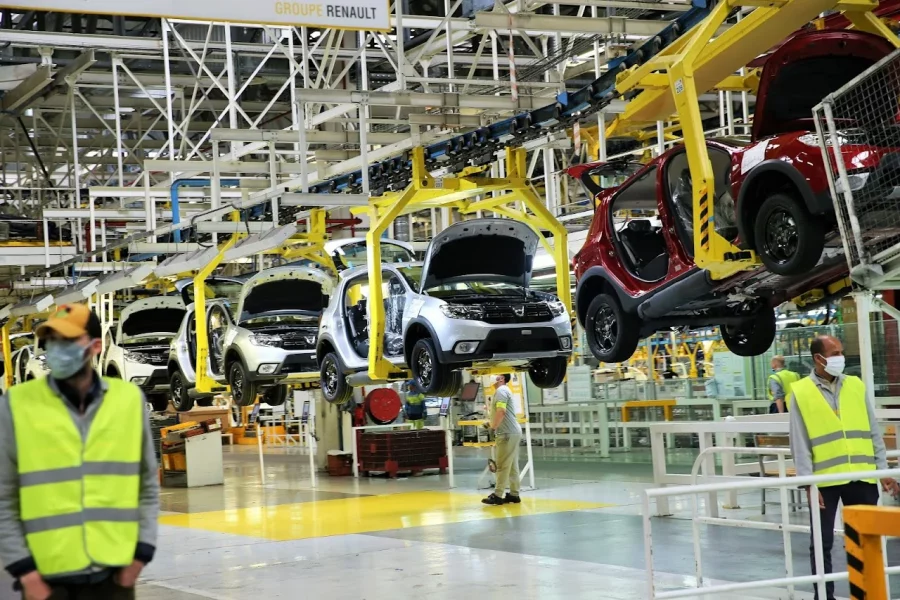
This competitive advantage has prompted French automakers to relocate a significant share of their manufacturing operations to Morocco. By leveraging lower labor costs and an increasingly attractive investment environment, the shift reinforces the country’s position as a strategic hub for global automotive production.
The findings come from a study by consulting firm Oliver Wyman, which analyzed more than 250 automotive assembly plants worldwide. The data is significant, as labor accounts for between 65% and 70% of total “conversion costs,” a category that also includes indirect expenses, energy and depreciation.
The study highlights that understanding “labor cost per vehicle” is no longer just a financial metric but a key factor for competitiveness in a rapidly evolving global market, one that Morocco has effectively leveraged to strengthen its role in the automotive value chain.
The report comes as the global automotive sector faces mounting challenges, including tariffs in the United States, intensifying competition from Chinese automakers and a slowdown in battery electric vehicle (BEV) sales. Under these pressures, manufacturers are being forced to optimize production and reduce costs to remain competitive.
The report groups automakers into four categories based on labor cost per vehicle. European luxury brands rank highest, averaging $2,232 per vehicle across companies such as Mercedes-Benz, BMW and Audi. In Germany, strict labor regulations and high wages push that figure to $3,307.
Manufacturers focused exclusively on electric vehicles, including Tesla and newer entrants, average $1,660 per vehicle. Their costs remain elevated due to lower production volumes and declining government subsidies.
Mainstream automakers average $880 per vehicle, with Japanese companies leading in efficiency at $769. In contrast, labor costs in the United States have risen to $1,341 following recent union wage increases.
Chinese automakers average $585 per vehicle, benefiting from relatively low labor costs and integrated supply chains. However, countries such as Morocco are becoming increasingly competitive in overall cost efficiency.
Beyond labor, the report emphasizes the role of energy costs and supply chain dynamics in reshaping the industry. German manufacturers continue to face high natural gas prices, while French companies benefit from lower energy costs linked to nuclear power.
Supply chain disruptions during the COVID-19 pandemic have also accelerated the adoption of “nearshoring” strategies. This trend is driving increased investment in geographically closer and cost-competitive countries such as Morocco, helping companies build more resilient supply chains for European and global markets.
The report concludes with several recommendations. It calls on European luxury automakers to restructure operations and reduce labor costs toward $1,500 per vehicle. It urges electric vehicle manufacturers to scale up production to offset declining subsidies. It also advises Chinese automakers to prioritize quality to strengthen their long-term competitiveness in international markets.








add your comment
Terms of publication : Not to offend the writer, people, sacred things, or attack religions or the divine self, and refrain from racist incitement and insults.