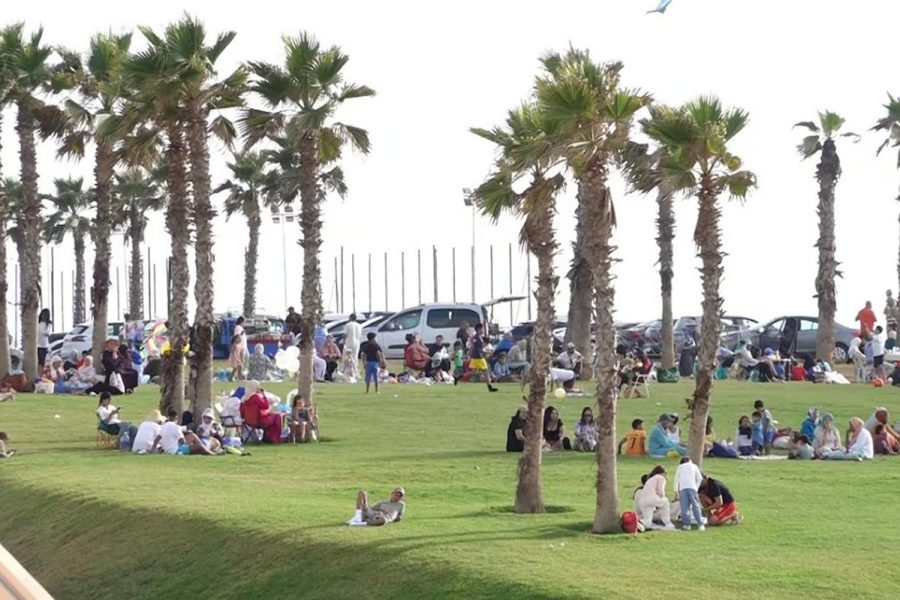
The recent decision by local authorities to prohibit sitting or walking on the lawns of the Rabat Corniche has ignited a heated debate among residents and local officials, as signs reading “Walking and sitting on the grass is prohibited” began appearing across the popular coastal destination.
For years, the Corniche has served as a vital “lung” for the capital’s residents. However, the new restrictions, which are being enforced by security personnel, have met with sharp criticism from some members of the city council.
Omar El Hyani, a member of the Rabat City Council representing the Democratic Left Federation (FGD), condemned the ban. In a social media post, El Hyani questioned the logic behind the decision, arguing that if the goal is to protect the grass, authorities could opt for temporary closures of damaged sections rather than a blanket ban.
“Every major city in the world opens its green spaces to the public,” El Hyani stated. “What is the point of these spaces in a city dominated by concrete if they cannot be used? Huge amounts of public money are spent on their irrigation and maintenance.”
El Hyani added that the move feels like an attempt to turn Rabat into a “guest salon”, a city meant only to be looked at rather than lived in.
In contrast, Hicham Akamhi, Vice President of the Rabat Communal Council, defended the measures, citing the “exceptional beauty” of the Corniche and the need to preserve its infrastructure. Speaking to Hespress, Akamhi expressed deep regret over the negligence and “unresponsible behavior” of some visitors.
Akamhi noted that during peak hours after 5:00 PM, families often arrive with heavy equipment, including chairs and tea sets, which puts direct pressure on the greenery. He also pointed to a significant littering problem, with household waste, plastic bags, and tissues frequently left behind.
“These are shocking scenes of uncivilized behavior that offend the beauty of the space,” Akamhi said. He emphasized that while the grass gives the Corniche its charm, its destruction through random play and trash strips the area of its aesthetic value.
The deputy Mayor concluded that the responsibility for maintaining the site lies with the public, suggesting that if visitors had maintained a culture of cleanliness and care, such restrictive measures might not have been necessary.








add your comment
Terms of publication : Not to offend the writer, people, sacred things, or attack religions or the divine self, and refrain from racist incitement and insults.