
Irregular migration to Ceuta has surged since the beginning of 2026, reflecting a rapid shift in migration routes toward Spain amid mounting humanitarian and security pressures on Spain.
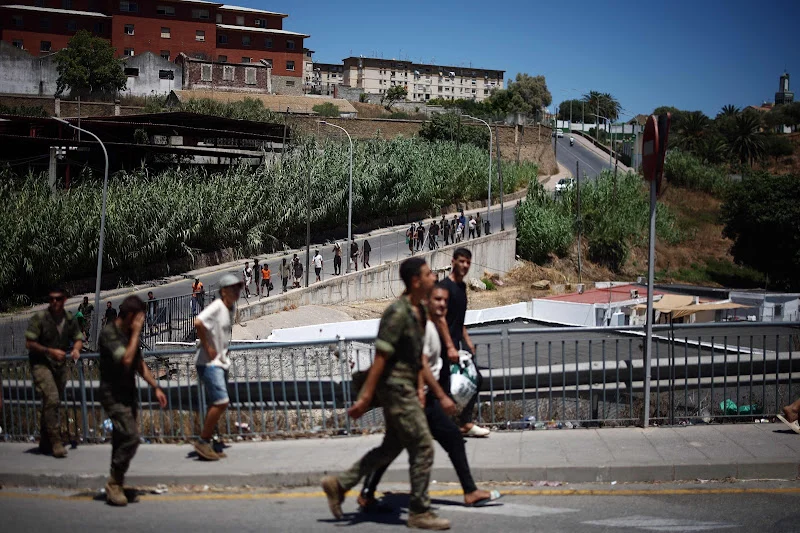
Figures released by Spain’s Interior Ministry and reported by El Faro de Ceuta show that 2,101 migrants entered Ceuta between Jan. 1 and April 30, primarily via land crossings or by swimming from nearby Moroccan shores. This marks a 329.7% increase compared with the 489 arrivals recorded in the sam period in 2025.
The spike represents an additional 1,612 entries in just four months, positioning Ceuta as one of the main pressure points for irregular migration toward Europe this year. The increase has been driven by both individual and group attempts to scale border fences or reach the enclave through adjacent coastal waters.
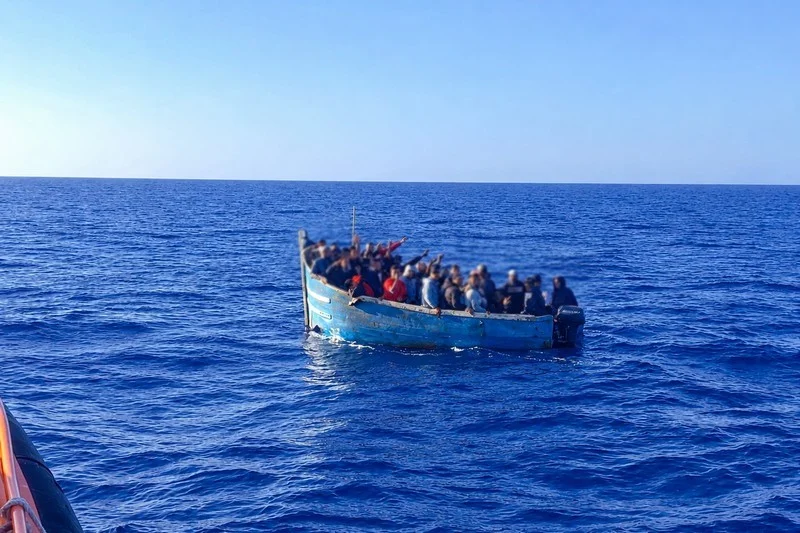
In contrast, direct maritime arrivals to Ceuta remain negligible, with no recorded entries by sea during the period. In nearby Melilla, only nine migrants arrived by sea, compared with just one a year earlier.
The data highlights a broader shift in migration dynamics, with pressure moving toward land crossings and short-distance coastal routes. Swimming attempts from neighboring Moroccan beaches, in particular, have increased in recent years.
Despite the localized surge in Ceuta, overall irregular migration to Spain has declined sharply. Authorities recorded 7,923 arrivals nationwide first four months of 2026, a drop of 43.2% compared with the same period last year.
This decline is largely attributed to a steep decline in arrivals to the Canary Islands, historically one of the most dangerous migration routes to Europe. Arrivals there fell by 78.5%, from 10,562 to 2,276 within a year.
Spanish authorities also reported a significant decrease in the number of migrant boats intercepted, with only 27 vessels recorded compared to 167 during the same period in 2025, suggesting tighter maritime surveillance and reduced smuggling activity along this route.
However, other areas have seen rising numbers. The Spanish mainland and the Balearic Islands recorded 1,536 arrivals between January and April, up 19.5% year-on-year.
According to the United Nations High Commissioner for Refugees, migration flows along the western Mediterranean route are dominated by Algerian nationals, who account for 42.8% of arrivals, followed by Moroccans at 19.3% and Sudanese at 12.5%. Migrants from Gambia, Senegal and Mali make up the majority of those heading to the Canary Islands.
Despite the overall decline in arrivals, the human cost of these journeys remains high. UNHCR data indicates that 1,214 people died in 2025 attempting to reach the Canary Islands, while 484 others lost their lives trying to reach mainland Spain, the Balearic Islands, or Ceuta and Melilla.
The figures underscore that even as migration flows fluctuate, routes to Europe, particularly along the western Mediterranean—remain among the deadliest in the world.








add your comment
Terms of publication : Not to offend the writer, people, sacred things, or attack religions or the divine self, and refrain from racist incitement and insults.