
Archaeologists working in southern Morocco say a recent excavation in Smara province has uncovered rare and important evidence of early human life, including burial sites, rock art and some of the earliest forms of Amazigh writing.
The dig took place between March and April at “Khankat Exat”, a site in the rural commune of Jdiriya. Researchers describe the findings as offering new insight into both the cultural and environmental history of the region.
Among the key discoveries are pre-Islamic burial structures. The team found what it called unique funerary architecture, along with primary burials containing objects believed to have been placed with the dead.
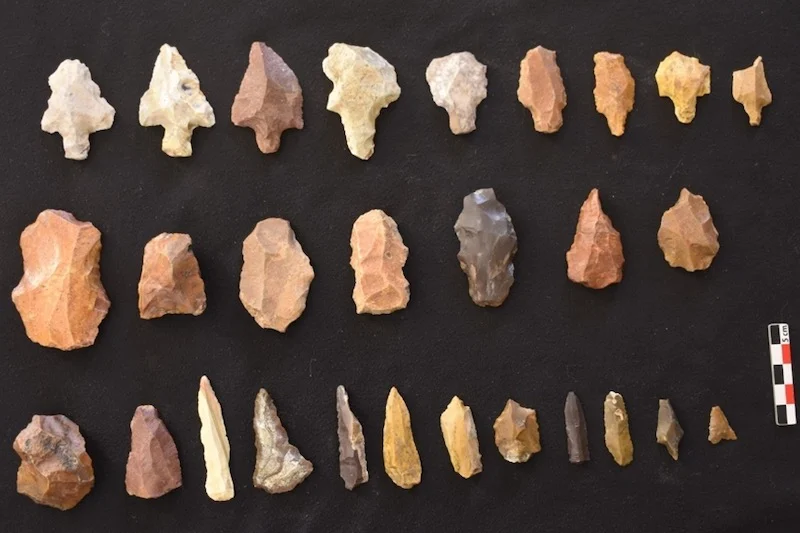
The finds point to long-standing burial traditions and social practices in the area.
Researchers also documented two groups of rock art. One includes early Amazigh inscriptions, believed to reflect the beginnings of written expression in the region. The other features ancient human figures, suggesting artistic activity dating back thousands of years.
One of the most notable findings is what researchers identified as a pigment preparation area. The site includes a hearth and grinding tools that still show traces of red pigment, likely used in the rock art.
Scientists analyzed the pigments using a mobile laboratory from Moulay Ismail University in Meknes.
The team used non-destructive methods, including color analysis, X-ray fluorescence and Raman spectroscopy, to study the materials without damaging them.
The research also points to a diverse ecosystem in the region. The presence of argan trees, known for their ability to survive in arid climates, and animal species adapted to desert conditions proves the area’s environmental significance.
The project is part of a broader effort to document and preserve cultural and natural heritage in the Saguia el-Hamra basin.
The project was led by the Miran Association for the Protection of Heritage, with support from local authorities, Morocco’s Culture Ministry and Ibn Zohr University in Agadir.
Researchers say the findings show a strong link between human activity and the natural environment in the area. They add that the site could play a role in developing cultural and eco-tourism in Smara province.





add your comment
Terms of publication : Not to offend the writer, people, sacred things, or attack religions or the divine self, and refrain from racist incitement and insults.