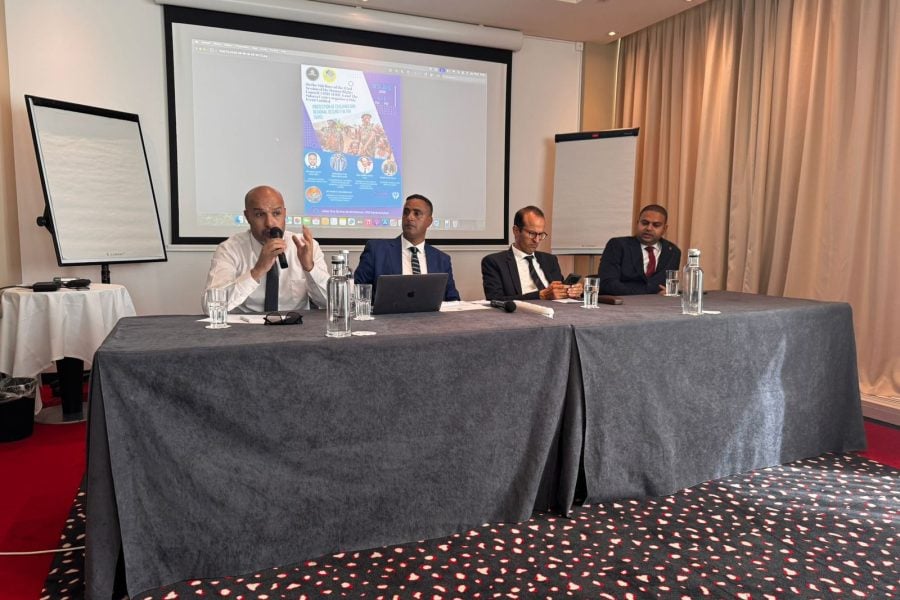
African experts and civil society representatives condemned attacks attributed to the Polisario Front against civilians in Smara and endorsed Morocco’s autonomy proposal during a side event held alongside the 62nd session of the UN Human Rights Council in Geneva.
The event, organized by the CIDH Africa Network and the Sahara Center for Studies and Research in Development and Human Rights, examined civilian protection and regional security across the Sahel-Sahara region.
Hamadi Filali, secretary-general of CIDH Africa Network, said available information concerning the use of civilians in logistical activities linked to the Smara attacks raised serious questions under international humanitarian law.
He said the laws of war require a clear distinction between civilians and combatants and called for those responsible for attacks against populated areas to be held accountable.
Mohamed Ahmed Kane, president of the African Institute for Peacebuilding and Conflict Transformation, placed the attacks within a broader regional security crisis involving terrorism, organized crime and armed groups operating across fragile borders.
Kane said attacks against civilian communities represented one of the most serious threats to regional security and argued that the characteristics of the Smara incidents were consistent with acts commonly classified as terrorism under international standards.
Abdelbasit Syed Irsa, president of World Humanitarian Drive, contrasted development projects he said he had observed during a visit to Morocco’s southern provinces with conditions in the Tindouf camps.
He described Morocco’s autonomy initiative as a realistic and credible political framework capable of ending the regional dispute.
Other speakers called for a human-security approach combining civilian protection, regional cooperation and sustainable development to address the roots of instability.
Participants concluded that attacks on civilians risked worsening insecurity across North Africa and the Sahel and urged international actors to reject military escalation.
They also said growing international support for Morocco’s autonomy initiative reflected its status, in their view, as the most serious and workable basis for resolving the Sahara dispute.





add your comment
Terms of publication : Not to offend the writer, people, sacred things, or attack religions or the divine self, and refrain from racist incitement and insults.