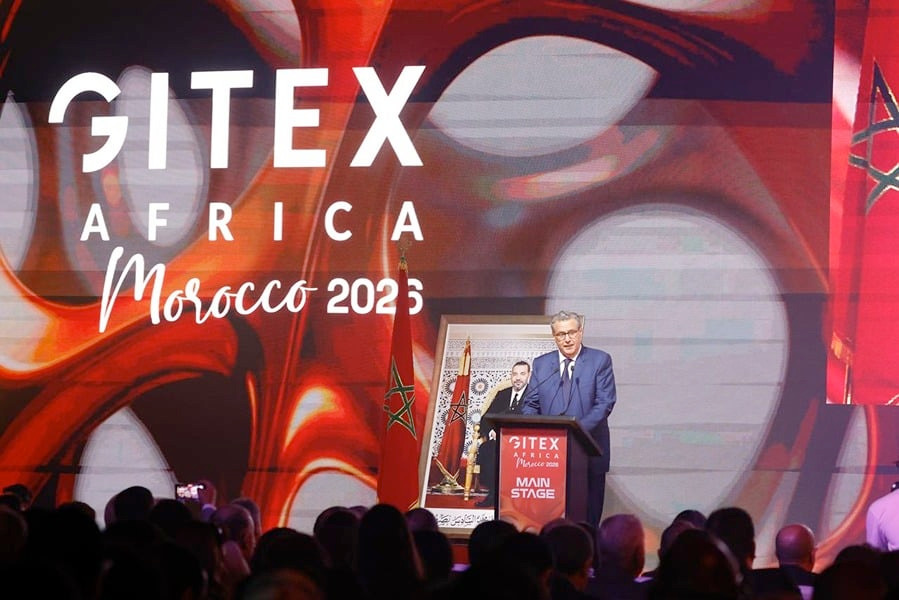
GITEX Africa, the continent’s largest tech and startup event, kicked off Today in Marrakech, drawing tens of thousands of investors, entrepreneurs and policymakers.
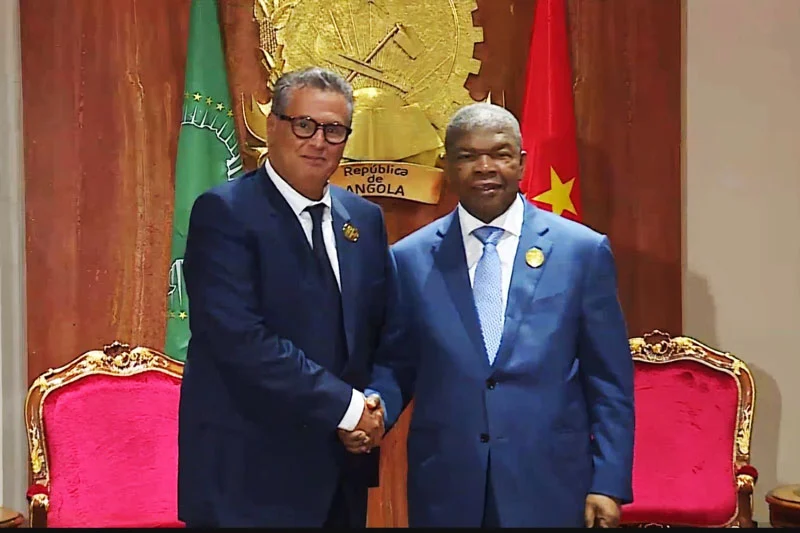
Opening the fourth edition of the event, head of governmeny Aziz Akhannouch said Morocco has increased spending on digital transformation and is now shifting from scattered initiatives to a “clear and coherent” national strategy.
Since 2021, when a dedicated ministry for digital transition was created for the first time, investment in the sector has surged from about MAD 11 million to more than MAD 1.7 billion, he said.
That shift is now anchored in the country’s “Digital Morocco 2030” strategy, launched in 2024, which aims to make public services easier to access while boosting the digital economy and job creation.
“Technology only matters if it improves people’s daily lives,” Akhannouch said, pointing to efforts to digitize services in education, justice and public administration.
He said Morocco has already created more than 148,000 jobs in offshoring and digital exports, generating over MAD 26 billion in revenue by the end of 2024. The government aims to nearly double that to 270,000 jobs and around MAD 40 billion in exports by 2030.
A major focus is startups, with new funding mechanisms ranging from seed financing to support for early-stage growth. A public-private investment push is expected to mobilize up to MAD 2.5 billion for Moroccan startups.
Morocco is also investing heavily in talent. The number of students in digital fields has doubled in two years to 22,000, while training programs like JobInTech are targeting skills in high-demand tech roles.
Artificial intelligence featured prominently in the opening speeches, with officials framing it as both an opportunity and a geopolitical challenge.
Digital Transition Minister Amal El Fallah Seghrouchni said the global race for AI dominance is reshaping power dynamics, driven by massive investments in the United States, China and Europe.
She said Morocco is positioning itself along a “third path” as it’s not trying to compete head-on with global tech superpowers, but aiming to build a model that combines innovation, sovereignty and international cooperation.
“The goal is not domination, but connection,” she said, describing Morocco as a bridge between Africa, Europe and the Atlantic.
She warned that AI could deepen global divides if left unchecked, but also said it can drive growth, stability and better governance if managed responsibly.
Morocco has recently climbed 14 places in a global index measuring government readiness for AI, officials said, citing improved strategy and institutional capacity.
Morocco has begun rolling out 5G, aiming to cover 45% of the population by the end of 2026 and 85% by 2030. Fiber-optic subscriptions have surpassed 1.4 million, while new programs target rural connectivity gaps.
“Africa has the energy and the ambition,” Akhannouch said. “What it needs now are digital roads, funding and opportunities.”





add your comment
Terms of publication : Not to offend the writer, people, sacred things, or attack religions or the divine self, and refrain from racist incitement and insults.