
For decades, the primary method to move hashish from northern Morocco into the European market was low‑tech and human‑dependent.
In the early phase of drug trafficking from Morocco to Europe, the trade relied heavily on human couriers, known as mules, who carried cannabis across the Spanish‑Morocco frontier at the Spanish exclaves of Ceuta and Melilla, the only land borders between Africa and the European Union.
Spanish law enforcement reported that border seizures at Ceuta and Melilla accounted for roughly 30–40 % of EU cannabis resin intercepts in the early 2000s.
Mules typically carried 5–20 kg per trip, depending on risk tolerance and border security measures. The high frequency of crossings allowed traffickers to move tons of hashish monthly even with low individual loads.
On the sea routes, smugglers used small vessels like speedboats or jet skis to shuttle shipments across the Strait of Gibraltar to the Andalusian coast near Algeciras and the Campo de Gibraltar region.
These traditional methods carried high risks of interception but required minimal infrastructure investment, and helped cement Spain’s role as Europe’s leading seizure point for Moroccan hashish
From mules to helicopters, aircrafts and drones
As enforcement tightened along the Gibraltar‑Alboran route and border checkpoints became more sophisticated, traffickers began diversifying tactics in the 2000s and 2010s.
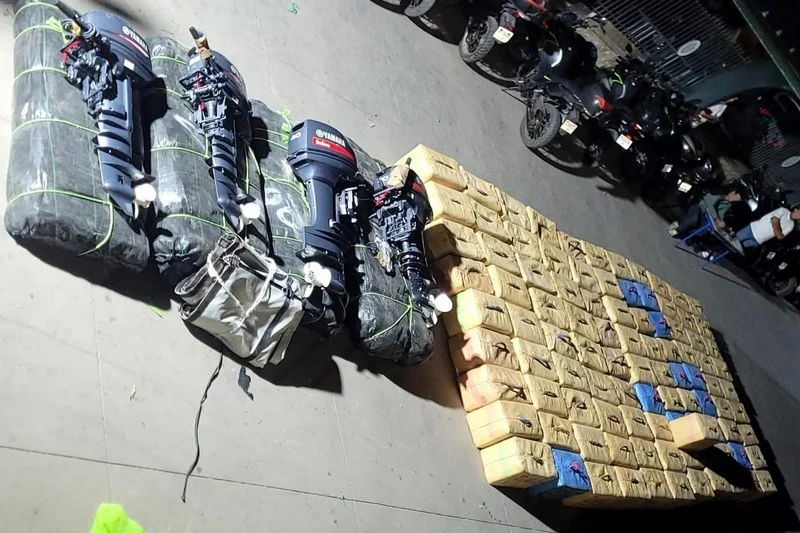
Maritime smuggling remained dominant but became more sophisticated as larger speedboats, semi‑rigid vessels and modified craft designed for stealth were used to move tonnage quickly before coastal patrols intercepted them.
Traffickers also experimented with air routes, using small aircraft or helicopters to drop loads offshore for pickup, though such methods were riskier and less common.
Even drones have been reported in recent years as part of trial operations to ferry light payloads of drugs over maritime approaches, indicating how technology was gradually entering the trade.
Tunnels and the high-tech era of smuggling
The most striking evolution in trafficking tactics came in 2025–26, with the discovery of engineered underground tunnels linking Morocco and the Spanish exclave of Ceuta.
In March 2026, Spanish police uncovered a complex three‑level smuggling tunnel beneath a warehouse in Ceuta that was used to move hashish directly from Morocco into Spain.
The structure included a vertical access shaft, a storage chamber and a passageway equipped with rails, pulleys and underground cranes to transport heavy pallets.
Authorities seized 17 metric tons of hashish and about $1.6 million in cash, and arrested 27 people in connection with the operation.
Investigators described the infrastructure as a “maze‑like” network** comparable to mine workings, built to bypass surface checkpoints and border controls.
Efforts to keep the tunnel operational included pumping systems to manage underground water and soundproofing to avoid detection.
Spanish reporting suggests the network transported hashish into Europe’s interior, including markets in the Netherlands and was tied to a “narco‑architect”who oversaw multiple tunnels.






add your comment
Terms of publication : Not to offend the writer, people, sacred things, or attack religions or the divine self, and refrain from racist incitement and insults.