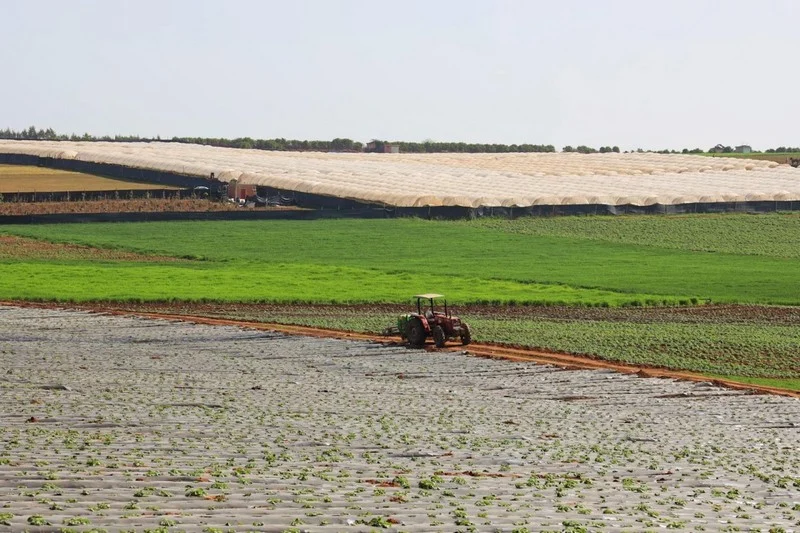
The Spanish government said cooperation agreements with Morocco in agriculture and fisheries go beyond trade, describing them as a strategic tool that strengthens sustainability, resilience and the international reach of Spain’s agricultural sector.
In a written response to lawmakers in parliament, the government of Prime Minister Pedro Sánchez said memorandums of understanding with Morocco have generated positive outcomes and new opportunities for key sectors.
The agreements promote sustainability and innovation, particularly through cooperation in ecological and organic farming, environmental efficiency, and the exchange of expertise in sustainable production practices. They also create opportunities for Spanish companies in agricultural technology, efficient irrigation, sustainable fertilization and digitalization.
Madrid said the partnership contributes to food security by facilitating knowledge-sharing in food system transformation and health coordination. It also enables Spanish companies and cooperatives to participate in investment projects, provide technical support and training in Morocco, while reinforcing Spain’s leadership in animal genetics, nutrition, agricultural machinery, and food processing and packaging.
The government added that cooperation in fisheries and aquaculture—along with efforts to combat illegal, unreported and unregulated fishing—offers key benefits, including improved sustainability and resource protection. Enhanced scientific collaboration provides Spain with greater access to shared data on fishing zones, migratory species, ecosystems and the effects of climate change in the northeastern Atlantic and western Mediterranean.
Spain stressed that cooperation with Morocco is essential to curb illegal fishing activities in shared waters and improve traceability and monitoring of landings. As a leading European country in aquaculture, Spain can also export technical expertise, management models, genetics, feed systems and health monitoring, strengthening its role as a preferred technical partner for Moroccan projects.
According to Madrid, relations with Morocco are based on a strategic neighborhood partnership that combines shared interests, institutional cooperation and joint management of common challenges. These ties are reinforced by geographic proximity and interconnectedness in areas such as security, trade, migration and environmental protection, as well as within frameworks like the European Neighborhood Policy and the Union for the Mediterranean.
The government emphasized that the recently signed fisheries memorandum is purely technical in nature and does not regulate market access or grant fishing rights. Such matters remain exclusively under European Union law.
It added that the agreement does not alter the existing legal framework or directly affect the activity of the Spanish fishing fleet. Instead, it aims to enhance sustainability, improve scientific knowledge, and strengthen monitoring and traceability systems—key elements in promoting transparency and combating unfair fishing practices.
Spain concluded that the memorandum has no legal impact on rulings by the Court of Justice of the European Union regarding EU-Morocco agriculture and fisheries agreements, and does not seek to bypass or reinterpret EU law. Rather, it is an administrative and technical cooperation tool aligned with EU regulations, intended to improve governance and sustainability in shared marine ecosystems.




add your comment
Terms of publication : Not to offend the writer, people, sacred things, or attack religions or the divine self, and refrain from racist incitement and insults.