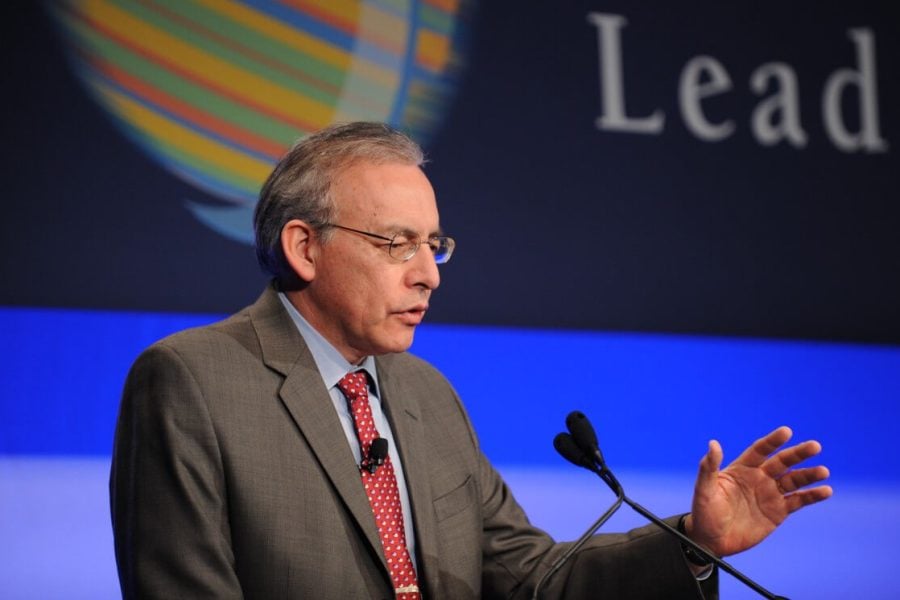
In 2026, the United Nations will appoint its 10th Secretary-General. In its 80-year history, the UN has not once been led by a woman. Since Trygve Lie took office in 1946, nine men have held the post. When António Guterres steps down, the question before Member States will not be who is qualified, but whether the UN is prepared to align its leadership with the principles it proclaims.
The case for a woman Secretary-General is not symbolic. It is structural.
Three years ago, in conversations I had with Nobel Peace Prize laureate Jody Williams and former Argentine Foreign Minister Susana Malcorra, the argument centered on effectiveness. The world faces accelerating climate collapse, a disintegrating nuclear arms control regime, widening inequality, and entrenched gender discrimination—mutually reinforcing crises.
Scientific warnings on climate change grow ever more urgent. Arms control agreements built over decades are unraveling as major powers modernize their arsenals. Pre-COVID income inequality, already staggering, has increased, reversing decades of progress. Women and children bear the brunt. In this context, gender equality is not a peripheral concern, but a force multiplier.
Research shows that peace agreements are more durable when women participate in negotiations. Countries with higher representation of women in parliament experience fewer human rights abuses. Institutions with women in senior leadership are less prone to corruption and failure, echoing UN Security Council Resolution 1325, which recognizes women’s central role in peace and security.
Malcorra underscored another dimension: representation. The United Nations claims to represent “We the Peoples.” Yet half of humanity has been excluded from its highest office. In the 193 Member States, women hold a fraction of top executive roles. The absence of a woman as UN head is not an oversight, but an institutional blind spot.
But in a recent conversation with novelist and thinker Bahiyyih Nakhjavani, the argument shifted. Since 2023, the world has grown more fragmented. The rule of international law is eroding. Armed conflicts multiply. Guardrails against nuclear proliferation weaken. Multilateralism is under siege. The UN faces financial strain, political paralysis in the Security Council, and declining public trust.
Nakhjavani posed an uncomfortable question: is appointing a woman now an act of empowerment or a “glass cliff,” a pattern in which women are elevated to leadership when institutions are in crisis and the likelihood of failure is high. Consider Theresa May, assuming office amid Brexit turmoil, inheriting a task many regarded as politically impossible. If Member States appoint a woman Secretary-General without granting her genuine authority, she may become a convenient scapegoat for systemic dysfunction.
The United Nations suffers from structural constraints no leader, male or female, can ignore. The veto power of the five permanent Security Council members limits decisive action, while national sovereignty often shields governments from accountability. Secretaries-General are selected through a process heavily influenced by the very powers they must scrutinize.
Without meaningful reform, any Secretary-General risks presiding over managed decline.
This is why 2026 matters.
A female Secretary-General cannot perform miracles, but can bring qualities urgently needed in this transitional age— consultative decision-making, coalition-building, and resilience under constraint. Today’s UN requires not a strongman but a bridge-builder. Not rhetorical bravado but moral credibility.
During COVID, several countries led by women were praised for transparent communication, reliance on scientific expertise, and decisive action. These examples do not prove that women are inherently better leaders. They do suggest that collaborative and evidence-based leadership styles—often undervalued in more confrontational political cultures—can yield results in crisis.
Nakhjavani put it starkly: what the UN needs most is integrity, a leader prepared to be criticized, even vilified, for defending principles that powerful states find inconvenient. A Secretary-General willing to confront systemic sclerosis rather than accommodating it.
Such leadership is not the preserve of men. But history suggests that women in high office, having often had to navigate formidable structural resistance, may be particularly well prepared for the difficult labor of institutional reform.
One truth must be faced squarely: political will.
If Member States refuse to loosen their grip or tolerate genuine independence, appointing a woman will be merely cosmetic, or worse, cynical. Elevating a woman as a symbol while denying her authority would confirm the very inequalities the appointment purports to solve.
If governments are serious about restoring credibility, modernizing governance, and confronting existential threats, then a qualified woman Secretary-General would send a signal far beyond symbolism. It would declare that representation, effectiveness, and legitimacy are inseparable.
In 1945, the UN Charter began with a promise to save succeeding generations from the scourge of war. That promise is fraying.
In 2026, Member States have more than a personnel decision to make. They will decide whether the United Nations is capable of renewal.
The world is watching. And history will remember not only who is chosen, but whether she is truly allowed to lead.



add your comment
Terms of publication : Not to offend the writer, people, sacred things, or attack religions or the divine self, and refrain from racist incitement and insults.