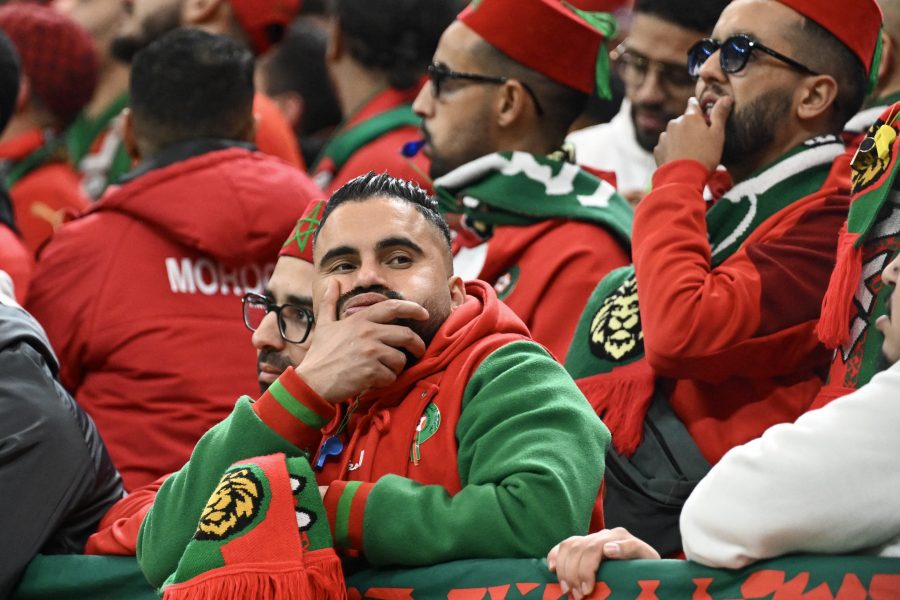
The Africa Cup of Nations hosted by Morocco was never a routine sporting event that could be reduced to a scoreline or a trophy, but instead a revealing moment in a much longer trajectory, a test of collective awareness rather than a purely technical contest on the pitch.
Readings that confine the experience to the logic of winning and losing remain fundamentally incomplete, because they fall into what can be called event-based reductionism: treating major moments as isolated incidents instead of as stages within a longer historical and cognitive process.
What the tournament revealed is that a country may not win everything on the field yet still secure deeper, more durable victories off it, victories that reshape mental frameworks, reorder perception, and generate lasting forms of collective knowledge.
In this sense, the competition became a moment of shared crystallisation, one in which symbolic power, regional rivalry, narrative warfare, information manipulation, and the emergence of a more mature and resilient public consciousness all came into sharp focus.
One of the most significant outcomes of this experience was the emergence of a new political awareness among large segments of Moroccan society: a growing conviction that what ultimately matters is neither external validation nor emotional rhetoric about brotherhood, but lucid national interest.
The tournament effectively put an end to what might be called relational naïveté, the assumption that solidarity between peoples is automatic and unconditional.
Reality, once again, demonstrated that states act first and foremost according to their own interests. This shift moved collective consciousness away from a sentimental reading of the world toward a more realistic understanding of power relations.
In this context, the tournament functioned as a mechanism for exposing politically instrumentalised discourse. Slogans long presented as expressions of goodwill, such as “brotherhood” narratives, collapsed under scrutiny, revealing themselves as tools of symbolic manipulation deployed by rivals when convenient, often to undermine internal cohesion.
Within this process, the concept of “backroom fixing” gradually entered Moroccan public discourse. Imported from hostile narratives, the term was normalised over time until it became a default explanation for any success.
Repetition turned it into a mindset that erodes self-confidence, persuading people that achievement must always be the result of hidden manipulation. What this experience demonstrated, however, is that success built on work, planning, and continuity requires no conspiratorial mythology to explain it.
At the same time, the campaign surrounding the tournament was not monolithic. It operated through a calculated division of roles. Some actors spread outright falsehoods, accusations, and doubts about organisation, integrity, and intent.
Others issued calm, courteous statements praising the event and acknowledging its success, wrapped in diplomatic language. This alternation between escalation and restraint was not accidental but strategic: one side attacked without limits, while the other projected reasonableness, confusing audiences and creating the illusion that truth lay somewhere in between.
This logic became even more apparent in the psychological pressure directed at the national team itself. The objective was never purely technical defeat but internal destabilisation, undermining confidence in players, coach, and the fairness of competition, and eroding public trust through repeated statements, media pressure, and manufactured tension before, during, and after matches.
The aim was to fracture morale, because a team that doubts itself does not need a superior opponent to lose.
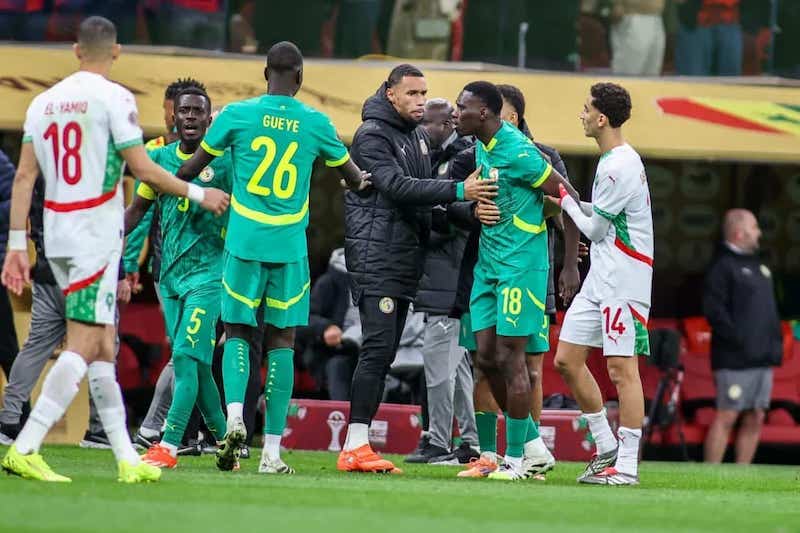
That pressure continued until the final whistle. The Senegalese team, under the leadership of a coach remembered for the wrong reasons, engaged in some of the ugliest forms of gamesmanship: provocative statements, sustained pressure on referees, exploitation of anything beyond fair play, and attempts to shift the confrontation from sport into chaos.
These tactics were mirrored by segments of supporters who resorted to violence and disorder, moments that could have plunged the match into open turmoil were it not for the disciplined and effective intervention of Moroccan security forces.At the same time, Moroccan public opinion became increasingly aware of coordinated campaigns that began with misinformation and downplaying, then escalated into gloating and mockery, relying on troll farms, professional digital operators, identity spoofing, and false-flag narratives, all aimed at disrupting public debate and undermining collective self-confidence.
It would be a mistake, however, to underestimate or ridicule the adversary. The opponent is not foolish, even if their rhetoric sometimes appears crude or contradictory. What is being deployed is systematic disinformation using well-documented techniques, including the “firehose of falsehood”: flooding the information space with rapid, repetitive, and multi-source falsehoods to exhaust public cognition and blur discernment.
This reality underscores the need to recognise and respond to such attacks effectively. Practical indicators of disinformation include repetitive messaging in slightly varied forms, the heavy presence of anonymous or newly created accounts, rapid escalation from debate to insult and suspicion, and the absence of verifiable data. These patterns correspond to what is known as coordinated inauthentic behavior.
Effective response does not lie in emotional reaction or scattershot rebuttal, but in information hygiene: verifying sources, contextualising claims, refusing to amplify toxic content, and building cognitive immunity through understanding how disinformation works before falling prey to it.
Against this multi-layered pressure, one decisive factor emerged as one of the tournament’s greatest gains: the Moroccan public.
Unlike teams that resort to emotional blackmail to extract temporary support from host populations, Moroccan supporters accompany their team naturally and spontaneously wherever it plays, driven by rooted belonging rather than manufactured mobilisation. Pride expressed itself not through raw emotion but through disciplined, conscious presence anchored in a long national memory.
On the pitch, players fought with full awareness of the symbolic weight of the national jersey and the responsibility it carries. This convergence between a conscious public and a committed team transformed stadiums into spaces of symbolic reinforcement, strengthening identity and cohesion, and producing a genuine moral victory by establishing collective resilience against manipulation.
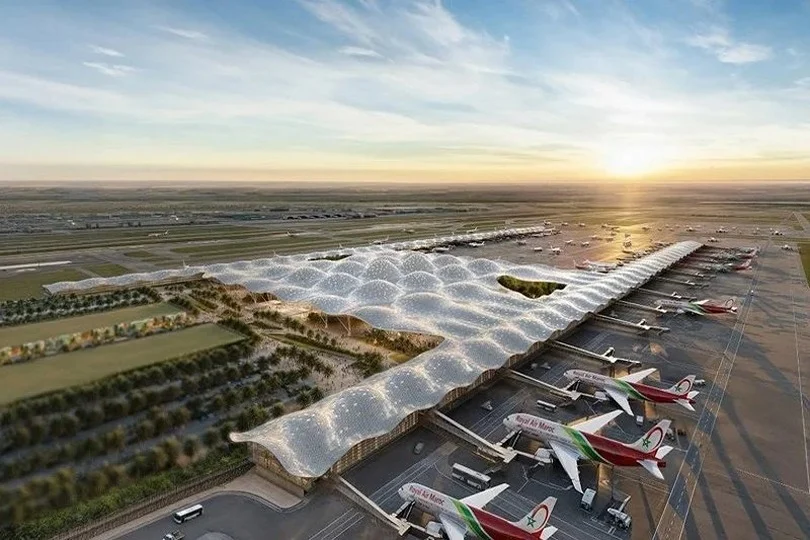
Morocco’s organisational success during the tournament further consolidated its image as a reliable state with strong organisational capacity. Yet success in nation branding does not generate admiration alone; it also produces structural envy. Progress, when visible and sustained, inevitably provokes hostility. The rule is simple: advancement attracts opposition.
At a deeper level, none of this can be understood without considering Morocco’s own specificity. Morocco is not a transient state or a polity clinging to ruins and nostalgia. It is an ancient nation with a long history of achievement, a living civilisational legacy, and uninterrupted historical continuity. Unlike entities that served merely as corridors for passing conquerors, Morocco preserved its core and built itself through accumulation, not rupture.
What Moroccans emerged with from this experience goes far beyond football. They gained a more mature awareness, a sharper ability to distinguish legitimate criticism from psychological warfare, and sporting rivalry from symbolic targeting.
In an era where perceptual warfare intersects with political conflict, the deepest victory is the one that renders a society less manipulable, more confident in itself, and more lucid about its trajectory.
That victory cannot be measured in trophies, but it is the one that determines a nation’s ability to move forward with steadiness toward lasting prosperity.




add your comment
Terms of publication : Not to offend the writer, people, sacred things, or attack religions or the divine self, and refrain from racist incitement and insults.