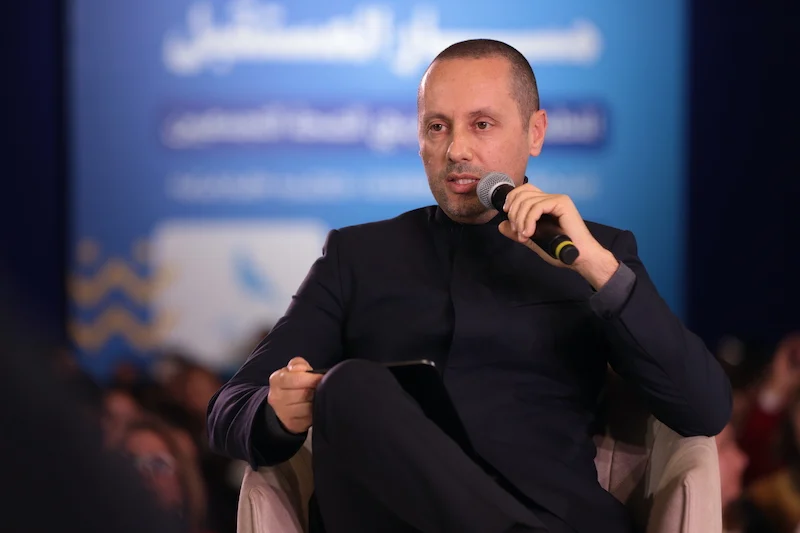
Morocco’s Minister of Health and Social Protection Amine Tahraoui said Saturday that reforms carried out in the health sector represent “significant and unprecedented progress” in Morocco’s institutional history.
Speaking during a meeting with health professionals affiliated with National Rally of Independents at the Mohammed VI International Conference Center, Tahraoui said the reforms form “a fundamental pillar in building the social state as envisioned by Mohammed VI.”
The minister said the overhaul of the health sector began with an extensive legislative and regulatory process that produced 497 legal and regulatory texts, including 17 laws, 52 decrees, and 428 ministerial decisions.
Tahraoui said the reform effort also included the creation of several new institutions, including the High Authority for Health, the Moroccan Agency for Medicines and Health Products, and the Moroccan Agency for Blood and Blood Derivatives, as well as the launch of territorial health groups.
Morocco has also made major progress in expanding compulsory health insurance, with 88% of the population, about 32 million people, covered in 2025, compared with 42% in 2020, Tahraoui said.
The expansion includes public and private sector employees, self-employed workers and professionals, as well as people registered under the AMO Tadamoun, which supports those unable to afford social coverage.
“Any Moroccan citizen, regardless of their social status, now has the right to benefit from compulsory health insurance,” the minister said.
Tahraoui also highlighted increased government spending on healthcare, noting that the sector’s budget rose from 20 billion dirhams in 2021 to more than 42 billion dirhams in 2026, an increase of about 115%.
The funding boost has accelerated infrastructure projects aimed at improving access to healthcare services, particularly in rural and remote areas.
Among the projects cited were the opening of university hospital centers in Agadir and Tangier, with additional facilities planned in Rabat and Laayoune.
The minister added that Morocco has renovated or rehabilitated about 1,400 primary health centers, 70% of which are located in rural areas. These facilities serve as the first point of contact for citizens seeking healthcare and have also supported public health campaigns, including efforts to address outbreaks of Measles.
Tahraoui said the reforms represent more than a list of achievements, describing them as “a major structural transformation” in Morocco’s effort to strengthen its social state and improve the quality and accessibility of healthcare services.







add your comment
Terms of publication : Not to offend the writer, people, sacred things, or attack religions or the divine self, and refrain from racist incitement and insults.