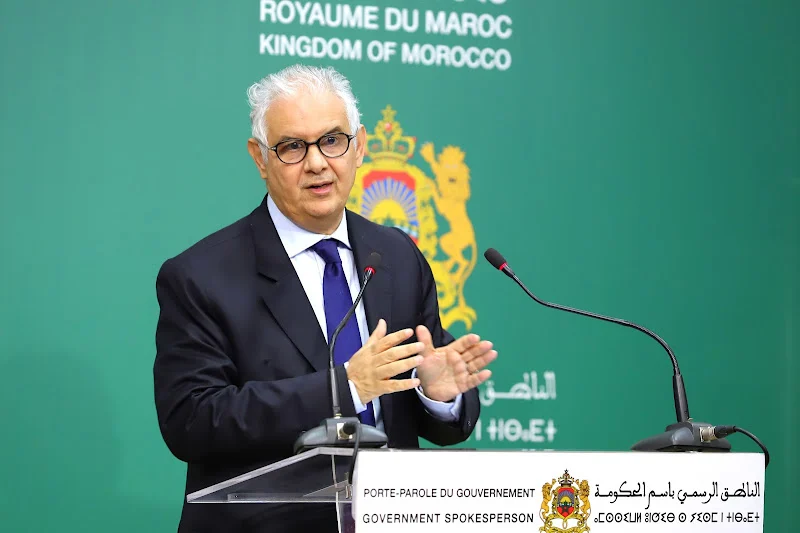
Morocco has recorded exceptionally high rainfall and water inflows in recent months, sharply boosting dam reserves but also contributing to severe flooding in several regions, Equipment and Water Minister Nizar Baraka said Wednesday.
Speaking at the government’s weekly press briefing, Baraka said his ministry had been fully mobilized during the recent floods, stressing the need for expert-led communication and the avoidance of political interpretations during emergency situations.
Rainfall since September has averaged 150 millimeters, representing a 35% increase compared with the long-term annual average recorded since the 1990s, Baraka said. Precipitation levels were three times higher than last year, exceeding normal seasonal levels.
Snowfall also reached record levels, with snow cover peaking at 55,495 square kilometers before declining to 23,186 square kilometers, he said. Since the start of the season, snow-covered areas have not fallen below 20,000 square kilometers, with snow depths ranging between 1 and 2 meters.
The exceptional weather significantly boosted dam inflows, both from rainfall and snowmelt. Between Sept. 1 and Wednesday, dams received 12.17 billion cubic meters of water, including 11.7 billion cubic meters since Dec. 12 alone — most of it in less than two months.
By comparison, total annual inflows during the 2023–2024 and 2024–2025 seasons did not exceed 9.8 billion cubic meters, Baraka said. From Jan. 28 to Wednesday alone, inflows reached 6.5 billion cubic meters, surpassing last year’s total in just 15 days.
National dam fill levels now stand at 69.4%, equivalent to 11.6 billion cubic meters of stored water.
Eight of Morocco’s ten river basins exceed 45% capacity, including Loukkos (93%), Sebou (91%), Bouregreg (92%) and Tensift (82%). The Draa-Oued Noun basin remains the lowest at 33%, while Souss-Massa stands at 45%.
Baraka said current reserves guarantee at least two years of drinking water supply, and between one and three years depending on the region. He added that further snowmelt is expected, keeping indicators positive.
A total of 31 dams currently exceed 80% capacity, while 11 dams have reached full capacity and have undergone controlled releases, the minister said.







add your comment
Terms of publication : Not to offend the writer, people, sacred things, or attack religions or the divine self, and refrain from racist incitement and insults.