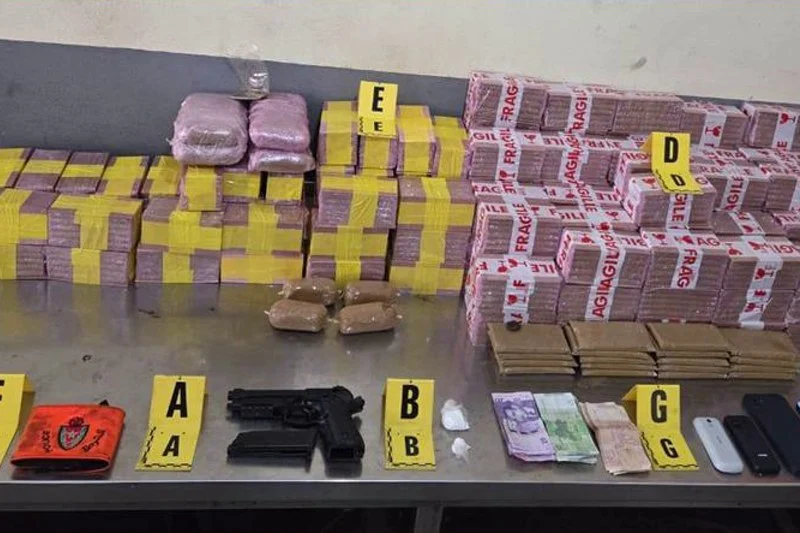
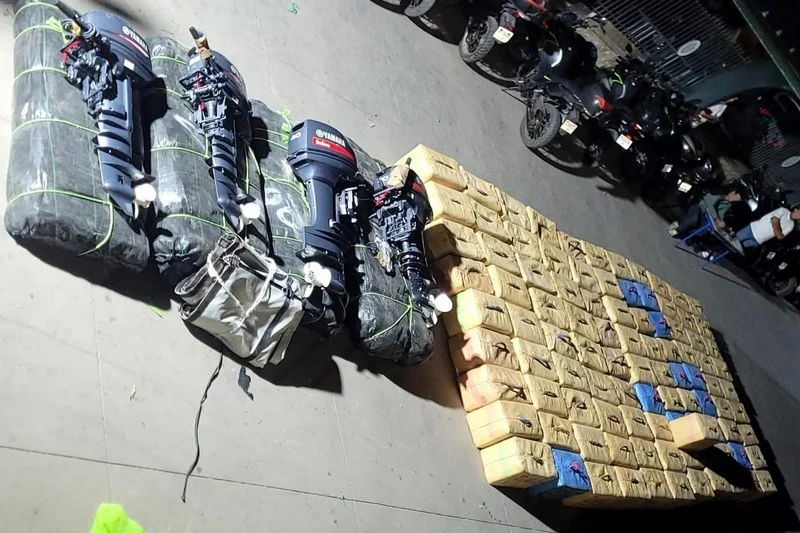
Africa is at risk of becoming a central new front in the global drug trade as criminal networks adapt to tougher U.S. anti-narcotics policies, a Moroccan security and geostrategic expert warned in a new analysis.
Cherkaoui Roudani, a specialist in security and geostrategic studies, said the United States’ increasingly hard-line approach to drug trafficking, especially during President Donald Trump’s second term, has pushed criminal networks to relocate rather than disappear. His analysis was published in Geopolitical Monitor under the title “Africa: The Next Front in the Global Drug Trade?”
Roudani said Washington’s expanding “war on drugs” has evolved beyond a domestic policy into a strategic diplomatic and security tool, reshaping global threat assessments tied to U.S. national security.
He pointed to a U.S. presidential determination issued in September 2025 that identified 23 countries as major drug-producing or transit states for fiscal year 2026, labeling them direct security threats. Five countries, Colombia, Venezuela, Afghanistan, Bolivia and Myanmar, were classified as having “demonstrably failed” to counter narcotics trafficking.
According to Roudani, the designation carries serious consequences, including potential economic sanctions, restrictions on international aid and intensified diplomatic pressure. It also opens the door to treating criminal networks as terrorist organizations, signaling a more globalized security-driven approach to drug control.
The analysis warned that heightened enforcement historically displaces drug economies rather than shrinking them. As risks and costs rise in Latin America without reducing global demand, criminal groups seek regions with weaker oversight and lower operational barriers, Roudani said.
Africa, he argued, has moved beyond its traditional role as a transit corridor to become an emerging platform for parts of the global criminal economy. Citing international reports, including those from the U.N. Office on Drugs and Crime, Roudani said hybrid transnational networks now operate in fragile environments such as the Sahel, the Gulf of Guinea and Libya, linking Latin American cartels, European markets and local armed groups.
The most dangerous shift, the study said, is the growing functional overlap between drug trafficking and armed extremist groups in the Sahel. Groups such as Islamic State in the Sahel and Jama’at Nusrat al-Islam wal-Muslimin benefit from drug revenues, while providing protection and control over smuggling routes.
“This is not an ideological alliance, but a transactional one,” Roudani said, warning that the dynamic gradually erodes state sovereignty rather than causing sudden collapse.
The study concluded that Africa’s strategic geography, weak port controls and vast conflict-affected areas make it particularly vulnerable to an expansion of organized crime. Roudani cautioned that trafficking networks may soon shift toward managing full criminal value chains, including storage, repackaging, money laundering and even the local production of synthetic drugs.
Such a transformation, he said, would blur the line between organized crime and insurgency, making Africa one of the regions most exposed to the geopolitical fallout of changes in the global drug trade.




add your comment
Terms of publication : Not to offend the writer, people, sacred things, or attack religions or the divine self, and refrain from racist incitement and insults.