
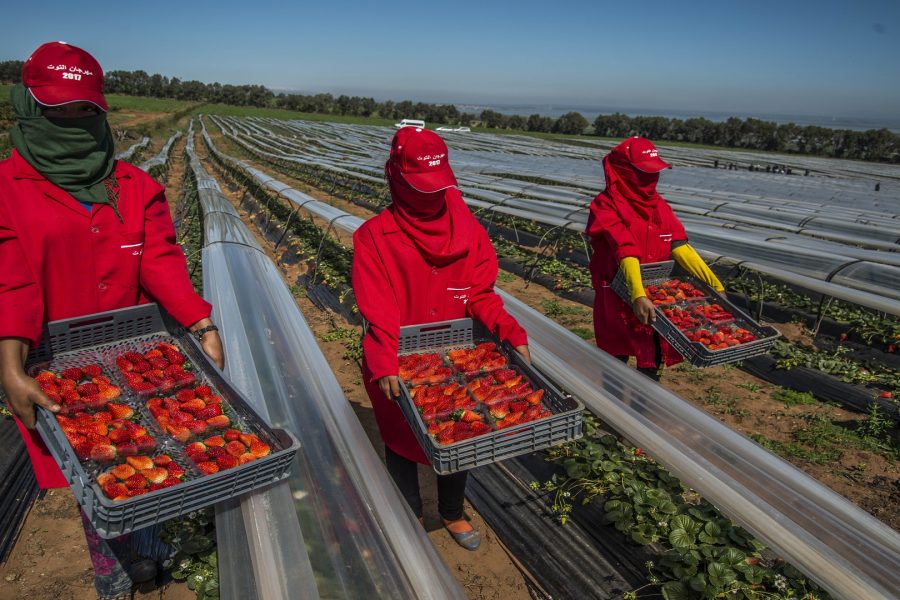
The Spanish province of Huelva has begun receiving Moroccan seasonal workers for the 2026 strawberry and red fruit harvest, with an initial group of 420 Moroccan women arriving this week under Spain’s GECCO seasonal labour prograam, according to Europa Press.
Under the recruitment-at-origin mechanism known as GECCO, designed to regulate temporary labour migration, authorities expect 21,496 seasonal workers from eight countries this season, with Moroccans forming the largest national contingent.
Spanish media cited data showing 3,305 Moroccan workers are due to participate in the Huelva harvest, followed by recruits from Colombia, Ecuador, Guatemala, Honduras, Mauritania, Paraguay and Senegal.
Many of the Moroccan women arriving this year have worked in previous seasons and are classified locally as experienced or repeat workers. Spanish officials said additional Moroccan seasonal workers , about 660, are expected to join in the coming days as part of phased recruitment and reception efforts.
The GECCO program, administered by Spain’s Ministry of Inclusion, Social Security and Migration in coordination with Moroccan authorities, issues work and residence permits before departure and is intended to meet labour demand in agriculture while managing migration flows.
Spanish recruitment data from 2025 show Moroccan nationals accounted for the majority of seasonal labour hires, representing about 81 percent of the total, with most workers deployed to Huelva’s agricultural sectors under the programme.
The seasonal harvest in Huelva, a key hub for red fruit production, typically runs from January to June, and requires significant temporary labour to meet crop-picking needs.








Je m’adapte aussi au tout type de travail manuel
He trabajado en el sector agrícola y sé mucho sobre el tema.