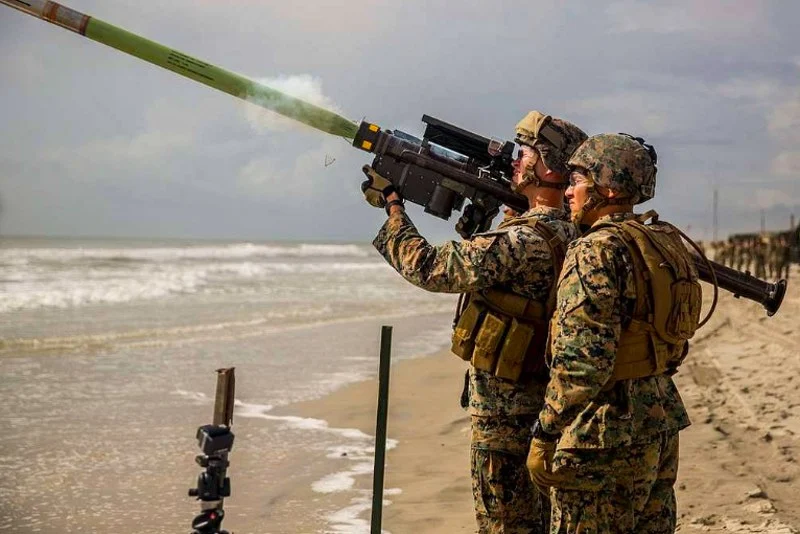
The United States has formally launched the legal process for a proposed $825 million arms sale to Morocco, involving short-range air defense systems, according to a notice published by the U.S. Department of Defense, marking another step in deepening military cooperation between the two countries.
The proposed sale, notified through the Defense Security Cooperation Agency under the Pentagon, was published in the Federal Register as part of the statutory procedure governing U.S. foreign military sales.
According to the notification, Morocco has requested the acquisition of up to 600 FIM-92K Stinger Block I surface-to-air missiles, portable air defense systems designed to counter low-altitude aerial threats. The total estimated value of the transaction is $825 million, including both the missile systems and associated support services.
Of that amount, $552 million covers the core defense equipment, while $273 million is allocated to support services such as technical assistance, logistics, training and engineering support, the document said. The sale would be fully financed by Morocco, with no U.S. grants, subsidies or security assistance involved.
In line with U.S. law, the proposal was transmitted to the United States Congress on April 15, 2025, under Section 36(b) of the Arms Export Control Act. Congress has a defined review period during which it may block the transaction, though no opposition has been announced to date.
In its justification, the United States Department of Defense said Morocco is a major non-NATO ally and a key security partner in North Africa, arguing that the proposed sale would strengthen the kingdom’s ability to address current and emerging threats, particularly in short-range air defense.
The Pentagon added that the transaction aligns with U.S. objectives of supporting the modernization of Morocco’s armed forces while ensuring compatibility with Western military standards. It also highlighted the role of the sale in improving interoperability between Moroccan forces and U.S. and allied militaries, including during joint exercises and multinational operations.
As is standard in such notifications, U.S. authorities said the proposed sale would not alter the regional military balance, language commonly used in congressional briefings to address geopolitical concerns surrounding American arms exports.
The proposed deal follows a series of major U.S. defense sales to Morocco in recent years, reflecting Rabat’s broader strategy of upgrading its military capabilities, diversifying procurement sources and adapting to evolving regional security dynamics.









As Morocco continues to modernize its military with such significant investments, I wonder how this reflects on the broader digital infrastructure and regulatory environment for international tech ventures entering the Kingdom. Given the scale of these defense deals, does anyone know if the same level of rigorous vetting and transparency is being applied to the licensing of emerging digital platforms and fintech sectors there? I’ve been reading some risk assessments regarding online operational standards, specifically this independent review at Guiade Vaide Betbrasil, and it makes me question whether the current regulatory framework is keeping pace with the country’s rapid modernization. Are there specific government oversight bodies that ensure these new digital entities meet the same Western standards mentioned in the missile sale?