
Head of Government Aziz Akhannouch said Monday that the government has taken urgent and sustained measures since taking office to support Morocco’s business sector, particularly small and medium-sized enterprises, as they face rising costs and supply disruptions.
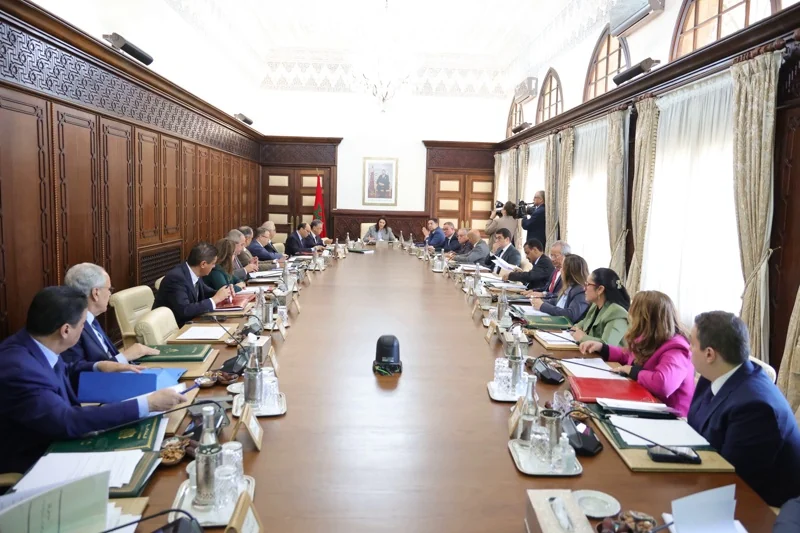
Speaking during the monthly accountability session in the House of Representatives, Akhannouch said the government introduced emergency measures to ease the impact of higher prices and shortages of raw materials on companies’ contractual obligations under public procurement contracts.
He said the state has also borne a significant financial burden by clearing overdue value-added tax refunds to struggling businesses, totaling nearly 78 billion dirhams ($7.8 billion), which he described as a key factor in improving companies’ cash flow and preserving financial stability.
Akhannouch pointed to corporate tax reform as another measure benefiting smaller firms, noting that the minimum corporate tax rate was reduced and unified at 20% for companies with profits below 100 million dirhams ($10 million), a threshold that covers most small and medium-sized enterprises.
He highlighted the recently enacted law regulating payment deadlines, saying it has improved transparency in commercial relations and strengthened oversight of large companies’ compliance with payment obligations, easing pressure on smaller suppliers.
The prime minister also cited the role of the Mohammed VI Investment Fund in expanding financing for national investment projects, particularly through programs such as “Cap Access” and “Cap Hospitality.”
Akhannouch said the new Investment Charter adopted under his government has become a key tool for promoting social equity and reducing regional disparities by improving the territorial distribution of investment benefits.
Since the charter entered into force in March 2023, the National Investment Commission has held nine meetings and approved 250 projects with a total value of 414 billion dirhams ($41.4 billion), which are expected to generate about 179,000 direct and indirect jobs, he said.
According to Akhannouch, the projects span 49 provinces and prefectures and cover 34 economic sectors, including tourism, agribusiness and the automotive industry.
He added that reforms aimed at improving the business climate, including digital platforms and one-stop shops for company creation, have helped simplify procedures and reduce processing times. As of the end of September 2025, more than 81,000 companies had been created, following over 95,000 new businesses registered in 2024.
At the regional level, investment centers have reviewed 103 projects valued at about 10 billion dirhams ($1 billion), approving 55 projects worth 5.8 billion dirhams ($580 million), which are expected to create roughly 10,000 jobs.
Akhannouch also pointed to the launch of a new support scheme for very small, small and medium-sized enterprises in November, calling it a strategic step in implementing the Investment Charter. The national support portal has received 63 investment applications worth a combined 880 million dirhams ($88 million), projects that are expected to generate around 2,200 jobs nationwide.



add your comment
Terms of publication : Not to offend the writer, people, sacred things, or attack religions or the divine self, and refrain from racist incitement and insults.