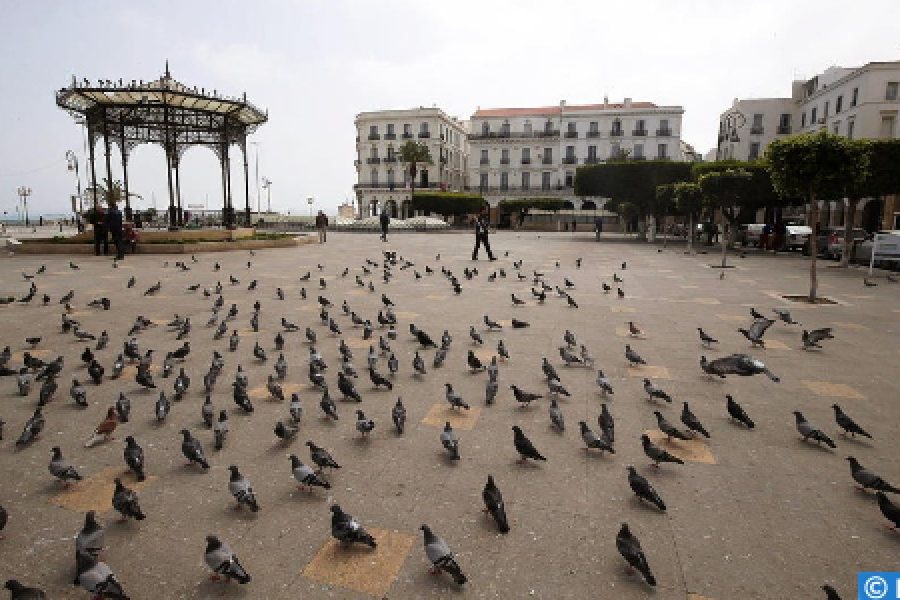
US daily “New York Times” painted a very bleak picture of the situation in Algeria, where “hopes fade for new political course a year after popular uprising”.
A year after a popular uprising ousted the 20-year autocrat, Abdelaziz Bouteflika, and led the army to jail much of his ruling oligarchy, hopes are now fading for an overhaul of the political system and real democracy in Algeria, wrote the paper’s Paris bureau chief Adam Nossiter who traveled to Algiers to interview president Abdelmadjid Tebboune.
“Old habits die hard in this North African country, which has known nearly 60 years of repression, military meddling, rigged elections and very little democracy,” wrote the paper.
In an interview with Tebboune, the latter insisted that his country was now “free and democratic,” but the American reporter recalls that it is within this same old, corrupt system that Tebboune had spent his entire career.
The state jails dissidents, and seats have been for sale — the going price was about $540,000 according to a parliamentarian’s court testimony — in the same Parliament that ratified Tebboune’s proposed new Constitution, drafted after he came to power in a disputed election in December. But the opposition is hobbled by a lack of leadership and a failure to articulate an alternative vision for the country.
“We are moving backward fast,” said Mohcine Belabbas, an opposition politician who played a major role in the uprising.
“Today there are two political narratives in Algeria: the one from Tebboune, on high, and the one in the streets below,” said the paper.
The revolt in the streets that began last year, known here as Hirak, initially appeared to signal a new dawn in a country that had been stifled for decades by its huge military. But when the movement’s failure to coalesce around leaders and agree on goals created a vacuum, the remnants of the repressive Algerian state, with its ample security services, stepped in.
The same source recalled that “the military established its pre-eminence in politics shortly after that, and has been at the forefront or just behind it ever since. A civil war with Islamists in the 1990s, in which as many as 100,000 were killed, helped consolidate its grip.”
Tebboune, once an ephemeral prime minister under Bouteflika, is believed to have been backed for the presidency by Gaid Salah. He was elected in a vote that opponents said drew less than 10 percent of the electorate, the paper underlined, adding that the pandemic stopped the demonstrations in March, and since then the government has played a cat-and-mouse game with Hirak’s remnants, releasing some and arresting others.
The author recalled the arrest and prosecution, for endangering national unity, of journalist Khaled Drareni, 40, who condemned the system that renews itself ceaselessly and refuses to change.
In his interview with the Algeria president, the US reporter noted that Tebboune made his normally reticent cabinet members available for interviews, and even demanded that the army chief of staff — who is never accessible to the media — agree to be interviewed.
“The army is neutral,” growled Gen. Saïd Chengriha, “how do you want us to be involved in politics? We’re not at all trained in that.”
The general and the president said they met at least twice a week to discuss the country’s situation, which is increasingly perilous because of a drop in oil prices. Well over 90 percent of the largely desert country’s exports consist of oil and gas, and with a heavy social expenditures bill, Algeria is estimated to need oil at $100 a barrel to balance its budget, said the paper.

add your comment
Terms of publication : Not to offend the writer, people, sacred things, or attack religions or the divine self, and refrain from racist incitement and insults.