
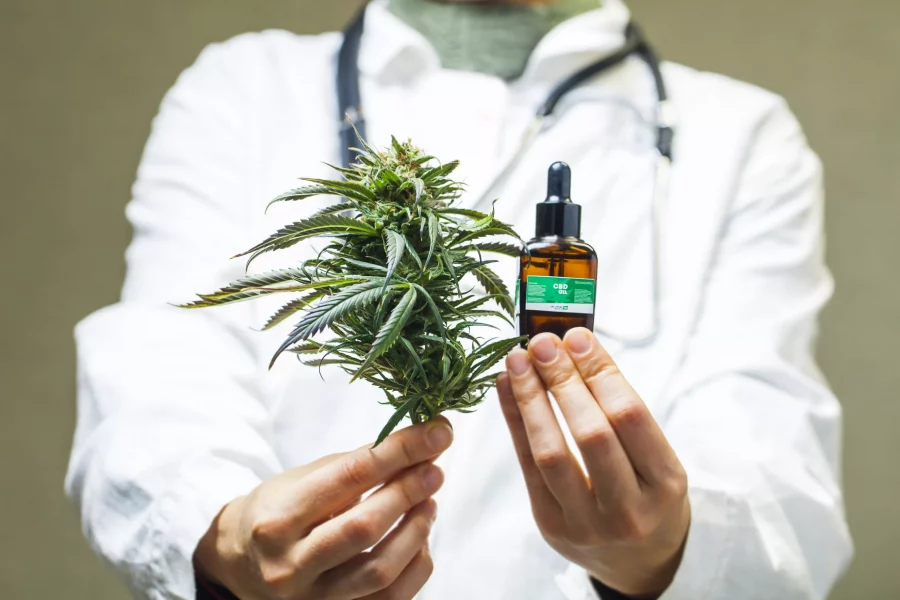
Decades of European demand turned Moroccan hash into one of the world’s most iconic varieties, a reputation that is now being repackaged for medical buyers, giving Morocco a head start in the legal cannabis trade that few exporters can claim to have.
One of the first to test that reputation was Medropharm, a Swiss company that brought in a trial shipment to see if Morocco could supply medical cannabis resin.
The shipment was widely celebrated as a glimpse of what the country stands to gain if the model holds with promises of revenue long lost to smuggling and a measure of legitimacy for institutions in Morocco’s north.
“Morocco has a deep, historical relationship with cannabis. That’s important to us, not just culturally, but also because it means there is agricultural know-how already in place.” said Patrick Widmer, Chief Business Dev. officer at Medropharm, one of about three publicly known importers of Moroccan-grown cannabis so far, in an interview with Hespress EN,.
What they imported were small quantities, about 50 to 100 kilograms, a fraction of the volumes common in established markets, where shipments can run into the hundreds of thousands of kilos. The modest scale is meant to prove Morocco could deliver quality and compliance, while buying time for its infrastructure to take hold, according to Widmer.
“Right now, we’re selling the idea of Moroccan cannabis, not the real thing,” said a source familiar with the legalization process, who asked not to be named. But that phase is common in new cannabis economies, where branding and reputation often run ahead of the infrastructure to meet them.
Of the thousands of licenses the national agency for the regulation of Cannabis issued for cannabis cultivation and trade, hundreds have already been revoked after fields lay idle or paperwork went ignored. Many more are at risk, as the agency shifts from early enthusiasm to stricter enforcement.
But even with permits in hand, the crop has nowhere to go without processing plants. These warehouses are where cannabis is dried, tested for THC levels and logged for traceability. Even if raw materials are exported abroad, they must first be cleared and logged by a Moroccan processing unit.
The Moroccan cannabis agency has issued 60 processing licenses, but only one has produced an actual plant.
Neighboring Portugal has more than two dozen plants, making it Europe’s most established exporter. It began exporting only a few hundred kilos in 2019 when it legalized cannabis, but exports jumped to more than 11 tonnes in 2023 and 32 tonnes in 2024.
Greece is building toward the same model, with several projects underway, including a 40 million-euro facility in Corinth meant for both domestic use and export. The bigger players are further ahead still, with Canada counting nearly two hundred licensed producers with full processing capacity, and Australia has more than forty.
In Morocco, Taounate has become the first site to host a legal cannabis processing plant, inaugurated in September 2024 by ANRAC’s director Mohamed El Guerrouj. According to the agency, the 3,000-square-meter facility was built with a 20 million dirham investment and now employs 25 permanent staff and more than 300 seasonal workers.
Taounate is one axis of Morocco’s cannabis “triangle,” grouped with Chefchaouen and Al Hoceima as the Rif’s core producing provinces. In 2003, a UN survey mapped about 134,000 hectares of cannabis there; by 2013, eradication campaigns had cut that to about 47,000 hectares.
But even after the decline, the Rif remains one of the world’s largest cultivation zones. Afghanistan counts 10,000 to 24,000 hectares, Lebanon around 10,000, and Pakistan just over 2,000.
Against them, Morocco dwarfs the rest. The Rif alone carries more land under cannabis than any other region in the world, but only about 0.1% of traditional cannabis farmland has been brought into the legal fold, the source familiar with the process told Hespress EN.
That gap is felt in the fields of Mohamed Morabit, a 64-year-old cannabis farmer in the region, who was among the 5,000 farmers to enter the legal fold. “We used to sell cannabis for 100 or 120 dirhams a kilo,” he says. “Now we are offered 80, sometimes even less.”.
The new contracts and cooperatives, intended to guarantee higher income, have so far left many growers unpaid and struggling to cover basic costs when the first harvests were delivered last year.
It is unclear when the promised gains will materialize, though ANRAC has said future exports and processing plants will bring farmers a greater share than the 4 percent they once retained under the black market.
Earlier this month, farmers in the Ghafsai area of Taounate province staged a protest over unpaid dues from crops delivered last November.
Many said debts were mounting as they waited for payment, while the companies that contracted them struggled to move legal cannabis through processing and export channels.
“To enter regulated health markets, GMP-compliant processes must begin already during post-harvest handling – especially drying. These GMP steps are not yet fully established in Morocco,” said Widmer.
GMP, or Good Manufacturing Practice, is the standard that governs how medicines and their ingredients are produced. For cannabis, it covers every step from cannabinoid profiles, heavy metals, pesticide residues, and microbiological contamination, with strict controls on hygiene, consistency and traceability.
Without GMP certification, products cannot be sold as active pharmaceutical ingredients in markets such as Europe.
Morocco can only guarantee exporters GACP certification, proof the crop was grown safely and consistently, but even that is uneven, with some villages lacking reliable electricity to meet company requirements or qualify for permits.
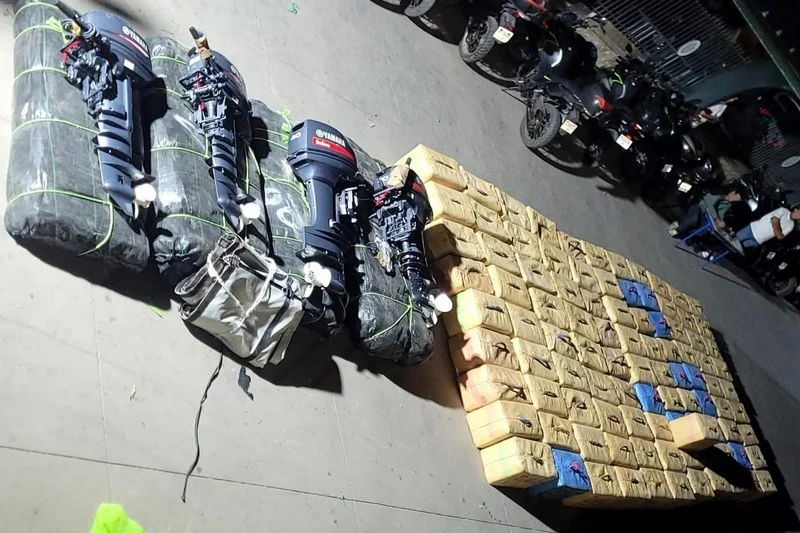
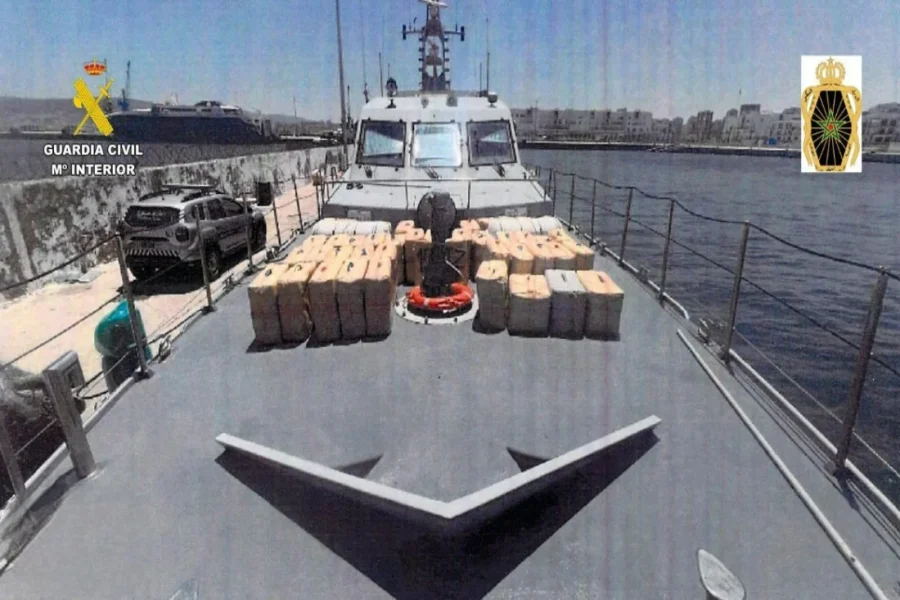
Yet for decades, Morocco has supplied a recreational market orders of magnitude larger than the legal trade now attempts to regulate. Seizures by the DGSN in 2024 alone were seven to ten times the annual legal exports of Portugal, Europe’s most established producer.
Activists say a regulated recreational market could undercut the black trade and clarify who sells and to whom, just as it has in peer countries.
“While it reduces the number of farmers involved in the illegal drug trade,” said Chakib El Khayari, coordinator of the Moroccan Coalition for the Medical and Industrial Use of Cannabis, “it doesn’t eliminate the existing consumer base for cannabis and its derivatives.” El Khayari, who helped spearhead a public appeal for recreational legalization in mid-2023 before it was shelved.
Reliable figures on use in Morocco are scarce. One financial analysis ranks the country among the top 20 global cannabis consumers. A 2024 regional health survey found cannabis to be the most commonly used illicit substance among adults in the country, used by 13.4% of participants, far above alcohol, sedatives, stimulants, and cocaine.
Other countries show what happens when that kind of use is drawn into legal markets. In Canada, by 2024 nearly three-quarters of consumers bought only from licensed outlets, while the share buying illegally dropped from almost a third to just 3%.
“The challenge is not cannabis itself, it’s building systems that move it into a regulated, transparent framework,” said Widmer of Medropharm, the Swiss firm that supplies pharmaceutical-grade CBD and THC for medical use.
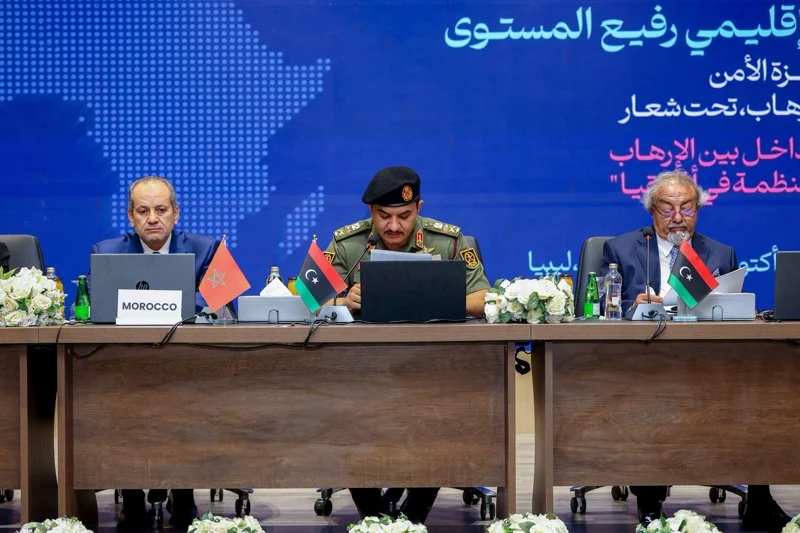
Each time cannabis returns to Parliament, it stalls. The PJD opposed the law in 2021, raised CBD again in 2024, and other officials repeated the line on medicine and industry.
Outside those chambers, the plant sits with alcohol, inheritance reform, and personal freedoms as the same pressure points that mark Morocco’s slow turn through social change.
—
Edited by Amira EL Masaiti



add your comment
Terms of publication : Not to offend the writer, people, sacred things, or attack religions or the divine self, and refrain from racist incitement and insults.